
Pearson+ LogoPearson+ Logo
Ch. 17 The Cardiovascular System I: The Heart
Amerman - Human Anatomy & Physiology 2nd Edition
Erin C. Amerman2nd EditionHuman Anatomy & PhysiologyISBN: 9780136873822Not the one you use?Change textbook
Chapter 17, Problem L1.11

The AV node delay:
a. Allows the atria and ventricles to depolarize and contract as a unit.
b. Allows the two ventricles to depolarize and contract separately.
c. Allows the atria and ventricles to depolarize and contract separately.
d. Speeds up the impulse transmission from the atria to the ventricles.

Verified step by step guidance
1
Understand the role of the AV (atrioventricular) node in the cardiac conduction system. The AV node is located between the atria and ventricles and plays a critical role in coordinating the timing of heart contractions.
Recall that the electrical impulse in the heart originates in the SA (sinoatrial) node, which causes the atria to depolarize and contract first. This impulse then travels to the AV node.
Recognize that the AV node introduces a delay in the transmission of the electrical impulse to the ventricles. This delay is crucial for allowing the atria to fully contract and empty their blood into the ventricles before the ventricles begin to contract.
Eliminate incorrect options by analyzing their descriptions: For example, the AV node delay does not cause the atria and ventricles to depolarize and contract as a single unit (option a is incorrect), nor does it allow the ventricles to depolarize and contract separately (option b is incorrect). Additionally, the AV node delay does not speed up impulse transmission (option d is incorrect).
Conclude that the correct answer is the option that describes the AV node delay as allowing the atria and ventricles to depolarize and contract separately, ensuring proper timing and coordination of the cardiac cycle (option c).

Verified video answer for a similar problem:

This video solution was recommended by our tutors as helpful for the problem above.
Was this helpful?

Key Concepts

Here are the essential concepts you must grasp in order to answer the question correctly.

AV Node Function

The atrioventricular (AV) node is a critical component of the heart's electrical conduction system. It serves as a gatekeeper, slowing down the electrical impulse from the atria before it reaches the ventricles. This delay is essential for allowing the atria to fully contract and empty blood into the ventricles before the ventricles contract.
Recommended video:
5:05
Introduction to Lymph Nodes

Cardiac Cycle Coordination

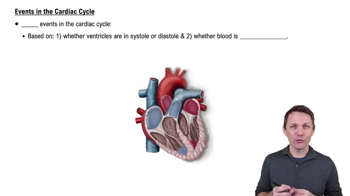
The cardiac cycle involves the coordinated contraction and relaxation of the heart's chambers. The AV node delay ensures that the atria and ventricles do not contract simultaneously, which is crucial for effective blood flow. This coordination allows for optimal filling of the ventricles, enhancing overall cardiac efficiency.
Recommended video:
Guided course
9:44
Events in the Cardiac Cycle

Impulse Transmission Speed

Impulse transmission speed refers to how quickly electrical signals travel through the heart's conduction system. While the AV node does slow down the impulse, it is not designed to speed up transmission. Understanding this concept helps clarify why the AV node delay is vital for proper heart function, rather than accelerating the heartbeat.
Recommended video:
02:52
Types of Electron Microscopes