Pearson+ LogoPearson+ Logo
Ch. 35 - Vascular Plant Structure, Growth, and Development
Campbell - Campbell Biology 12th Edition
Urry12th EditionCampbell BiologyISBN: 9785794169850Not the one you use?Change textbook
Chapter 35, Problem 10

A strawberry plant mutant that fails to make stolons would suffer from
a. Too little mineral absorption.
b. A tendency to topple over.
c. Too little water absorption.
d. A reduction in asexual reproduction

Verified step by step guidance
1
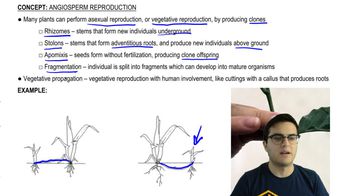
Understand the role of stolons in strawberry plants. Stolons are horizontal stems that grow at or just below the soil surface and are involved in asexual reproduction by producing new plants.
Consider the options given in the problem. Option (A) refers to mineral absorption, which is primarily the function of roots, not stolons.
Option (B) suggests a tendency to topple over. Stolons do not provide structural support to prevent toppling; this is more related to the plant's root system and stem strength.
Option (C) mentions water absorption, which is also a function of roots rather than stolons.
Option (D) refers to a reduction in asexual reproduction. Since stolons are directly involved in producing new plants asexually, a failure to make stolons would indeed lead to a reduction in asexual reproduction.

Verified video answer for a similar problem:

This video solution was recommended by our tutors as helpful for the problem above.
Video duration:
37s
Was this helpful?

Key Concepts

Here are the essential concepts you must grasp in order to answer the question correctly.

Stolons

Stolons, also known as runners, are horizontal stems that grow at or just below the soil surface. They are crucial for asexual reproduction in plants like strawberries, allowing them to spread and form new plants. Stolons facilitate the propagation of genetically identical offspring, enhancing the plant's ability to colonize an area.
Recommended video:
Guided course
06:56
Asexual Reproduction

Asexual Reproduction

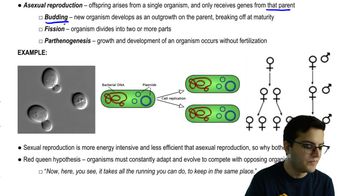
Asexual reproduction is a mode of reproduction that does not involve the fusion of gametes, resulting in offspring that are genetically identical to the parent. In plants, this can occur through mechanisms like stolons, rhizomes, or tubers, enabling rapid population growth and survival in stable environments without the need for pollinators.
Recommended video:
Guided course
05:44
Sexual and Asexual Reproduction

Plant Structure and Stability

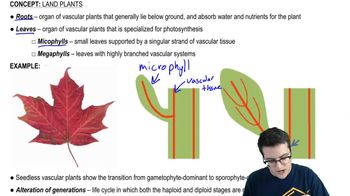
Plant structure, including roots, stems, and leaves, plays a vital role in stability and nutrient absorption. While stolons primarily aid in reproduction, other structures like roots are responsible for anchoring the plant and absorbing water and minerals. A lack of stolons does not directly affect stability or absorption but limits reproductive spread.
Recommended video:
Guided course
03:36
Land Plants - 3