
Pearson+ LogoPearson+ Logo
Ch. 42 - Circulation and Gas Exchange
Campbell - Campbell Biology 12th Edition
Urry12th EditionCampbell BiologyISBN: 9785794169850Not the one you use?Change textbook
Chapter 42, Problem 3

Pulse is a direct measure of
a. Blood pressure.
b. Stroke volume.
c. Cardiac output.
d. Heart rate.

Verified step by step guidance
1
Understand the definitions of each term: Blood pressure is the force of blood against the walls of arteries. Stroke volume is the amount of blood pumped by the left ventricle of the heart in one contraction. Cardiac output is the volume of blood the heart pumps per minute, calculated as heart rate multiplied by stroke volume. Heart rate is the number of heartbeats per minute.
Recognize that pulse is the tactile arterial palpation of the heartbeat, which is directly related to the heart rate.
Consider how each option relates to the pulse: Blood pressure is not directly measured by pulse, though they are related. Stroke volume contributes to cardiac output but is not directly measured by pulse. Cardiac output is a broader measure that includes heart rate but is not directly measured by pulse.
Identify that the pulse is a direct measure of heart rate, as it reflects the number of times the heart beats per minute.
Conclude that the correct answer is the option that directly correlates with the pulse, which is heart rate.

Verified video answer for a similar problem:

This video solution was recommended by our tutors as helpful for the problem above.
Video duration:
50s
Was this helpful?

Key Concepts

Here are the essential concepts you must grasp in order to answer the question correctly.

Heart Rate

Heart rate refers to the number of times the heart beats per minute. It is a direct measure of the heart's activity and is typically assessed by feeling the pulse at various points on the body, such as the wrist or neck. The pulse is essentially the tactile arterial palpation of the heartbeat, which directly correlates with the heart rate.
Recommended video:
Guided course
05:13
Heart Physiology

Cardiac Output

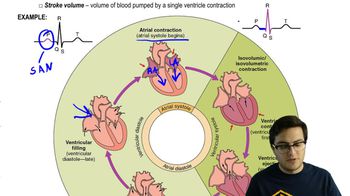
Cardiac output is the volume of blood the heart pumps per minute. It is calculated by multiplying the heart rate by the stroke volume, which is the amount of blood pumped with each beat. While pulse can provide indirect information about cardiac output, it is not a direct measure of it.
Recommended video:
Guided course
05:37
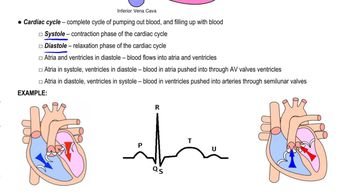
Cardiac Cycle

Blood Pressure

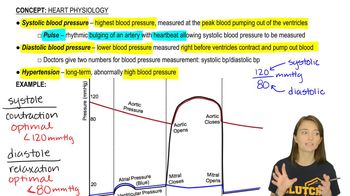
Blood pressure is the force exerted by circulating blood on the walls of blood vessels. It is measured in millimeters of mercury (mmHg) and is expressed as two numbers: systolic over diastolic pressure. Although related to heart function, blood pressure is not directly measured by pulse, which only indicates heart rate.
Recommended video:
Guided course
15:53
Blood Pressure