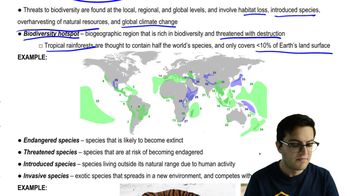
What is the single greatest threat to biodiversity?
a. Overharvesting of commercially important species
b. Habitat alteration, fragmentation, and destruction
c. Introduced species that compete with native species
d. Novel pathogens
Verified step by step guidance
What is the single greatest threat to biodiversity?
a. Overharvesting of commercially important species
b. Habitat alteration, fragmentation, and destruction
c. Introduced species that compete with native species
d. Novel pathogens
Which of these is a consequence of biological magnification?
a. Toxic chemicals in the environment pose greater risk to top-level predators than to primary consumers.
b. Populations of top-level predators are generally smaller than populations of primary consumers.
c. The biomass of producers in an ecosystem is generally higher than the biomass of primary consumers.
d. Only a small portion of the energy captured by producers is transferred to consumers.
Which of the following strategies would most rapidly increase the genetic diversity of a population in an extinction vortex?
a. Establish a reserve that protects the population's habitat
b. Introduce new individuals transported from other populations of the same species
c. Sterilize the least fit individuals in the population
d. Control populations of the endangered population's predators and competitors