
Pearson+ LogoPearson+ Logo
Ch. 56 - Conservation Biology and Global Change
Campbell - Campbell Biology 12th Edition
Urry12th EditionCampbell BiologyISBN: 9785794169850Not the one you use?Change textbook
Chapter 56, Problem 1

One characteristic that distinguishes a population in an extinction vortex from most other populations is that
a. It is a rare, top-level predator
b. Its effective population size is lower than its total population size
c. Its genetic diversity is very low
d. It is not well adapted to edge conditions

Verified step by step guidance
1
Understand the concept of an extinction vortex: An extinction vortex is a process where a population's size and genetic diversity decrease, leading to further declines and potential extinction.
Identify the key characteristics of populations in an extinction vortex: These populations typically have low genetic diversity, which reduces their ability to adapt to environmental changes.
Consider the options given in the problem: Analyze each option to determine which one aligns with the characteristics of an extinction vortex.
Evaluate option c: 'its genetic diversity is very low.' This option directly relates to the concept of an extinction vortex, as low genetic diversity is a critical factor in the process.
Conclude that option c is the characteristic that distinguishes a population in an extinction vortex from most other populations, based on the understanding of the concept.

Verified video answer for a similar problem:

This video solution was recommended by our tutors as helpful for the problem above.
Video duration:
1m
Was this helpful?

Key Concepts

Here are the essential concepts you must grasp in order to answer the question correctly.

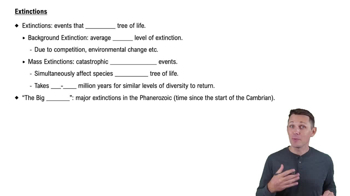
Extinction Vortex

An extinction vortex is a process where a population's size and genetic diversity decrease, leading to a downward spiral towards extinction. This occurs due to factors like inbreeding, genetic drift, and environmental changes, which exacerbate the population's vulnerability and reduce its ability to adapt and survive.
Recommended video:
04:48
Extinctions

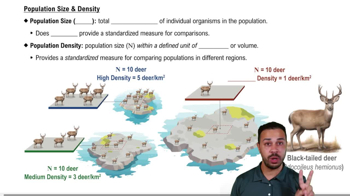
Effective Population Size

Effective population size refers to the number of individuals in a population who contribute offspring to the next generation. It is often lower than the total population size due to factors like unequal sex ratios, variation in reproductive success, and genetic bottlenecks, affecting genetic diversity and evolutionary potential.
Recommended video:
Guided course
01:52
Population Size & Density

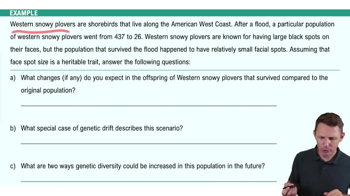
Genetic Diversity

Genetic diversity is the variety of genes within a population, crucial for adaptability and survival. Low genetic diversity can lead to reduced resilience against environmental changes and diseases, making populations more susceptible to extinction, especially in an extinction vortex where genetic variation is already compromised.
Recommended video:
02:37
Genetic Drift Example 2