
Pearson+ LogoPearson+ Logo
Ch. 26 - Bacteria and Archaea
Freeman - Biological Science 8th Edition
Freeman8th EditionBiological ScienceISBN: 9780138276263Not the one you use?Change textbook
Chapter 26, Problem 13

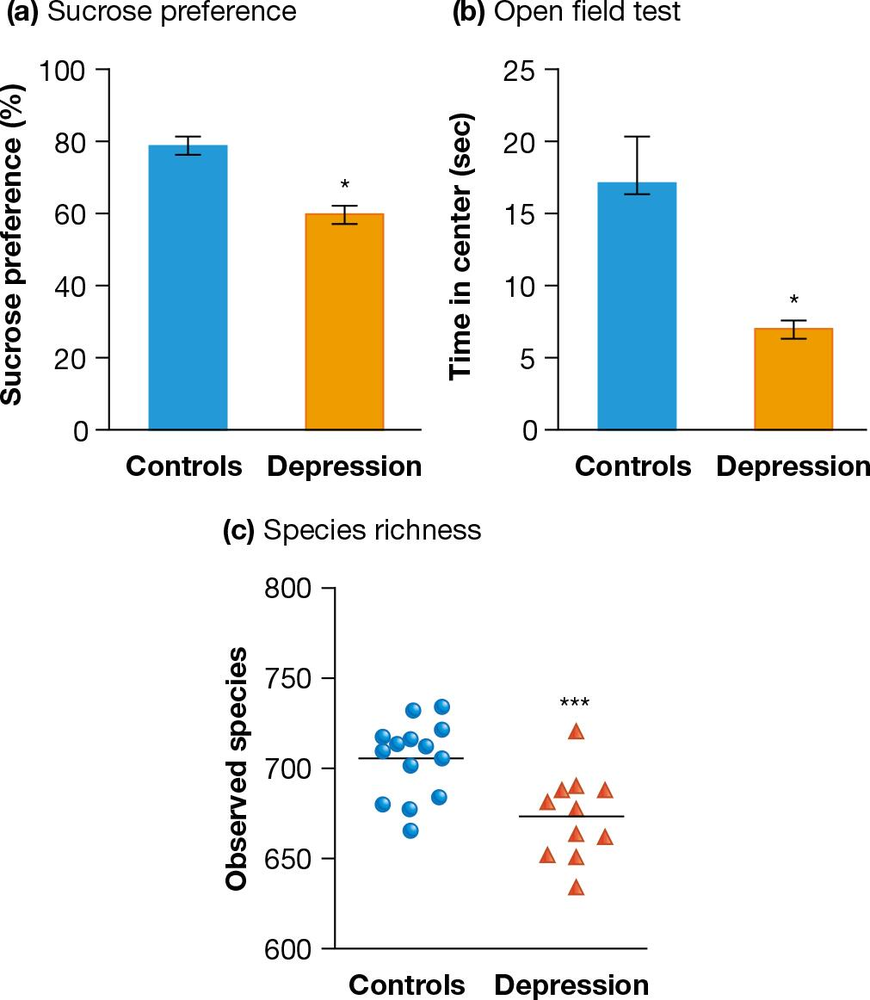
Researchers examined the relationship between gut microbiomes and depression. To do so, they collected fecal samples from people with depression and also a control group of individuals with no signs of depression. They then performed a fecal microbiota transfer (FMT) by adding the samples to rats that had no gut microbiota and examined behaviors associated with depression and anxiety as well as species of bacteria that ended up growing in the rats’ guts. The results are presented below. Graph (a) shows the rats’ interest in a pleasurable experience (drinking sugar water). Graph (b) shows the amount of time rats spent out in the open versus along the edge of an area (a sign of anxiety). Graph (c) shows the number of species observed in rats after FMT.


Why was it important for the rats used in the study to be free of gut microbiota to begin with?

Verified step by step guidance
1
Understand the purpose of the study: Researchers are examining the relationship between gut microbiomes and depression by using fecal microbiota transfer (FMT) in rats.
Identify the importance of using rats free of gut microbiota: This ensures that any observed changes in behavior or gut microbiota composition are solely due to the transferred fecal samples and not influenced by pre-existing gut bacteria.
Analyze Graph (a): Compare the sucrose preference between control rats and those with depression-associated microbiota to assess interest in pleasurable experiences.
Analyze Graph (b): Compare the time spent in the center of an open field between control rats and those with depression-associated microbiota to assess anxiety levels.
Analyze Graph (c): Compare the species richness in the gut microbiota of control rats and those with depression-associated microbiota to understand the diversity of bacterial species.

Key Concepts

Here are the essential concepts you must grasp in order to answer the question correctly.

Gut Microbiota

Gut microbiota refers to the diverse community of microorganisms residing in the gastrointestinal tract. These microbes play a crucial role in digestion, metabolism, and immune function, and they can influence mental health by producing neurotransmitters and other metabolites. Understanding the composition and function of gut microbiota is essential for studying its impact on conditions like depression.
Recommended video:
Guided course
03:25
The Human Microbiome

Fecal Microbiota Transfer (FMT)

Fecal microbiota transfer (FMT) is a medical procedure that involves transferring fecal matter from a healthy donor to a recipient to restore a balanced gut microbiome. In this study, FMT was used to investigate how the gut microbiota from individuals with depression affects behavior in rats. This method helps researchers understand the causal relationships between gut microbiota and mental health.
Recommended video:
Guided course
04:42
Horizontal Gene Transfer

Behavioral Indicators of Depression and Anxiety

Behavioral indicators of depression and anxiety in animal models often include changes in preference for rewarding stimuli, such as sucrose, and alterations in exploratory behavior, such as time spent in open areas. These behaviors are measured to assess the impact of gut microbiota on mental health. The results from the graphs in the study provide insights into how gut microbiota influences these behavioral outcomes.
Recommended video: