Pearson+ LogoPearson+ Logo
Ch. 48 - The Immune System in Animals
Freeman - Biological Science 8th Edition
Freeman8th EditionBiological ScienceISBN: 9780138276263Not the one you use?Change textbook
Chapter 48, Problem 11

What are two main criteria required for an RNA vaccine to be effective at protecting a vaccinated individual from a viral infection?

Verified step by step guidance
1
Identify the target antigen: The RNA vaccine must contain the genetic information for a specific viral protein (antigen) that, when expressed, will stimulate the immune system to recognize and fight the actual virus.
Ensure efficient delivery and expression: The RNA needs to be delivered into the host cells effectively and must be translated into the target protein efficiently. This often involves encapsulating the RNA in lipid nanoparticles to protect it from degradation and facilitate its entry into cells.
Achieve a strong immune response: The expressed antigen should be able to elicit a robust immune response, including both antibody production by B cells and activation of T cells, which are crucial for clearing the virus and providing long-term immunity.
Ensure stability and distribution: The RNA vaccine must remain stable during storage and distribution. This often requires specific temperature conditions to prevent degradation of the RNA.
Safety and minimal side effects: The vaccine should not trigger any severe adverse effects and should be safe for use in a wide population, including those with different health conditions.

Verified video answer for a similar problem:

This video solution was recommended by our tutors as helpful for the problem above.
Video duration:
2m
Was this helpful?

Key Concepts

Here are the essential concepts you must grasp in order to answer the question correctly.

RNA Vaccine Mechanism

RNA vaccines work by introducing a piece of messenger RNA (mRNA) that encodes a viral protein into the body. This mRNA is translated by the host's cells to produce the viral protein, which then triggers an immune response. The immune system recognizes this protein as foreign, leading to the production of antibodies and memory cells that provide protection against future infections.
Recommended video:
Guided course
04:19
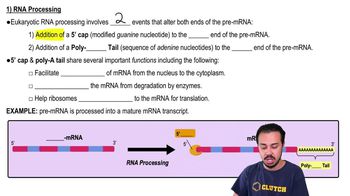
1) RNA Processing

Immune Response Activation

For an RNA vaccine to be effective, it must successfully activate the immune response. This involves both the innate immune response, which provides immediate defense, and the adaptive immune response, which generates specific antibodies and memory cells. A robust immune response ensures that the vaccinated individual can recognize and combat the actual virus if exposed.
Recommended video:
Guided course
05:20
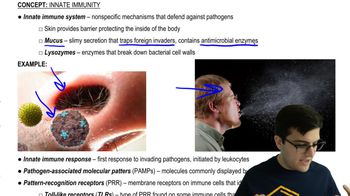
Innate Immune Response

Stability and Delivery of RNA

The stability of the RNA and its effective delivery into cells are critical for vaccine efficacy. RNA is inherently unstable and can degrade quickly; thus, it must be encapsulated in lipid nanoparticles for protection and efficient cellular uptake. Proper delivery ensures that sufficient amounts of mRNA reach the cells to elicit a strong immune response.
Recommended video:
Guided course
04:19
1) RNA Processing