Ch. 7 - Sex Determination and Sex Chromosomes
Klug - Concepts of Genetics 12th Edition
Klug12th EditionConcepts of GeneticsISBN: 9780135564776Not the one you use?Change textbook
Chapter 7, Problem 7

The phenotype of an early-stage human embryo is considered sexually indifferent. Explain why this is so even though the embryo's genotypic sex is already fixed.

Verified step by step guidance
1
insert step 1> The genotypic sex of an embryo is determined at fertilization by the combination of sex chromosomes: XX for female and XY for male.
insert step 2> Despite the genotypic sex being established, the early-stage human embryo does not exhibit distinct male or female physical characteristics.
insert step 3> During the early stages of development, the embryo possesses bipotential gonads, which have the potential to develop into either testes or ovaries.
insert step 4> The presence or absence of certain genes, such as the SRY gene on the Y chromosome, will later influence the differentiation of these gonads into testes or ovaries.
insert step 5> Until these genes are expressed and the gonads begin to differentiate, the embryo remains sexually indifferent, meaning it does not yet show phenotypic characteristics of either sex.

Verified video answer for a similar problem:

This video solution was recommended by our tutors as helpful for the problem above.
Video duration:
1m
Was this helpful?

Key Concepts

Here are the essential concepts you must grasp in order to answer the question correctly.

Genotype vs. Phenotype

Genotype refers to the genetic makeup of an organism, including the alleles inherited from its parents, while phenotype is the observable physical and physiological traits resulting from the genotype and environmental influences. In early-stage embryos, although the genotype (XX or XY) is established, the phenotype has not yet developed distinct sexual characteristics.
Recommended video:
Guided course
07:52
Gamete Genotypes

Sexual Indifference in Embryos

Sexual indifference in embryos refers to the stage where the developing organism has not yet differentiated into male or female forms. This occurs because the initial stages of embryonic development involve a common pathway for both sexes, where structures that can develop into either male or female reproductive organs are present until specific signals trigger differentiation.
Recommended video:
Guided course
02:56
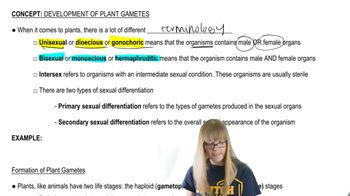
Plant Gamete Terminology

Role of Hormones in Sexual Differentiation

Hormones play a crucial role in sexual differentiation, particularly during the later stages of embryonic development. In males, the presence of testosterone and other hormones leads to the development of male characteristics, while in females, the absence of these hormones allows for the development of female traits. This hormonal influence is what ultimately determines the phenotype, despite the fixed genotype.
Recommended video:
Guided course
02:56
Plant Gamete Terminology