Pearson+ LogoPearson+ Logo
Ch. 10 - DNA Structure and Analysis
Klug - Concepts of Genetics  12th Edition
Klug12th EditionConcepts of Genetics ISBN: 9780135564776Not the one you use?Change textbook
Chapter 10, Problem 3

Discuss the reasons proteins were generally favored over DNA as the genetic material before 1940. What was the role of the tetranucleotide hypothesis in this controversy?

Verified step by step guidance
1
Step 1: Understand the historical context before 1940, when scientists debated whether proteins or DNA carried genetic information. Proteins were favored because they are chemically diverse and complex, with 20 different amino acids, suggesting a greater capacity to store genetic information compared to DNA, which was thought to be chemically simple.
Step 2: Recognize that DNA was considered too simple to be the genetic material because it was believed to consist of a repeating tetranucleotide structure—four nucleotides repeated in a fixed sequence—implying a lack of variability necessary for encoding complex genetic information.
Step 3: Explain the tetranucleotide hypothesis, which proposed that DNA was made up of equal amounts of the four nucleotides arranged in a repetitive pattern, leading scientists to think DNA was a structural molecule rather than an informational one.
Step 4: Discuss how the perceived chemical simplicity of DNA, reinforced by the tetranucleotide hypothesis, contrasted with the known complexity and variability of proteins, which had diverse structures and functions, making proteins the favored candidates for genetic material.
Step 5: Summarize that the tetranucleotide hypothesis played a key role in the controversy by supporting the idea that DNA lacked the complexity to carry genetic information, thus delaying the acceptance of DNA as the genetic material until later experimental evidence disproved this hypothesis.

Verified video answer for a similar problem:

This video solution was recommended by our tutors as helpful for the problem above.
Video duration:
1m
Was this helpful?

Key Concepts

Here are the essential concepts you must grasp in order to answer the question correctly.

Protein as the Presumed Genetic Material

Before 1940, proteins were favored as the genetic material because of their structural complexity and diversity. Proteins are made of 20 different amino acids, allowing for vast variability, which seemed necessary to encode genetic information, unlike DNA, which was thought to be chemically simple.
Recommended video:

Tetranucleotide Hypothesis

The tetranucleotide hypothesis proposed that DNA was composed of repeating units of four nucleotides in a fixed sequence, implying a simple, repetitive structure. This idea suggested DNA lacked the complexity to carry genetic information, reinforcing the belief that proteins were the genetic material.
Recommended video:
Guided course
03:13
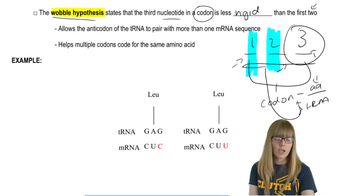
Translation:Wobble Hypothesis

Historical Context and Experimental Evidence

The preference for proteins was also influenced by limited experimental evidence before 1940. Key experiments, such as Griffith’s transformation and Avery’s DNA identification, later challenged this view by demonstrating DNA’s role in heredity, shifting the consensus away from proteins.
Recommended video:
Guided course
05:48
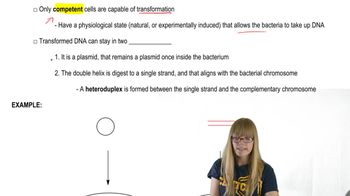
Transformation