Pearson+ LogoPearson+ Logo
Ch. 17 - Transcriptional Regulation in Eukaryotes
Klug - Concepts of Genetics  12th Edition
Klug12th EditionConcepts of Genetics ISBN: 9780135564776Not the one you use?Change textbook
Chapter 17, Problem 24a

A particular type of anemia in humans, called β-thalassemia, results from a severe reduction or absence of the normal β-globin chain of hemoglobin. However, the γ-globin chain, normally only expressed during fetal development, can functionally substitute for β-globin. A variety of studies have explored the use of the nucleoside 5-azacytidine for the expression of γ-globin in adult patients with β-thalassemia.
How might 5-azacytidine lead to expression of γ-globin in adult patients?

Verified step by step guidance
1
Understand that β-thalassemia is caused by a reduction or absence of the β-globin chain, which is normally part of adult hemoglobin, and that γ-globin is typically expressed only during fetal development.
Recognize that 5-azacytidine is a nucleoside analog known to inhibit DNA methylation, a key epigenetic modification that can silence gene expression.
Recall that DNA methylation often represses gene expression by adding methyl groups to cytosine bases in DNA, particularly in promoter regions of genes, thereby preventing transcription factors from binding.
Consider that in adult patients, the γ-globin gene is usually silenced by methylation, so treatment with 5-azacytidine can reduce methylation levels, leading to reactivation of the γ-globin gene.
Conclude that by demethylating the γ-globin gene promoter, 5-azacytidine allows transcription machinery to access the gene, resulting in the expression of γ-globin chains that can substitute for missing β-globin in adult hemoglobin.

Verified video answer for a similar problem:

This video solution was recommended by our tutors as helpful for the problem above.
Video duration:
1m
Was this helpful?

Key Concepts

Here are the essential concepts you must grasp in order to answer the question correctly.

β-Thalassemia and Globin Gene Expression

β-Thalassemia is a genetic disorder characterized by reduced or absent β-globin chains in hemoglobin, leading to anemia. Normally, β-globin is expressed after birth, while γ-globin is primarily expressed during fetal development. Understanding the switch from γ- to β-globin expression is key to exploring therapeutic strategies.
Recommended video:
Guided course
02:09
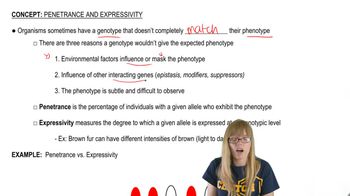
Penetrance and Expressivity

Epigenetic Regulation and DNA Methylation

Gene expression can be regulated epigenetically through DNA methylation, which typically silences genes. In adult cells, the γ-globin gene is often methylated and inactive. Demethylation can reactivate these genes, allowing fetal hemoglobin production to resume, which is beneficial in β-thalassemia.
Recommended video:

Mechanism of Action of 5-Azacytidine

5-Azacytidine is a nucleoside analog that inhibits DNA methyltransferases, leading to hypomethylation of DNA. This demethylation can reactivate silenced genes like γ-globin in adult patients, promoting fetal hemoglobin production and compensating for defective β-globin in β-thalassemia.
Recommended video:
Guided course
07:10
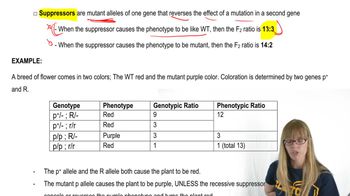
Other Gene Interactions
Related Practice
Textbook Question

Explain how the following mutations would affect transcription of the yeast GAL1 gene in the presence of galactose.

A deletion of one of the four UASG elements upstream from the GAL1 gene.

558
views
Textbook Question

Explain how the following mutations would affect transcription of the yeast GAL1 gene in the presence of galactose.

A point mutation in the GAL1 core promoter that alters the sequence of the TATA box.

510
views
Textbook Question

The interphase nucleus is a highly structured organelle with chromosome territories, interchromatin compartments, and transcription factories. In cultured human cells, researchers have identified approximately 8000 transcription factories per cell, each containing an average of eight tightly associated RNAP II molecules actively transcribing RNA. If each RNAP II molecule is transcribing a different gene, how might such a transcription factory appear? Provide a simple diagram that shows eight different genes being transcribed in a transcription factory and include the promoters, structural genes, and nascent transcripts in your presentation.

506
views
Textbook Question

A particular type of anemia in humans, called β-thalassemia, results from a severe reduction or absence of the normal β-globin chain of hemoglobin. However, the γ-globin chain, normally only expressed during fetal development, can functionally substitute for β-globin. A variety of studies have explored the use of the nucleoside 5-azacytidine for the expression of γ-globin in adult patients with β-thalassemia.

Explain why this drug may also have some adverse side effects.

457
views
Textbook Question

Regulation of the lac operon in E. coli and regulation of the GAL system in yeast are analogous in that they both serve to adapt cells to growth on different carbon sources. However, the transcriptional changes are accomplished very differently. Consider the conceptual similarities and differences as you address the following.

Compare and contrast the roles of the lac operon inducer in bacteria and Gal3p in eukaryotes in the regulation of their respective systems.

701
views
Textbook Question

Regulation of the lac operon in E. coli and regulation of the GAL system in yeast are analogous in that they both serve to adapt cells to growth on different carbon sources. However, the transcriptional changes are accomplished very differently. Consider the conceptual similarities and differences as you address the following.

Compare and contrast the cis-regulatory elements of the lac operon and GAL gene system.

852
views