Pearson+ LogoPearson+ Logo
Ch. 18 - Post-transcriptional Regulation in Eukaryotes
Klug - Concepts of Genetics  12th Edition
Klug12th EditionConcepts of Genetics ISBN: 9780135564776Not the one you use?Change textbook
Chapter 18, Problem 15

In principle, RNAi may be used to fight viral infection. How might this work?

Verified step by step guidance
1
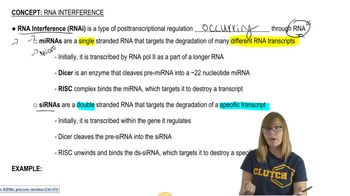
Understand that RNA interference (RNAi) is a natural cellular process where small RNA molecules inhibit gene expression by degrading specific messenger RNA (mRNA) molecules or blocking their translation.
Recognize that viruses rely on their RNA or DNA to produce viral proteins inside host cells, which are essential for viral replication and infection.
Consider that RNAi can be designed to target viral RNA sequences specifically, leading to the degradation of viral mRNA and preventing the production of viral proteins.
Realize that by introducing small interfering RNAs (siRNAs) or short hairpin RNAs (shRNAs) complementary to viral RNA, the RNA-induced silencing complex (RISC) can be guided to the viral RNA to silence it.
Conclude that this targeted degradation of viral RNA reduces viral replication and spread, thereby helping to fight viral infection through the RNAi mechanism.

Verified video answer for a similar problem:

This video solution was recommended by our tutors as helpful for the problem above.
Video duration:
32s
Was this helpful?

Key Concepts

Here are the essential concepts you must grasp in order to answer the question correctly.

RNA Interference (RNAi) Mechanism

RNAi is a cellular process where small RNA molecules, such as siRNA or miRNA, guide the degradation or translational repression of complementary messenger RNA (mRNA). This mechanism effectively silences specific genes by preventing their expression, which can be harnessed to target viral RNA.
Recommended video:
Guided course
06:59
RNA Interference

Viral RNA Targeting

Viruses often rely on RNA genomes or produce RNA transcripts during infection. RNAi can be designed to specifically recognize and bind to viral RNA sequences, leading to their degradation and thus inhibiting viral replication within host cells.
Recommended video:

Therapeutic Application of RNAi

Using RNAi as an antiviral strategy involves delivering synthetic or vector-expressed small RNAs into infected cells to trigger RNAi against viral genes. This approach offers a targeted method to reduce viral load and combat infections without affecting host genes.
Recommended video:
Guided course
04:15
Artificial Selection