Pearson+ LogoPearson+ Logo
Ch. 23 - Developmental Genetics
Klug - Concepts of Genetics  12th Edition
Klug12th EditionConcepts of Genetics ISBN: 9780135564776Not the one you use?Change textbook
Chapter 23, Problem 4

Nuclei from almost any source may be injected into Xenopus oocytes. Studies have shown that these nuclei remain active in transcription and translation. How can such an experimental system be useful in developmental genetic studies?

Verified step by step guidance
1
Understand the experimental system: Xenopus oocytes are large, easily manipulated cells that can support transcription and translation when nuclei from other sources are injected into them. This makes them a powerful tool for studying gene expression and regulation.
Recognize the relevance to developmental genetics: Developmental genetics focuses on how genes control the growth and differentiation of organisms. By injecting nuclei from different developmental stages or tissues into Xenopus oocytes, researchers can study how specific genes are expressed and regulated during development.
Design experiments to study gene activity: Researchers can inject nuclei from embryos at various stages of development or from specific tissues into Xenopus oocytes. This allows them to observe which genes are transcribed and translated, providing insights into gene activity during development.
Analyze transcription and translation products: Using techniques such as RNA sequencing or protein analysis, researchers can identify the mRNA and proteins produced in the oocytes. This helps determine which genes are active and how their expression changes over time or in different conditions.
Apply findings to developmental processes: The data obtained from these experiments can be used to understand the roles of specific genes in developmental pathways, identify regulatory elements, and study how mutations or environmental factors affect gene expression during development.

Verified video answer for a similar problem:

This video solution was recommended by our tutors as helpful for the problem above.
Video duration:
2m
Was this helpful?

Key Concepts

Here are the essential concepts you must grasp in order to answer the question correctly.

Xenopus Oocytes

Xenopus oocytes, derived from the African clawed frog, are large and easily manipulated cells that serve as a model system in developmental biology. Their ability to support the transcription and translation of injected nuclei makes them ideal for studying gene expression and developmental processes. Researchers can introduce nuclei from various sources to analyze how specific genes function during early development.
Recommended video:
Guided course
21:21
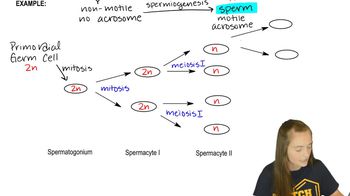
Gamete Development

Transcription and Translation

Transcription is the process by which DNA is copied into messenger RNA (mRNA), while translation is the subsequent process where ribosomes synthesize proteins based on the mRNA sequence. Understanding these processes is crucial in developmental genetics, as they determine how genes are expressed and how proteins influence cellular functions and development. The activity of injected nuclei in Xenopus oocytes allows researchers to study these processes in a controlled environment.
Recommended video:
Guided course
07:58
Translation initiation

Experimental Systems in Developmental Genetics

Experimental systems, like the use of Xenopus oocytes, provide researchers with tools to manipulate and observe genetic functions in a living context. These systems allow for the investigation of gene regulation, protein interactions, and the effects of specific genes on development. By using such models, scientists can gain insights into the genetic mechanisms underlying development and how alterations can lead to developmental disorders.
Recommended video:
Guided course
07:39
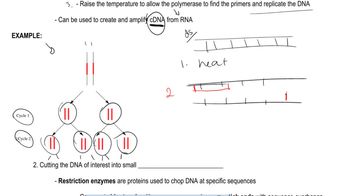
Genetic Cloning