Pearson+ LogoPearson+ Logo
Ch. 8 - Chromosome Mutations: Variation in Number and Arrangement
Klug - Concepts of Genetics  12th Edition
Klug12th EditionConcepts of Genetics ISBN: 9780135564776Not the one you use?Change textbook
Chapter 8, Problem 2

Write a short essay that discusses five altered phenotypes that result from specific chromosomal aberrations.

Verified step by step guidance
1
Begin by defining what chromosomal aberrations are: structural or numerical changes in chromosomes that can lead to altered phenotypes due to gene dosage imbalances or disrupted gene function.
Identify five specific chromosomal aberrations, such as deletions, duplications, inversions, translocations, and aneuploidies, and briefly describe each type.
For each aberration, explain a corresponding altered phenotype. For example, discuss how a deletion can cause Cri-du-chat syndrome, characterized by a distinctive cry and developmental delays.
Describe how duplications might lead to phenotypes involving intellectual disabilities or developmental issues due to extra copies of genes, and how inversions can disrupt gene function or regulation, sometimes causing infertility or developmental abnormalities.
Explain how translocations can result in phenotypes like chronic myelogenous leukemia due to gene fusion, and how aneuploidies such as trisomy 21 cause Down syndrome, characterized by intellectual disability and distinct physical features.

Verified video answer for a similar problem:

This video solution was recommended by our tutors as helpful for the problem above.
Video duration:
1m
Was this helpful?

Key Concepts

Here are the essential concepts you must grasp in order to answer the question correctly.

Chromosomal Aberrations

Chromosomal aberrations are structural changes in chromosomes, such as deletions, duplications, inversions, translocations, or aneuploidy. These alterations can disrupt gene function or regulation, leading to changes in an organism’s phenotype. Understanding these aberrations is essential to link specific chromosomal changes to altered traits.
Recommended video:
Guided course
08:42
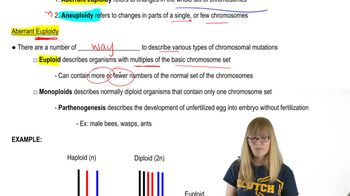
Aberrant Euploid

Phenotype and Genotype Relationship

Phenotype refers to the observable traits of an organism, which result from the interaction of its genotype and environment. Chromosomal aberrations can alter the genotype by changing gene dosage or structure, thereby producing distinct phenotypic outcomes. Recognizing this relationship helps explain how chromosomal changes manifest as altered traits.
Recommended video:
Guided course
07:52
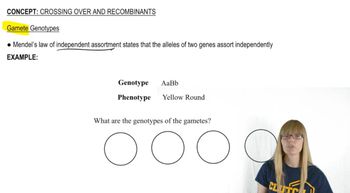
Gamete Genotypes

Examples of Altered Phenotypes from Chromosomal Aberrations

Specific chromosomal aberrations cause well-known phenotypes, such as Down syndrome (trisomy 21), Cri-du-chat syndrome (deletion on chromosome 5), or chronic myelogenous leukemia (translocation between chromosomes 9 and 22). Familiarity with these examples illustrates how chromosomal changes translate into clinical or physical traits.
Recommended video:
Guided course
08:42
Aberrant Euploid