Pearson+ LogoPearson+ Logo
Ch.10 Acids and Bases and Equilibrium
Timberlake - Chemistry: An Introduction to General, Organic, and Biological Chemistry 13th Edition
Timberlake13th EditionChemistry: An Introduction to General, Organic, and Biological ChemistryISBN: 9780134421353Not the one you use?Change textbook
Chapter 10, Problem 62

Someone with severe diabetes obtains energy by the breakdown of fats, which produce large amounts of acidic substances. How would this affect the pH of the blood plasma?

Verified step by step guidance
1
Understand that pH is a measure of the hydrogen ion concentration in a solution, with lower pH values indicating higher acidity.
Recognize that the breakdown of fats in the body produces acidic substances, such as ketone bodies (e.g., acetoacetic acid and beta-hydroxybutyric acid), which can increase the concentration of hydrogen ions in the blood.
Recall that an increase in hydrogen ion concentration will lower the pH of the blood plasma, making it more acidic. This condition is known as acidosis.
Consider the body's natural buffering systems, such as the bicarbonate buffer system, which works to maintain blood pH within a narrow range (approximately 7.35–7.45). However, excessive production of acidic substances can overwhelm this system.
Conclude that the production of large amounts of acidic substances due to fat breakdown in severe diabetes would likely decrease the pH of the blood plasma, potentially leading to a condition called diabetic ketoacidosis (DKA).

Verified video answer for a similar problem:

This video solution was recommended by our tutors as helpful for the problem above.
Video duration:
2m
Was this helpful?

Key Concepts

Here are the essential concepts you must grasp in order to answer the question correctly.

Diabetes and Metabolism

Diabetes, particularly type 1, can lead to a state called ketoacidosis, where the body breaks down fats for energy due to insufficient insulin. This process produces ketone bodies, which are acidic, and can significantly impact the body's metabolic state.
Recommended video:
Guided course
0:52
Metabolic Pathways Concept 2

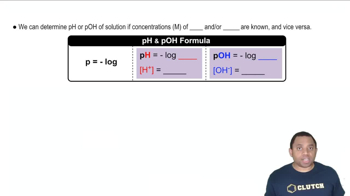
pH and Blood Plasma

The pH of blood plasma is tightly regulated, typically around 7.35 to 7.45. A decrease in pH (acidosis) can occur when excess acidic substances, like ketones from fat metabolism, accumulate in the bloodstream, leading to potential health complications.
Recommended video:
Guided course
02:09
pH and pOH Calculations

Acidosis

Acidosis refers to a condition where the body fluids contain too much acid, resulting in a lower pH. In the context of diabetes, the accumulation of ketone bodies can lead to metabolic acidosis, which can cause symptoms such as fatigue, confusion, and in severe cases, can be life-threatening.