
Pearson+ LogoPearson+ Logo
Ch.16 Amino Acids, Proteins, and Enzymes
Timberlake - Chemistry: An Introduction to General, Organic, and Biological Chemistry 13th Edition
Timberlake13th EditionChemistry: An Introduction to General, Organic, and Biological ChemistryISBN: 9780134421353Not the one you use?Change textbook
Chapter 16, Problem 55a

Ethylene glycol (HO—CH2—CH2—OH) is a major component of antifreeze. If ingested, it is first converted to HOOC—CHO (oxoethanoic acid) and then to HOOC—COOH (oxalic acid), which is toxic.
<IMAGE>
a. What class of enzyme catalyzes the reactions described?

Verified step by step guidance
1
Step 1: Begin by identifying the type of chemical reaction occurring in the problem. The conversion of ethylene glycol to oxoethanoic acid and then to oxalic acid involves the addition of oxygen atoms and the removal of hydrogen atoms, which is characteristic of oxidation reactions.
Step 2: Recall that enzymes are biological catalysts that facilitate specific types of reactions. For oxidation reactions, the class of enzymes responsible is known as oxidoreductases.
Step 3: Oxidoreductases are a broad class of enzymes that catalyze oxidation-reduction reactions. These enzymes typically involve the transfer of electrons, often with the help of cofactors such as NAD+ or FAD.
Step 4: In this specific case, the enzyme catalyzing the conversion of ethylene glycol to oxoethanoic acid and then to oxalic acid would likely be a subclass of oxidoreductases, such as alcohol dehydrogenase or aldehyde dehydrogenase, which are known to oxidize alcohols and aldehydes, respectively.
Step 5: Conclude by noting that the class of enzyme catalyzing the described reactions is oxidoreductases, as they are responsible for facilitating the oxidation of ethylene glycol to its toxic metabolites.

Verified video answer for a similar problem:

This video solution was recommended by our tutors as helpful for the problem above.
Video duration:
1m
Was this helpful?

Key Concepts

Here are the essential concepts you must grasp in order to answer the question correctly.

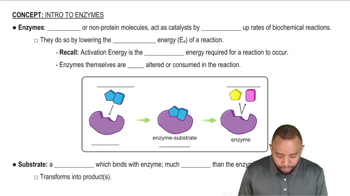
Enzymes

Enzymes are biological catalysts that accelerate chemical reactions in living organisms. They are typically proteins that lower the activation energy required for reactions, allowing them to occur more quickly and efficiently. Each enzyme is specific to a particular substrate and reaction, facilitating processes such as metabolism and detoxification.
Recommended video:
Guided course
2:14
Intro to Enzymes Concept 1

Oxidoreductases

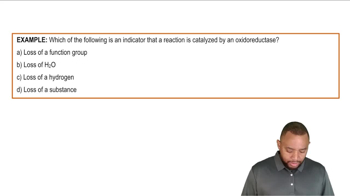
Oxidoreductases are a class of enzymes that catalyze oxidation-reduction reactions, where the transfer of electrons occurs between molecules. In the context of ethylene glycol metabolism, these enzymes play a crucial role in converting the compound into its toxic metabolites by facilitating the necessary chemical transformations through electron transfer.
Recommended video:
Guided course
0:57
Oxidoreductases Example 3

Metabolic Pathways

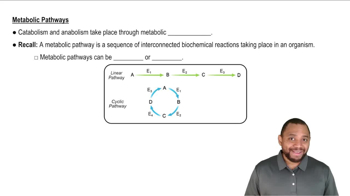
Metabolic pathways are series of interconnected biochemical reactions that occur within a cell, leading to the conversion of substrates into products. In the case of ethylene glycol, the metabolic pathway involves its conversion to oxoethanoic acid and subsequently to oxalic acid, highlighting the importance of enzymes in regulating these processes and their implications for toxicity.
Recommended video:
Guided course
0:52
Metabolic Pathways Concept 2
Related Practice
Textbook Question

Methanol and ethanol are oxidized by alcohol dehydrogenase. In methanol poisoning, ethanol is given intravenously to prevent the formation of formaldehyde that has toxic effects.

b. Would ethanol compete for the active site or bind to a different site?

867
views
Textbook Question

In humans, the antibiotic amoxicillin (a type of penicillin) is used to treat certain bacterial infections.

a. Does the antibiotic inhibit enzymes in humans?

741
views
Textbook Question

In humans, the antibiotic amoxicillin (a type of penicillin) is used to treat certain bacterial infections.

c. Is amoxicillin a reversible or irreversible inhibitor?

813
views
Textbook Question

Ethylene glycol (HO—CH2—CH2—OH) is a major component of antifreeze. If ingested, it is first converted to HOOC—CHO (oxoethanoic acid) and then to HOOC—COOH (oxalic acid), which is toxic.

<IMAGE>

b. The treatment for the ingestion of ethylene glycol is an intravenous solution of ethanol. How might this help prevent toxic levels of oxalic acid in the body?

730
views
Textbook Question

Adults who are lactose intolerant cannot break down the disaccharide in milk products. To help digest dairy food, a product known as Lactaid can be added to milk and the milk then refrigerated for 24 hours.

<IMAGE>

a. What enzyme is present in Lactaid, and what is the major class of this enzyme?

853
views
Textbook Question

Adults who are lactose intolerant cannot break down the disaccharide in milk products. To help digest dairy food, a product known as Lactaid can be added to milk and the milk then refrigerated for 24 hours.

<IMAGE>

b. What might happen to the enzyme if the Lactaid were stored at 55 °C?

975
views