Pearson+ LogoPearson+ Logo
Ch.18 Metabolic Pathways and ATP Production
Timberlake - Chemistry: An Introduction to General, Organic, and Biological Chemistry 13th Edition
Timberlake13th EditionChemistry: An Introduction to General, Organic, and Biological ChemistryISBN: 9780134421353Not the one you use?Change textbook
Chapter 18, Problem 63

What are some conditions that characterize ketosis?

Verified step by step guidance
1
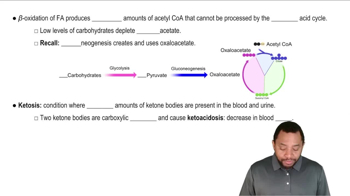
Ketosis is a metabolic state where the body uses ketone bodies as its primary energy source instead of glucose. This typically occurs when carbohydrate intake is very low, and fat becomes the main source of energy.
One condition that characterizes ketosis is elevated levels of ketone bodies in the blood, such as beta-hydroxybutyrate, acetoacetate, and acetone. These are produced during the breakdown of fatty acids in the liver.
Another condition is a decrease in blood glucose levels, as the body shifts away from using glucose for energy and relies on fat metabolism instead.
Ketosis is often accompanied by changes in breath odor, commonly described as fruity or acetone-like, due to the exhalation of acetone, a byproduct of ketone metabolism.
Ketosis can also lead to changes in urine composition, where ketone bodies are excreted and can be detected using urine test strips, indicating the presence of ketones in the body.

Verified video answer for a similar problem:

This video solution was recommended by our tutors as helpful for the problem above.
Video duration:
3m
Was this helpful?

Key Concepts

Here are the essential concepts you must grasp in order to answer the question correctly.

Ketosis

Ketosis is a metabolic state in which the body, due to a lack of carbohydrates, begins to break down fat for energy, producing ketones as a byproduct. This process typically occurs when carbohydrate intake is significantly reduced, prompting the liver to convert fatty acids into ketones, which can be used as an alternative energy source by various tissues, including the brain.
Recommended video:
Guided course
1:52
Ketone Bodies Concept 3

Low Carbohydrate Diet

A low carbohydrate diet is characterized by a significant reduction in carbohydrate intake, often to less than 50 grams per day. This dietary approach encourages the body to enter ketosis by limiting glucose availability, which forces it to utilize fat stores for energy. Common examples include ketogenic diets, which emphasize high fat and moderate protein consumption.
Recommended video:
Guided course
1:29
Classification of Carbohydrates Example 1

Symptoms of Ketosis

The onset of ketosis can be accompanied by various symptoms, including increased thirst, dry mouth, frequent urination, and a distinct fruity odor on the breath due to acetone, a type of ketone. Other symptoms may include fatigue, headache, and changes in appetite. These signs indicate the body’s transition to using ketones for energy instead of glucose.
Recommended video:
Guided course
1:52
Ketone Bodies Concept 3