Pearson+ LogoPearson+ Logo
Ch.18 Metabolic Pathways and ATP Production
Timberlake - Chemistry: An Introduction to General, Organic, and Biological Chemistry 13th Edition
Timberlake13th EditionChemistry: An Introduction to General, Organic, and Biological ChemistryISBN: 9780134421353Not the one you use?Change textbook
Chapter 18, Problem 69c

What metabolic substrate(s) are produced from the carbon atoms of each of the following amino acids? 
c. tyrosine

Verified step by step guidance
1
Understand the context: Tyrosine is an amino acid that can be metabolized in the body. Its carbon atoms are converted into specific metabolic substrates during catabolism. This process is part of amino acid metabolism, which links to pathways like glycolysis, the citric acid cycle, and gluconeogenesis.
Identify the metabolic pathway: Tyrosine is primarily broken down through a series of enzymatic reactions. It is converted into fumarate and acetoacetate, which are intermediates in the citric acid cycle and ketogenesis, respectively.
Break down tyrosine: Tyrosine undergoes hydroxylation and subsequent reactions to form homogentisate. Homogentisate is then oxidized to form maleylacetoacetate, which is further processed into fumarylacetoacetate.
Determine the final products: Fumarylacetoacetate is cleaved into fumarate and acetoacetate. Fumarate enters the citric acid cycle, while acetoacetate can be used in ketogenesis or converted into acetyl-CoA for energy production.
Summarize the substrates: The carbon atoms of tyrosine are ultimately converted into fumarate (a citric acid cycle intermediate) and acetoacetate (a ketone body or precursor for acetyl-CoA). These products are key components in energy metabolism.

Verified video answer for a similar problem:

This video solution was recommended by our tutors as helpful for the problem above.
Video duration:
5m
Was this helpful?

Key Concepts

Here are the essential concepts you must grasp in order to answer the question correctly.

Amino Acid Metabolism

Amino acid metabolism refers to the biochemical processes that involve the breakdown and utilization of amino acids in the body. This includes transamination, deamination, and the conversion of amino acids into various metabolic intermediates. Understanding these processes is crucial for determining how specific amino acids, like tyrosine, contribute to energy production and the synthesis of other biomolecules.
Recommended video:
Guided course
3:03
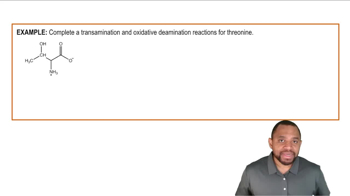
Amino Acid Catabolism: Amino Group Example 2

Tyrosine Catabolism

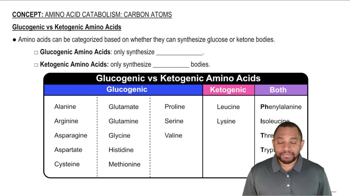
Tyrosine catabolism is the metabolic pathway through which the amino acid tyrosine is broken down into smaller molecules. This process involves several enzymatic reactions that convert tyrosine into fumarate and acetoacetate, which can then enter the citric acid cycle for energy production. Recognizing the end products of tyrosine catabolism is essential for understanding its role as a metabolic substrate.
Recommended video:
Guided course
2:41
Amino Acid Catabolism: Carbon Atoms Concept 1

Metabolic Substrates

Metabolic substrates are the molecules that serve as the starting materials for metabolic pathways, providing the necessary components for energy production and biosynthesis. In the context of amino acids, the carbon skeletons of these substrates can be converted into glucose, fatty acids, or other intermediates. Identifying the specific metabolic substrates derived from tyrosine is key to understanding its contribution to overall metabolism.
Recommended video:
Guided course
2:32
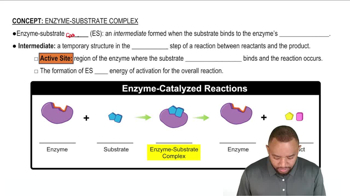
Enzyme-Substrate Complex Concept 1