
Textbook Question
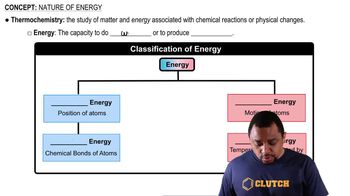
Indicate whether each of the following statements describes potential or kinetic energy:
b. kicking a ball
2015
views

 Verified step by step guidance
 01:26
01:26
 01:19 01:26
Indicate whether each of the following statements describes potential or kinetic energy:
b. kicking a ball
Discuss the changes in the potential and kinetic energy of a roller-coaster ride as the roller-coaster car climbs to the top and goes down the other side.
During extreme hypothermia, a child's temperature dropped to 20.6 °C. What was his temperature in degrees Fahrenheit?
Using the energy values for foods (see TABLE 3.7), determine each of the following (round off the answer for each food type to the tens place):
a. the total kilojoules in two tablespoons of crunchy peanut butter that contains 6 g of carbohydrate, 16 g of fat, and 7 g of protein
For dinner, Charles had one cup of clam chowder, which contains 16 g of carbohydrate, 12 g of fat, and 9 g of protein. How much energy, in kilocalories and kilojoules, is in the clam chowder? (Round off the answer for each food type to the tens place.)
Using the energy values for foods (see TABLE 3.7), determine each of the following (round off the answer for each food type to the tens place):
d. the grams of fat in one avocado that has 405 kcal, 13 g of carbohydrate, and 5 g of protein