Students blog

Explore the latest trends, tips, and experiences in college life in this blog written by fellow students.

Explore posts in other areas.

PreK-12Higher EducationProfessional

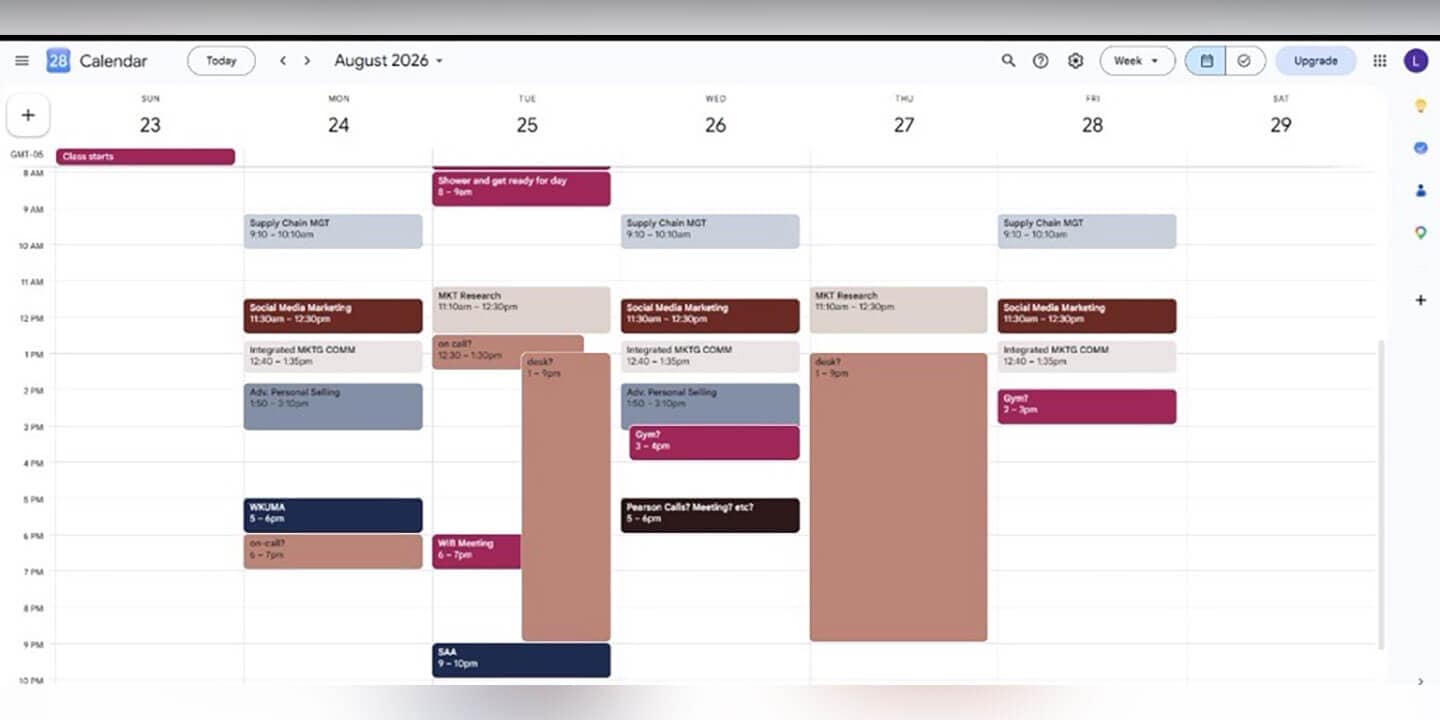
  • Image shows a screenshot of a week-long college class schedule with each class listed in a different colored time block.

    How to Beat the Senior Year Scaries

    Lyndsi Marcum

    When you step into college as a first-year student, everything is new. Over your four years, you have time to gain lived experiences and grow into a semi-adult. When you step into your senior year, you are a seasoned college student.

    However, I was surprised to find that, for me, thinking about senior year was more terrifying than my first year.

    As a senior, you’re taking your last undergraduate classes and interviewing for full-time positions. You're moving away from friendships you developed, and reality starts to set in. I get it; it's scary and it can make your chest feel tighter.

    Surviving your senior year starts with strategy and planning. How you plan your senior year truly affects how you feel when you walk across that stage. My plan involved three key steps: learning to breathe, creating a realistic timeline and budget, and finally, making time to enjoy the experience.

    Just Breathe

    When I got settled at the end of my first week of classes, I realized I was extremely overwhelmed. Rightfully so; I work three jobs and am involved in more than five organizations on campus.

    I had to take a step back and relax. I did that with focused breathing to calm my nervous system.

    One breathing technique is to inhale for four seconds and then exhale for eight seconds. I did that until my heart slowed. Breathing techniques are effective, but so is my planner.

    Plan Your Time

    My planner is my lifeline. It helps me through the days that start at 7 a.m. and don’t end until 10 p.m. By breathing and planning, I made senior year less stressful.

    In my planner, I meticulously color-code my schedule: classes, my three jobs, my organizations, remote meetings, and even the gym. While this level of detail might seem extreme, it’s what works for me.

    On the flip side, I knew I needed to be realistic, as there are only twenty-four hours in a day. By being realistic, I build break times into my day to allow for unexpected events. When you know what you’re doing throughout the day, it lessens the stress.

    Plan Your Budget

    Now, let’s talk budgeting. As a first-generation college student, I find it hard to maintain financial stability.

    My biggest tip is to hold off on buying something you want until after the urge passes; don’t make impulse purchases. Second, track what you spend and how much you save.

    If withdrawing cash helps you save, do that. If cutting up your credit card saves you from future debt, consider it a necessary step. The key is to do what works for you.

    Don't Forget to Enjoy It

    Lastly, it’s your senior year. You are so close to walking across that stage, so enjoy it. You deserve to have fun!

    Remember, it’s all about balance. Spend time with your friends, try new foods, and speak to people who have been in your classes for the last three years.

    For some of you, this will be your very last time in college, so embrace the chaos and enjoy your senior year to the fullest!

    Do you have a compelling story or student success tips you’d like to see published on the Pearson Students blog?  If you are a college student and interested in writing for us – click here to pitch your idea and get started! 

     

  • An open space area surrounded by academic buildings on a college campus. The area is lined with trees blooming with white flowers.

    Five Tips for Balancing Life in College

    Lyndsi Marcum

    The longer you are in college, the more likely you are to become connected on campus. However, balancing these connections among school, work, health, relationships, and life demands can often feel overwhelming. After experiencing this struggle firsthand, I’ve picked up five main tips along the way: set early deadlines, create a study routine, practice self-care, take things one day at a time, and remember to have fun!

    Stay Ahead by Setting Early Deadlines

    To avoid feeling overwhelmed, set deadlines that are earlier than the ones your professor assigns. It can be stressful to realize too late that you have five big assignments due on the same day.

    My go-to strategy is to start assignments early and begin with the hardest ones first. Completing an essay a week early reduces stress and leaves time for peer review before submission, which could lead to a higher grade.

    Using this approach has helped me prioritize studying for exams instead of scrambling to finish assignments I’ve procrastinated on.

    Improve Recall by Scheduling Study Time

    Allocating specific times to study for quizzes or re-read chapters has been crucial for my success in college. While my study schedule varies from week to week, I strive to study between thirty minutes and two hours each day.

    Actively recalling the material you’re learning is a highly effective way to retain this new knowledge.

    Reward Yourself with Rest

    Incorporate self-care into your routine. Set aside time for relaxing activities like stretching, applying a face mask, or playing video games.

    To encourage a healthy balance with these activities, set a limit for them. For example, limit yourself to one mission in a video game or set a twenty-minute timer before switching to a more productive task.

    There is no single “right” way to practice self-care. Do what works for you. If self-care means lying in bed for ten or twenty minutes, then do just that!

    Take It Day by Day and Have Fun

    Finally, take it one day at a time and remember to have fun! College will throw many curveballs your way: family emergencies, financial struggles, and more. But you’ll also want to make room for those core memories that will never leave your brain.

    Be kind to yourself. College is a learning experience, and every year brings something new. Even if you’re a planner (like me), taking things day by day can help you achieve a consistent balance in your schedule.

    Benefit from Balance

    Ultimately, finding balance comes from a mix of thoughtful planning and self-compassion. Build a system to navigate the chaos of college by setting early deadlines, creating a study routine, practicing self-care, taking it day by day, and enjoying yourself.

    The goal isn’t to be perfect but to create a college experience that feels both productive and fun. Discovering a balance that works for you is one of the most valuable lessons you'll learn in college!

    Do you have a compelling story or student success tips you’d like to see published on the Pearson Students blog?  If you are a college student and interested in writing for us – click here to pitch your idea and get started!