
Students blog

Explore the latest trends, tips, and experiences in college life in this blog written by fellow students.

Explore posts in other areas.

PreK-12Higher EducationProfessional

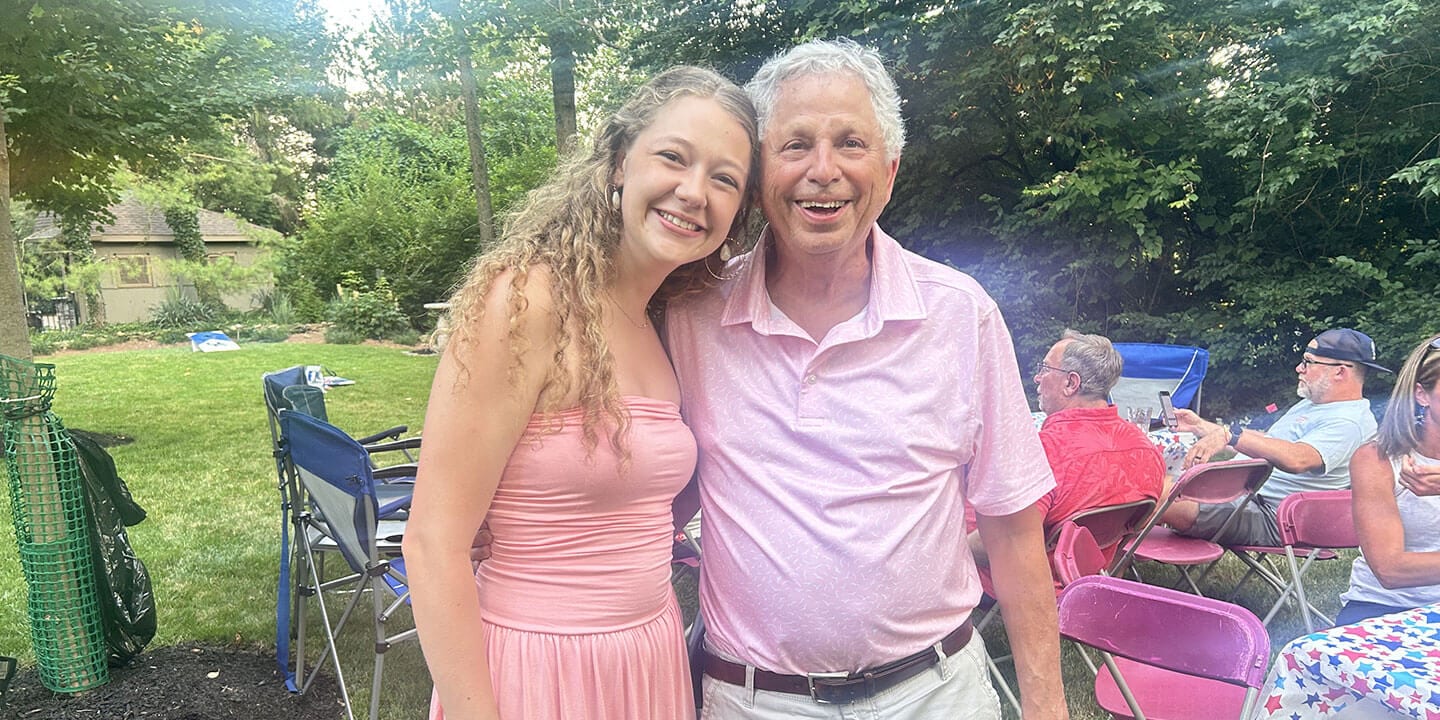
  • The blog author and her grandfather are standing outside at a picnic.

    From the Capitol to the Kitchen Table: A Veterans Day Reflection on My Grandfather's Service

    Riley Maddox

    The Personal in the Political

    As a political science student, I’ve spent a lot of time thinking about the foundations of our government and the principles that make America what it is today. It’s easy to get caught up in theoretical discussions about democracy, freedom, and citizenship—abstract ideas we study in textbooks and debate in classrooms.

    However, my understanding has evolved as I’ve learned more about our history and political system. I’ve come to realize that these concepts aren’t just ideas on a page; they’re the lived experiences of people who sacrificed so much for the freedoms we now enjoy.

    During my time in Washington, D.C., I couldn’t help but think of my grandfather’s service and what it has meant for my family and our country. I wrote the following letter to him during one of these reflective sessions. It was a moment where I found my work, studies, and family history combining into a deeper understanding.

    Dear Grandpa: A Letter from the Capitol

    As I sit here in the Library of Congress, looking out at the United States Capitol, I’m reminded of the symbolism that this place holds. Perched atop the Capitol dome is a 20-foot, 15,000-pound statue—the Statue of Freedom. This statue represents the triumph of freedom, both in times of peace and war. It’s a powerful symbol of our nation’s values, standing tall above Washington, D.C., and visible from many parts of the city.

    During my time working here, I’ve learned about the statue’s significance. Tour guides often point out that it faces east, symbolizing the welcoming of new opportunities and the protection of the freedoms we hold dear. But, while the statue is a beautiful reminder of our nation’s ideals, it’s not the statue itself that upholds these values. It’s the people who fought for those ideals—people like you, Grandpa.

    When I look at that statue, I’m reminded of you and your service. It makes me think of the sacrifices you made and how you fought not just for a statue, but for a way of life that we all cherish. The Statue of Freedom may stand tall in the Capitol, but it is your bravery, your sacrifice, and your love for this country that truly embody freedom.

    As we approach Veterans Day, I want to take a moment to reflect on everything you’ve done for this country. I think about how you left your family and your life behind to serve and protect others. You risked everything so that others wouldn’t have to. Every time I pass the Capitol, I think of you and the legacy you’ve created—not just for our family, but for our nation.

    I don’t say it enough, but I am deeply thankful for your service, Grandpa. I am proud to have you as my grandfather, and I miss you more than words can express. I can’t wait for the day we’re at your kitchen table again, debating politics and enjoying frozen Oreos together.

    Take care, Grandpa. I love you.

    – Riley Mai Maddox

    Stories Complement Our Studies

    It’s easy to get caught up in definitions, theories, and analysis while studying history and politics in college. But we all have a story to tell about our experiences in this country, and every experience is part of a shared history.

    Sharing our stories and honoring our experiences helps turn our knowledge into insight. As valuable as textbooks are, we are the source of how those theories translate into real life.

    Happy Veterans Day to all, and thank you for your service, your sacrifice, and your story.

    Do you have a compelling story or student success tips you’d like to see published on the Pearson Students blog?  If you are a college student and interested in writing for us – click here to pitch your idea and get started! 
     

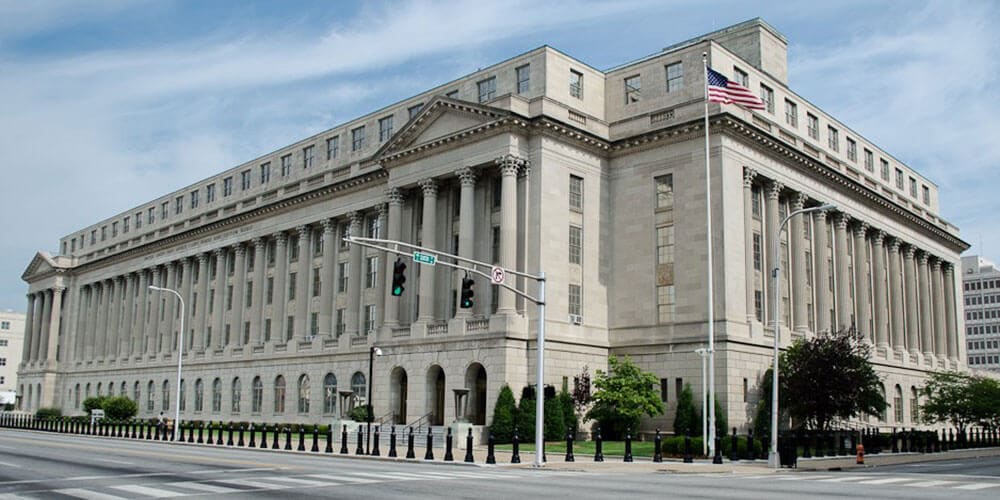
  • The courthouse in Louisville, Kentucky.

    Discovering Civic Duty: My Internship in Federal Judicial Service

    Riley Maddox

    When I applied for an internship at the U.S. District Court, I mistakenly thought it was for the U.S. Attorney's Office. Although these are very different places of employment, they share the same website, and the job listing didn't specify the department.

    Throughout the hiring process, I referenced attorneys and former interns at the U.S. Attorney's Office, hoping to show I was a credible, well-researched candidate. When I received a call offering me the position, I thanked them for the opportunity at the United States Attorney's Office. Yet, no one corrected my error. It wasn't until my first day, as I walked into the Gene Snyder Courthouse, that I realized I had applied for a completely different role.

    I would not be working with court documents or assisting attorneys on cases. I would not be interpreting legal proceedings or analyzing crime scenes. In fact, I wouldn't even be working with attorneys. Instead, I would oversee everyone's favorite civic obligation: jury duty.

    First Day in the Courthouse

    My first day was challenging. I was immediately thrown into the bullpen: checking jurors in, issuing numbered badges, and briefing them on the selection process. I quickly learned that for many Louisvillians, jury duty is their first and only interaction with the court system.

    Many citizens arrive at the courthouse feeling scared, frustrated, and confused. They're unsure why they were summoned and upset about missing work or caregiving responsibilities for what they perceive as "pointless work."

    While I can understand why jury duty doesn't top anyone's list of favorite activities, it's still a powerful civic responsibility we accept when registering to vote. Coming to jury duty prepared and willing to sacrifice an afternoon (or sometimes many) is a beautiful responsibility we all share. It is part of what makes the United States such a remarkable place to live.

    Observing the Judicial Process

    After the initial selection, attorneys for both sides narrowed the sixty-juror pool to about fourteen individuals. As these participants checked in with me each day, I watched them begin to grasp the true weight of their role.

    Over time, their respect for the court system deepened. They listened attentively, asked thoughtful questions, and took seriously the responsibility of determining the facts in a case. In federal court, the stakes were often high, and jurors knew their decisions could significantly impact someone's life.

    Through their eyes, I also began to see the court system differently. I looked forward to coming to work and witnessing individuals with no formal legal training fall in love with the law. It made me fall deeper in love with it as well.

    Embracing Civic Engagement

    As a political science student, I started to view these jurors not just as individuals fulfilling a legal obligation but as temporary stewards of justice. They were active players in a system designed to be "by the people, for the people."

    In many ways, my internship turned out to be far more valuable than I had initially imagined. Instead of working behind the scenes with attorneys, I was witnessing democracy in action. I watched ordinary citizens enter the courtroom, embrace their constitutional role, and legitimize a justice system reliant on public participation.

    My accidental internship with the U.S. District Court offered me a perspective I might never have experienced otherwise. Rather than an insider's view of legal mechanics working alongside attorneys, I had a quiet observer's view of civic participation. This experience deepened my appreciation of jury duty and my understanding of justice as a collaborative effort between the court and citizens.

    Do you have a compelling story or student success tips you’d like to see published on the Pearson Students blog?  If you are a college student and interested in writing for us – click here to pitch your idea and get started! 
     

  • A young college woman sitting on the bed in her college dorm room.

    Cold Water: How to Survive Homesickness and the First Weeks of College

    Riley Maddox

    As a kid, one of my family's favorite summer pastimes was going to the pool. We kept our pool bag stocked with dry towels and sunscreen, ready to jump in the car at a second's notice if my siblings suddenly got the urge for the cool water. I, for one, never liked the way that the cold pool water felt on my skin. I would watch my brother effortlessly dive right into the deep end, while I would do the walk of shame to the shallow stairs, barely getting the courage to dip my big toe in.

    My method for safely entering the pool was simple. I would close my eyes, count to ten, and take one step down the stairs. The cold water was always a shock to my skin, but I longed to get in and play with the rest of the kids so after thirty seconds of being inches in the water, I would repeat this process. Over and over again, inch by inch, I would take small but significant steps until I was fully submerged.

    Going to college felt a lot like getting in the cold pool. I stood on the pool deck watching as everyone I knew jumped right in, knowing I didn't have the courage to. Knowing that it would take a long time before I could join them. Wanting, wishing, and hoping I could be like that. Why was the water so cold for me, but seemingly temperate for them? Why couldn't I jump right in?

    That first weekend, I recall sitting in a dimly lit restaurant with other students from my dorm, my eyes burning, trying not to cry. I just wanted my mom. I just wanted to get home. But that didn’t exist anymore. This was my home. This was my life. It all came so fast. Everything I had ever known was replaced with unfamiliar faces and places. I drove back to campus early that night, while all the other students went for ice cream. I stared at the pictures that they had taken, their faces bright and happy, and I cried. I wanted to be happy, just like them. I wanted my face to glow with excitement, as cold ice cream dripped onto my hand. I wanted to jump in the pool. But it was just too cold.

    Week two got a little better. I was starting to understand how college worked. What time to wake up, and what time to shower so my roommates wouldn't be mad. How my classes worked, who my professors were, and how much time I had to eat lunch. I was developing a routine. But I still wasn't happy. My dad suggested that I start going to the gym. He claimed the dopamine release would be good for my body, but that proved unhelpful. My mom told me I just needed to give it time, but every night I would lay in my bed and stare at the keys to my car, thinking about how I could leave right now. I could go home and sleep in my own bed. I could shower without shoes. I could hug my mom. I would stare at those keys until I fell asleep. Wondering how long it would take me to act on my impulses.

    At the end of my second week, I was talking to Camryn, an upperclassman in my class, expressing my feelings about college. I told her that I just didn’t love it yet. The first couple of weeks had been difficult, and I didn't know how I was going to make it through the next 4 years. She gave me some very valuable advice. She said “Riley, I'm going to be honest with you. I didn’t start liking college until after Labor Day. And I didn’t start loving college until after Fall Break. It’s the second week. It’s not going to be good right now.”

    Hearing those words from someone I looked up to meant the world to me. It made me feel validated and safe. It let me know that even though it may seem like it, not everyone is jumping directly into the cold pool and having fun right away. Some people are also taking their time. Other people jump right into the cold pool and pretend like they are having fun, but in reality, are freezing and miserable.

    She was right. I went home for Labor Day weekend and returned to campus refreshed and ready to take on college. I felt a renewed sense of purpose and self-confidence. I could do this. I continued to push forward and step outside of my comfort zone. I tried talking to one new person every day. I still didn’t love college yet, but I didn’t hate it.

    Before I knew it, Fall Break had come. And I thought back to what Camryn had told me. I looked around me and saw a firmly established friend group, with whom I was attending football games and going to dinner. I saw a roommate who I loved spending time with, and classes that were challenging but manageable. I felt, finally, like I could say I loved college, and it was the whole truth.

    Within those first 12 weeks, I was challenged and tested in ways I would never have expected. I grew academically, personally, spiritually, and mentally. I now feel more confident in myself and my decisions. I have become someone that my senior self would not fully recognize. I still have the same passion in my chest, same hair on my head, and the same love of learning. But now I’m fully submerged in the pool. I have joined my friends in the deep end. I can finally feel the cool water enveloping my body. And I am happy.

    Do you have a compelling story or student success tips you’d like to see published on the Pearson Students blog?  If you are a college student and interested in writing for us – click here to pitch your idea and get started!