Students blog

Explore the latest trends, tips, and experiences in college life in this blog written by fellow students.

Explore posts in other areas.

PreK-12Higher EducationProfessional

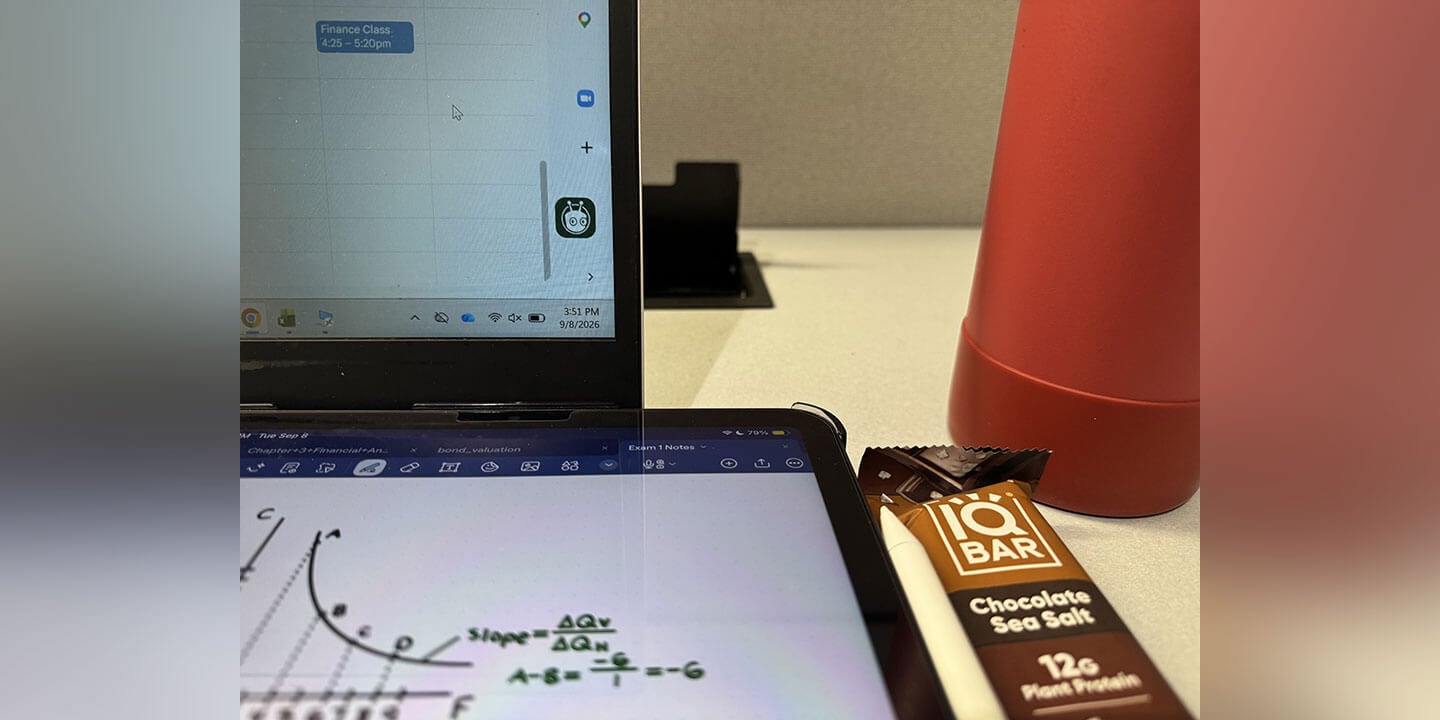
  • Image shows a desk with a computer screen with a schedule pulled up, an iPad with a graph showing, an energy bar, and a water bottle.

    How I Turn Small Gaps into Small Wins

    Sammy Chilet

    As a finance major, I have to say it: time is money. College students often focus on managing major blocks of time, but some of the most useful parts of my day are the thirty-to-sixty-minute gaps between my classes.

    I have these gaps almost every day, and because I usually have nowhere else to go, I spend them in the library or outside my next classroom. I used to fill that time by doomscrolling, talking with friends, or watching an episode of a show. Those activities were entertaining, but they did not help when my assignments began piling up.

    Start with a Plan

    I finally changed my routine after realizing how stressed I felt when several assignments were waiting for me at the end of the day. Thirty minutes may not seem like enough time to accomplish much, but it can make a difficult evening easier. Now, during the first two minutes of a break, I check my calendar and the spreadsheet where I track my assignments, identify the highest-priority task, and begin working on it.

    Chip Away at Assignments

    As a finance student, I often use this time to complete part of a homework assignment. Finance problems can be time-consuming, and starting early makes them feel more manageable.

    I may not finish the entire assignment between classes, but completing even a few problems means I have less work waiting for me later. Otherwise, I know I may regret wasting that gap when it is 10 p.m. and an assignment is due at 11:59 p.m.

    Prioritize Your Well-Being

    Not every gap needs to become an intense study session. Sometimes the most useful choice is to grab a protein bar, pretzel chips, a banana, or an apple. Eating something helps me avoid going into my next class distracted by hunger.

    Before an exam, I also avoid overwhelming myself with heavy studying. I might complete a few practice problems, especially ones similar to questions I previously answered incorrectly.

    Once I feel prepared, I stop, take a few deep breaths, and repeat words of affirmation on my way to the exam. In that situation, resetting is more helpful than trying to learn everything in the final few minutes.

    Overcome Your Biggest Obstacle

    My biggest obstacle is my phone. When friends are scrolling or talking, it is easy to follow their lead without noticing how quickly the gap disappears.

    Sometimes I break that cycle by powering off my phone completely. This might sound extreme, but I remind myself that I do not need to see who posted on Instagram or who texted me immediately. The notifications will still be there when I finish.

    Own the Moment

    An in-between hour is not about forcing yourself to work every second. It is about deciding what would help your future self most. Whether you start an assignment, check your calendar, eat a snack, prepare for an exam, or intentionally rest, one thoughtful decision can turn an empty gap into a meaningful win.

    Do you have a compelling story or student success tips you’d like to see published on the Pearson Students blog?  If you are a college student and interested in writing for us – click here to pitch your idea and get started! 
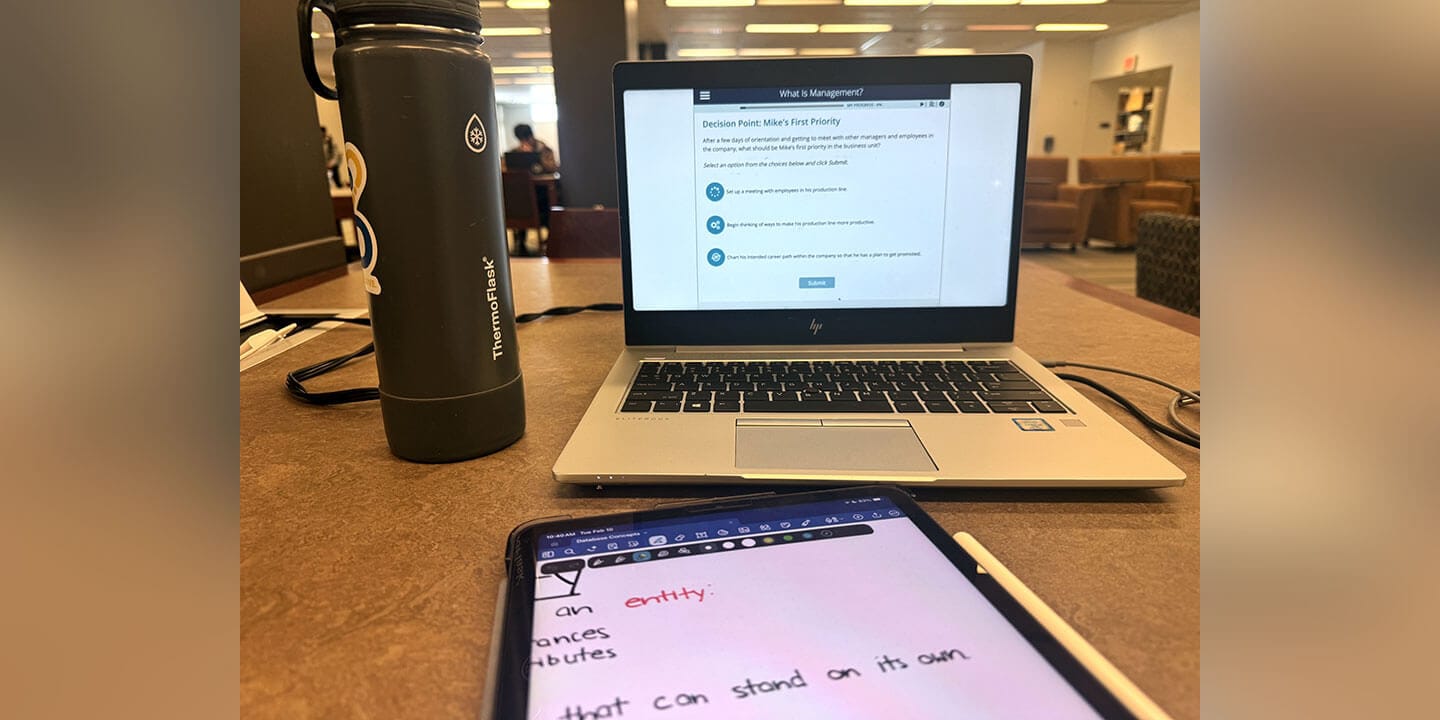
     

  • A water bottle, laptop, and tablet are all shown on a desk.

    It's Not You, It's Your Study Habits

    Sammy Chilet

    A Shift in Perspective

    Three weeks into the semester, I told myself, “Wow, I am not good at this class.” I had never stopped to think about how I learn best, so I was doing what I had always done. I read the textbook, rewrote my notes, highlighted key terms, and stayed up late.

    I convinced myself that the more time I spent studying, the better my chances of getting a decent grade. When my exam grades came back, my heart sank. My grades did not match the effort I had put in. It was frustrating and a bit discouraging.

    Marketing is not a class where memorizing definitions will get you far. You can know every term and still struggle to apply those ideas to real situations. That disconnect made me realize that the issue was not my ability but how I was approaching the class.

    Learning by Doing

    Everything changed when the course shifted from memorizing definitions to working through problems. Tools like MyLab Marketing and Mini Sims forced me to engage with the material rather than just read it. Instead of recognizing concepts, I had to use them, which made a bigger difference than I expected.

    Mini Sims were the most helpful because they felt realistic. I was placed in scenarios where I had to make real-life decisions and see the impact of those choices. At first, I second-guessed myself, but being able to test my reasoning without the pressure of receiving a grade made me feel more confident.

    It helped me understand why the thought process behind choosing a strategy is so important. I was no longer just memorizing the terms. I started thinking like someone making effective marketing decisions.

    A Lesson in Learning

    Marketing ended up being one of the classes that taught me the most about how I learn. It showed me the value of interactive tools, especially in courses where real-world situations matter. I stopped dreading assignments and started to see them as opportunities to test my understanding.

    If there is one thing I could tell other students, it is this: If a class feels impossible, take a moment to reflect before blaming yourself. Sometimes the problem is not you, even when it feels like there’s no one else to blame.

    Sometimes you just need a different approach. Once I figured that out, classes that had seemed impossible stopped feeling overwhelming and started feeling achievable.

    Do you have a compelling story or student success tips you’d like to see published on the Pearson Students blog?  If you are a college student and interested in writing for us – click here to pitch your idea and get started!