Students blog

Explore the latest trends, tips, and experiences in college life in this blog written by fellow students.

Explore posts in other areas.

PreK-12Higher EducationProfessional

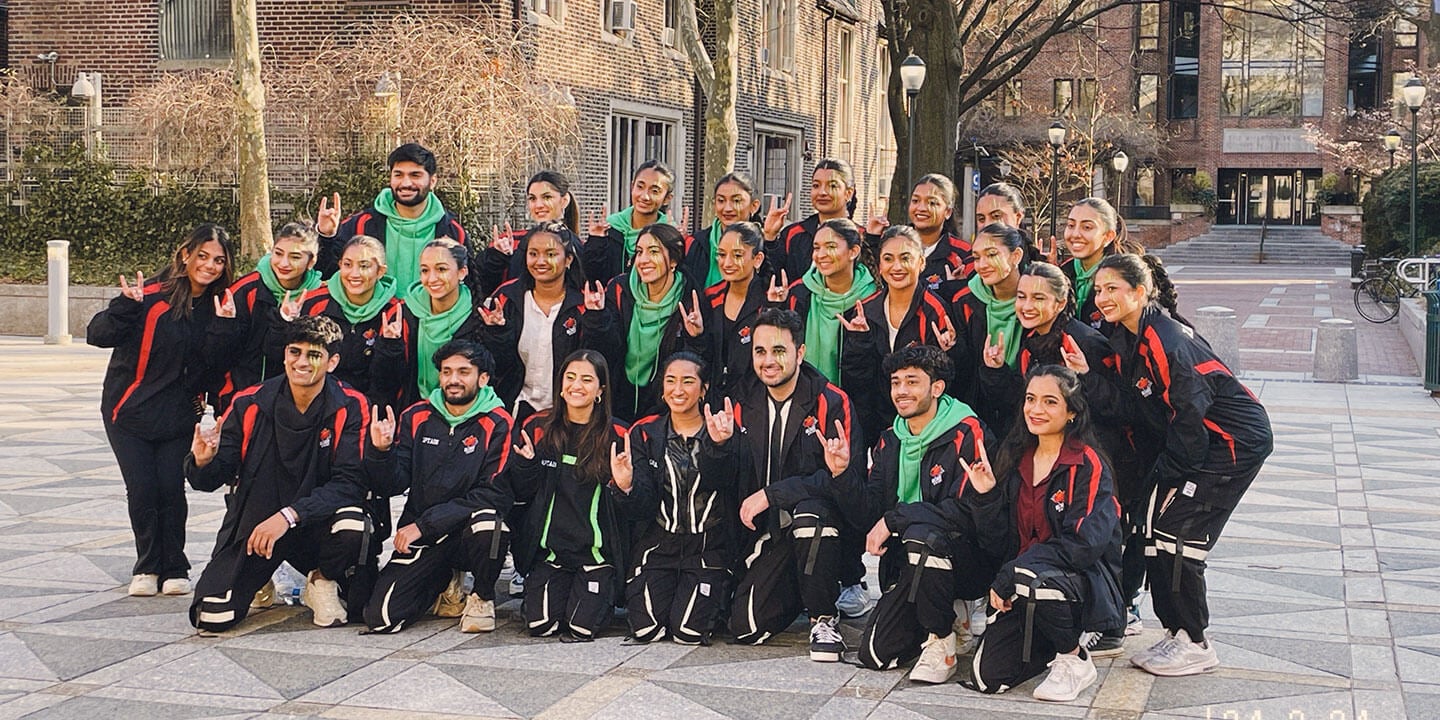
  • The blog author’s Bollywood dance team in a group photo. There are 27 members each wearing black track suits with red or green accents.

    Footsteps of Bollywood: Dancing Through College

    Ishita Rao

    Step into the vibrant world of collegiate Bollywood dance competitions, embarking on a thrilling journey of rhythm and culture. From intense rehearsals to intricate choreography, every practice is a step to the competition season. Dedication and teamwork pay off as the competition season unfolds, teams travel across states and compete across the East and West coasts. Interactions with fellow dancers from other colleges foster unity and mutual admiration for dance, and backstage buzzes with excitement as teams prepare to showcase their fusion of tradition and innovation, leaving audiences and judges to determine who will make it to the national championship: Legends. Desi Dance Network is a circuit that combines colleges across the nation, so join me as I take you through a journey of what it's like to be a dancer at these competitions. 

    Through a rigorous selection process, almost 100 teams compete for a spot in the competition season, consisting of around 20 competitions. However, only the top 8 teams get chosen per competition based on audition videos submitted. Nazaare, North Carolina State University’s premiere Bollywood competition team, gets accepted into at least four competitions every year. In Spring 2024, we participated in two competitions in Georgia, one in Pennsylvania, and one in our very own Chapel Hill.  
     
    To start a competition, teams travel to different places where all the hospitality is provided (hotels, food, transportation, etc.) by the competition board. To start the competition, Friday is designated for a “mixer”, where teams mix with other teams through different games and activities set up by the competition. This is a time for dancers to mingle and meet other dancers from like-minded backgrounds before the competition starts. More importantly, the games played determine the show's order. After the mixer is post-mixer practice, where all the last-minute practice and preparations take place (this can go till 3 am sometimes). From here comes room reveal, where teams go back to their hotel rooms that have been decorated by the liaisons who are managing your team. Here, you get merch, snacks, and beverages (for the afterparty ;) ). Following this, at the early hours of what could be 4 am, teams go to sleep. 

    Saturday morning comes fast, as teams have to hustle to the venue for their “tech time”. This consists of 20 minutes for each team on stage to do formation run-throughs with props and a chance to get a recorded full out run-through, to get a feel for the stage. The order of tech time is based on the show order, so if you are first, you may have to reach the venue as early as 8 am. Following this comes a viewing room, where teams are given 20-40 minutes (depending on the competition), to watch the full-out run-throughs on stage and see how the set looks from an audience perspective. From here, comes post-tech time practice, where teams are given their final 20 minutes to fix anything that may have looked off on stage. 

    Following this busy morning comes the fun part: getting ready and getting team pictures taken. However, when it comes to 10 girls in one hotel room and one mirror, this can get hectic at times (there are almost 30 people on our team and only 3 hotel rooms). Once hair, makeup, and costumes are done, the team heads over to the venue to take team photos and of course, perform the set!


  • A laptop computer displaying the landing page for Pearson+.

    Finding Your Voice: Becoming an Effective Student Leader

    Namira Anjum

    Growing up we all learned about powerful leaders and the fearless work they accomplished throughout history. Sitting in that classroom, that type of impact maybe seemed quite distant and unreachable. However, there is no better opportunity for you to become a leader than while you’re in college! It is the perfect environment for students to cultivate their leadership skills and start a movement or initiative, no matter how small.

    With most large universities being home to hundreds of clubs and organizations, there are multiple ways for you to lead others while expressing your identity, values, and vision. And though becoming a leader is no doubt beneficial for reasons I’ll explain, the task of doing so alongside juggling school, work and other activities is no easy one. Here’s how to be an effective student leader all while balancing it with your busy college life.

    Leadership is defined as “the ability of an individual or a group of people to influence and guide followers or members of an organization, society or team1.” This skill will be invaluable for your time at college, career, and overall future. Therefore, it is important to start learning how to become a leader as soon as you can. To do so, start by finding the organizations on your campus that you are interested in and could develop a passion for. Most colleges have activities fairs each semester that exhibit the clubs that are available for you to join, which is perfect for finding your niche.

    In my case, I joined the Bengali Student Organization (BSO) at the University of Virginia to stay connected with my culture and be part of this community. My influence started small; I was the first-year representative during my freshman year. However, now two years later, I am vice president, and my responsibilities have grown much larger! I take part in all sorts of activities to help run this club such as planning events, managing finances, and overseeing others on the executive board. Furthermore, I’ve developed several skills, including effective communication and organization, that I not only apply to BSO, but also my classes, job interviews and other situations. I also feel proud knowing my work has had an impact on others and facilitated my club’s mission to showcase Bengali culture. The main takeaway is once you find a voice you are passionate about and want to amplify, the work you do to influence your community becomes ever meaningful and exciting to do.

    I won’t lie and tell you being a student leader is an easy role. It comes with many responsibilities that require a large part of your time and effort, depending on what kind of position you have. When you have multiple other time commitments such as classes and jobs, your plate can get quite full. To avoid becoming overloaded with work, I have a few key tips. Firstly, you most likely have to plan events or activities to execute your organization’s mission or purpose. For these reasons I recommend planning the details and logistics reasonably early. For example, BSO’s signature event of the year was our charity bash, and we began planning the bash around 3 months ahead of time. With an early approach, you can avoid unnecessary stress closer to the date of your event and be prepared for any sudden changes or complications.

    Additionally, if your organization does have an executive board, set a weekly meeting time to discuss what activities you will be doing and set a schedule. In doing so, you can also maintain thorough communication with your team, making the process of running your organization more effective. And by making your schedule more structured with these tips and eliminating time inefficiencies, the task of being a student leader alongside your other activities becomes less stressful and more manageable.

    With these pieces of advice, I hope you are inspired to become a student leader, steer others in a positive way, and use your voice to express whatever it is you are passionate about, whether its chess, soccer, or food inequality. Who knows, maybe one day you’ll be the next Nelson Mandela, Malala Yousafzai, or Martin Luther King!

    Endnotes

    1 Barney, Nick, and Mary K. Pratt. “What Is Leadership?: Definition by TechTarget.” CIO Strategy, TechTarget, 22 Mar. 2023, https://www.techtarget.com/searchcio/definition/leadership.

    Do you have a compelling story or student success tips you’d like to see published on the Pearson Students blog?  If you are a college student and interested in writing for us – click here to pitch your idea and get started! 

  • A graphic featuring the letters ‘SGA’ in script font in front of a government building. Two groups of students stand on either side of the person speaking at a podium.

    Get Involved in Your Student Government

    Melanie Perez

    Have you ever wondered what it's like to be part of the student government in your prospective school? Have you ever felt discouraged, as if you’re not good enough to join such an “elite” club? Is it too stressful to think about the amount of work you have to do if you do end up getting accepted? Here are 3 tips on how to get involved and how to stay focused once you’re in.

    Apply Apply Apply

    Don’t focus on the negatives or the what ifs, the first step to your success is to apply. If you’re truly passionate about the position, even if you don't get accepted the first time, try again! I applied early into the school year, and I even made it to the interview stage, but I ended up not getting accepted the first time. Although I was slightly sad, I wasn't discouraged, and at the start of the fall semester, I applied once more and got in! Not getting accepted is not failure, it's a small set-back, and although it might hurt at first, it's always good to keep pushing.

    I'm In? Now What Do I Do?

    The first step after getting accepted is always to talk to one of the managers who run the student government. More often than not, the other student council members don't know much about the paperwork, so always stick to speaking to the higher-ups. They will guide you through the steps needed so you can officialize your position. Once all the paperwork is done, the real work begins…

    How To Manage School Work and Student Government Work.

    Depending on your college or university, the student government might have different schedules or workload. Consult with your SGA president or another member with a lot of experience. Always contact another student for this, not a manager. While SGA work is important, it's important to remember that it comes second to schoolwork. Exams, homework, quizzes, projects, whatever it may be, they all come first. Always prioritize your schoolwork but work to figure out where you have extra time in your schedule to focus on SGA work as well.

    You Got This!

    After a while, you’ll start to notice that everything intertwines, and mixing SGA and schoolwork isn’t so difficult anymore; you now have a set schedule that you follow. Your multi-tasking and time management skills have increased. Being involved in student government is a worthwhile and rewarding endeavor for any college student. Now, what’s taking so long for you to start the application?

    Do you have a compelling story or student success tips you’d like to see published on the Pearson Students blog?  If you are a college student and interested in writing for us – click here to pitch your idea and get started! 

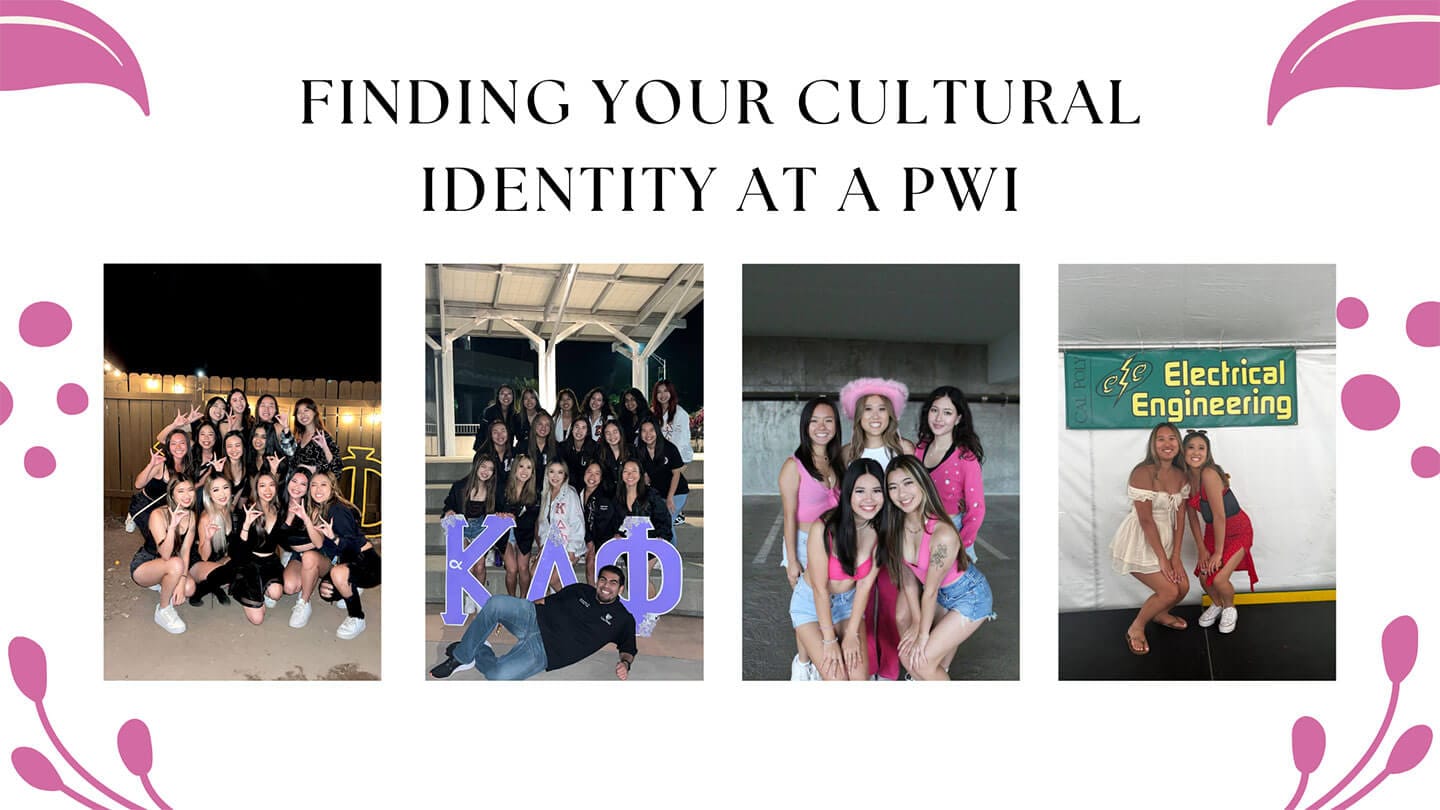
  • A collection of 4 images of events with the blog author’s sorority.

    Finding Your Cultural Identity at a PWI

    Sally Lee

    Growing up, I always struggled with my cultural identity since I lived in a predominantly white area. Most of my peers and friends did not look like me, and most knew little to nothing about the country I was born in, South Korea. Therefore, I went through a very long phase of cultural rejection. I refused to speak the language and never wanted to take any Asian food to school. I tried my best to fit in with my peers.

    Accepting My Culture

    It wasn’t until seventh grade that I became more open-minded and susceptible to learning about my Korean culture. Food was always a part of my life, but now I craved Korean food more often than I did before and would ask my mom to cook certain dishes. I incorporated more of the culture such as music, tv shows, etc. into my life. This was a turning point in my journey of embracing my Asian American culture. Time passed and my culture became a bigger part of my life, but there was still more I could learn, and I felt like there were communities out there to help.

    Progress Stalled

    My progress was stalled when I decided to attend college at a predominantly white institution (PWI). I was hoping to go to a college with a bigger Asian American community. However, this could not be further from the truth. In the days leading up to leaving for college I started to worry that I would lose all the progress I’d made so far or hit a dead end since there was no difference from the environment I grew up in my whole life.

    A Search for a Cultural Community

    As soon as I got to campus, I was obviously comfortable with the environment since I was used to being around people who don’t look like me. But I wanted to challenge myself and continue my journey of finding my cultural identity. I decided to immerse myself in the different cultural communities on campus. The community that allowed me to finally feel a strong sense of belonging was my Asian-interest sorority, alpha Kappa Delta Phi. (This group uses four Greek letters in its name and chooses not to capitalize the first letter.) Being at a PWI, this sorority provides a home away from home and is a tight-knit group of young women that are pursuing a college degree and finding themselves. One of the pillars of this sorority is Asian Awareness which has played a huge role in helping me to truly find my cultural identity and embrace my Asian American culture. I have never been able to share so many experiences with so many other Asian American women. Being able to relate to so many other people was the best feeling in the world.

    How Can I Make This Better for The Next Generation?

    In addition, I have been able to engage in many dialogues with my sisters and talk about what cultural identity means to us and how we want our kids to be more in touch with their culture. Despite my worries, I have felt the most pride in my culture and am the most in touch with my culture during my time here in college because of this community that I found.

    I urge you to share your stories, traditions, and ways that have made an impact on you and find a community that will help you embrace your culture. There is so much to learn about where you come from and what makes you, you. It’s never too late to start embracing your culture and striving to learn more about your identity.

    Do you have a compelling story or student success tips you’d like to see published on the Pearson Students blog?  If you are a college student and interested in writing for us – click here to pitch your idea and get started!