Students blog

Explore the latest trends, tips, and experiences in college life in this blog written by fellow students.

Explore posts in other areas.

PreK-12Higher EducationProfessional

  • Scene shows a hand with a blue pen writing notes in a spiral bound notebook.

    It’s Okay Not to Have Your Career Figured Out Yet

    Rachel Lanspery

    My “Perfect” Plan

    When I first started college, I thought I had everything planned out. I entered as a biology major on the pre-dental track, fully expecting that I would one day become a dentist. It felt like a solid, respectable path, one that made sense not just to me but to the people around me.

    At the time, I believed that having a clear plan meant I was ahead.

    Expectation vs. Reality

    As time went on, I started to question whether that path was actually right for me. Through my classes and experiences, I realized that while I could succeed in biology, it didn’t excite me the way I hoped it would.

    I found myself more drawn to creativity, communication, and understanding how people think. These interests didn’t quite align with the career I had originally chosen.

    Admitting the mismatch between my expectations and my experience was difficult. It felt like I was stepping away from a plan I had already invested time and energy into.

    A Change of Direction

    Eventually, I made the decision to change my major to public relations and advertising, with a minor in psychology. It wasn’t an easy switch, and it definitely didn’t feel like a “perfectly planned” move. Still, it was the first time I felt genuinely aligned with what I was studying.

    Instead of forcing myself into a path that didn’t fit, I gave myself the space to explore something that did.

    The Freedom of Not Knowing

    That experience taught me an important lesson: not having everything figured out isn’t a setback; it’s part of the process.

    There’s a lot of pressure in college to have your future mapped out early. But the reality is that most people are still figuring things out as they go.

    Interests change. Priorities shift. And sometimes, the path you thought was right for you turns out not to be. That doesn’t mean you’ve failed; it means you’ve learned something valuable about yourself.

    Career Paths are Rarely Linear

    Changing direction can feel intimidating, especially when it means starting over in some ways. But it also opens the door to opportunities you might not have discovered otherwise. If I had stayed on the pre-dental track just because it was my original plan, I might never have explored my interest in advertising or realized how much I enjoy it.

    It’s also important to remember that career paths are rarely linear. Many people end up in fields completely different from what they originally studied. What matters more than sticking to one plan is being willing to adapt, learn, and grow along the way.

    Your Journey, Your Pace

    Looking back, I’m grateful that I didn’t have everything figured out from the start. Not knowing forced me to reflect, take risks, and ultimately choose a path that felt right for me, not just one that looked good on paper.

    If you’re feeling uncertain about your future, you’re not alone. It’s okay to change your mind. It’s okay to take a different path. And it’s definitely okay not to have everything figured out yet.

    Do you have a compelling story or student success tips you’d like to see published on the Pearson Students blog?  If you are a college student and interested in writing for us – click here to pitch your idea and get started! 

     

  • An active archaeological dig site divided into sections by stakes and string with someone kneeling in front of a trowel.

    How an Archaeological Field School Unearthed More Than Artifacts

    Lily Butler

    When I signed up for a summer archaeological field school, I was just fulfilling a requirement and earning extra credits. Of course, the experience sounded exciting, but I didn’t expect it to reshape my entire college journey. For two weeks, I joined a student team at an archaeological site in my state, and we spent our days digging, documenting, and uncovering fragments of local history.

    The Real Meaning of “Hands‑On Learning”

    Unlike a sterile lecture hall, the field school meant camping out, getting our hands dirty, and crouching in the soil all day. It was the first time I could apply what I’d been learning instead of just studying it. We learned to map units, excavate properly, screen the soil, and assess artifacts, all while fighting off mosquitoes and camping in the rain and sweltering heat.

    Working on this site also gave me a tangible connection to local history. We unearthed a variety of artifacts, including a large number of ceramic sherds, nails, a buckle, a sewing needle, and even a curry comb (used for grooming horses). Seeing how classroom lessons translated into a real-world project made abstract ideas hands-on and concrete, and I realized that I was practicing a potential job skill.

    Growth Without a Grade

    Personal growth was just as significant as the historical insights and technical skills we gained. Trying to learn while enduring the heat, bugs, and impossible-to-wash-off dirt certainly builds character. Living and working so closely with my classmates 24/7 also built lasting friendships.

    We dug side by side for eight hours a day, prepared communal meals, and chatted around the campfire in our free time. By the end of the two weeks, I knew them and myself better than I had ever imagined.

    Adventure Doesn’t Require a Passport

    That summer course became a highlight of my college experience. It connected academics, career exploration, personal growth, and a deeper appreciation for home. Field school also taught me that you don’t have to study abroad or travel very far to have an adventure; sometimes the most eye-opening experiences happen close to home.

    The Real Takeaway: Applied Knowledge

    My field school experience is a perfect example of how learning can be hands-on, collaborative, and personal. Stepping outside your comfort zone to find challenging opportunities can help you grow in unexpected ways. Education doesn’t stop at the classroom door.

    But why should this matter to a business or a chemistry major? While grades and credits are important, college is about gaining applicable experience. The ability to put theory into practice is the most valuable skill you’ll gain in college, regardless of your major.

    Do you have a compelling story or student success tips you’d like to see published on the Pearson Students blog?  If you are a college student and interested in writing for us – click here to pitch your idea and get started! 
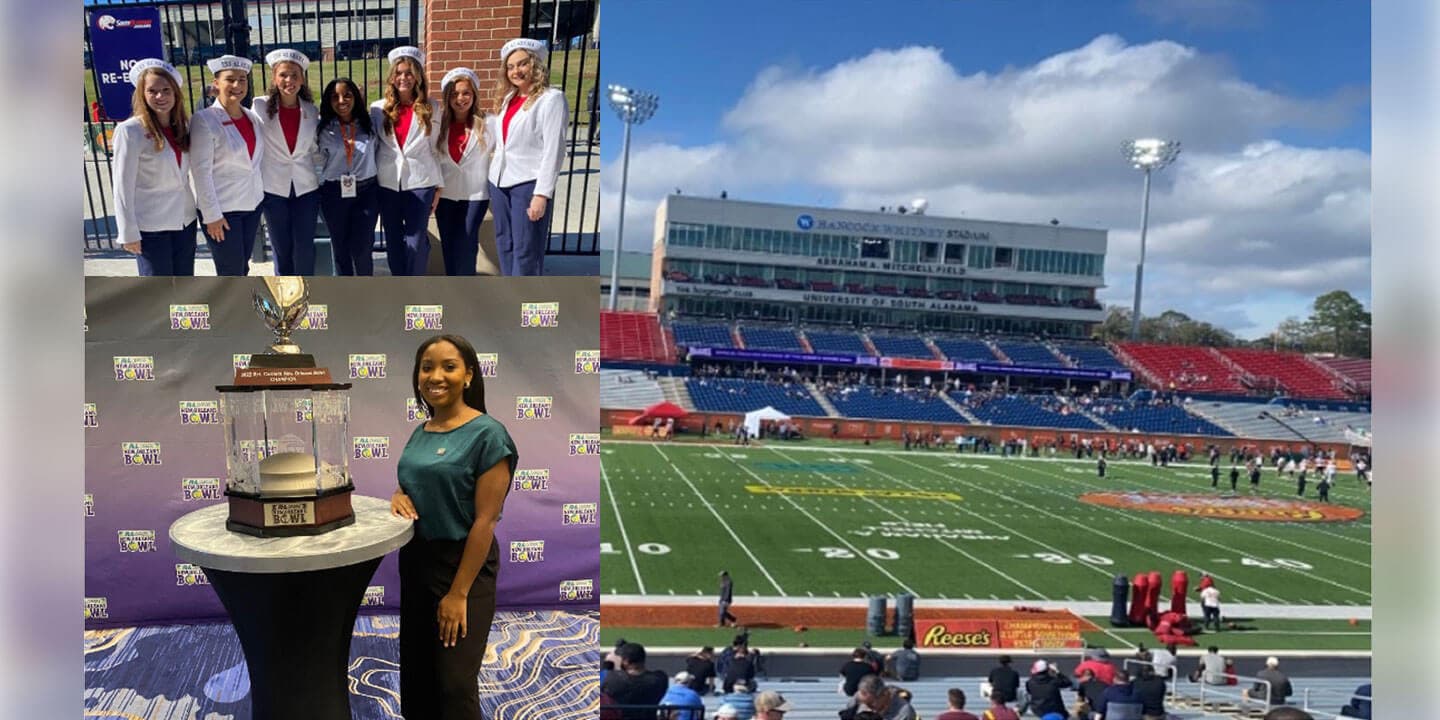
     

  • A very large crowd of racing teams is gathered at a racetrack surrounding multiple race cars.

    Your Fast Track to an Engineering Career: FSAE EV

    Jason Martinez

    What is the one thing all employers want from students, but students struggle to obtain? Experience.

    When applying to entry-level internships or jobs, it is common to see employers asking for one to two years of related experience. When seeing this, most students are confused; they think, “How am I supposed to gain experience if entry-level positions require experience?”

    For engineering students, there is a solution: your university’s Formula SAE Electric (FSAE EV) club.

    What Makes a College Club Great?

    With all of the assignments and schedules competing for your time in college, it’s important to determine what will make a club membership worthwhile for you. For engineering students, this means opportunities to apply course concepts to physical designs and develop leadership skills by managing real budgets and deadlines. A great club also allows students to collaborate with peers from other disciplines, like business and marketing, and validate design decisions through testing and professional feedback.

    If a club can meet these requirements, students will gain the necessary skills and experience to contribute meaningful work in their first technical job. Luckily for engineering students, FSAE EV clubs meet all these requirements.

    Real Industry Experience

    An FSAE EV club feels more like a fast-paced startup than a school club. The competition involves designing, manufacturing, and presenting a product every year: an open-wheel electric race car that can reach speeds close to 100 miles per hour. This means members and leads work at all hours to achieve the club’s goals.

    At SDSU, our goal is to compete in every dynamic event at the competition, a first for our club. This requires late nights, early mornings, and weekend test days from the start of summer until the end of the school year. Of course, this level of commitment is not for everyone.

    The great thing is that these clubs are what you make of them. If you only want to show up for a couple of hours each week, that is all you have to do. You won’t get the same amount of experience compared to someone who shows up every day, but that is how the industry works.

    Competitions and Networking

    The annual competition is a great event for all students involved. It gives clubs the opportunity to compete against one another and let their hard work speak for itself on the racetrack. It is also one of the best networking events of the year.

    More than one hundred teams show up, with each team typically having thirty members at the competition. That means roughly three thousand like-minded, driven, and talented students are all in the same place for a week. This is where you can build your network, learn from your peers, and make meaningful connections.

    Many industry professionals also show up as judges or guests. This makes it a great place to meet engineers from top companies. You might even land an internship or job.

    Preparing for the Future

    For students looking to turn ideas into reality, there is no comparison to an FSAE EV club. It provides the knowledge, the experience, and the network to launch you into the next stage of your career.

    Do you have a compelling story or student success tips you’d like to see published on the Pearson Students blog?  If you are a college student and interested in writing for us – click here to pitch your idea and get started! 
     

  • A person wearing jeans and a red polo sitting in an orange chair working on a laptop in front of a bank of windows in a large room.

    More Than a Job: My PCA Journey

    Tristan Deveyra

    The Pearson Campus Ambassador (PCA) program has been an incredible journey. It shaped my college experience and professional development in ways I never could have imagined.

    Through this program, I gained invaluable opportunities for networking, hands-on sales experience, internships, and personal growth. These have all set the foundation for my future.

    I write this reflection with a heavy heart, as this is my final semester as a PCA. At the same time, I feel an overwhelming sense of gratitude. This program has been transformative, and I want to commemorate my journey by sharing how much it has meant to me.

    First Steps and First Impressions

    My experience began in the spring of 2023, when I first started onboarding before officially joining in the fall. From my very first All-Call, I was struck by the energy of being surrounded by college students from across the country. That sense of community immediately made me feel like I was part of something much larger than myself.

    Early on, I also met my Regional Coordinator, Ryan Celestine, who quickly became a mentor. His guidance and support during that first semester made my transition into the program smooth and encouraging.

    During that semester, I recorded and edited a day-in-the-life vlog of a PCA for the Pearson Instagram. It was a fun content-creation opportunity!

    Opportunities, Collaboration, and Mentorship

    By the end of fall 2023, I was eager to pursue new opportunities, which led me to discover Pearson’s Micro-Internships. These short-term roles provided direct exposure to managers within Pearson and helped me explore my career interests.

    In spring 2024, I earned a Data Analyst Micro-Internship with the Higher Education Data Reporting team. There, I conducted data quality audits and supported a product data migration project. This experience led to a full-time summer internship with the same team.

    During my time with Pearson, I completed five internships with Pearson through the PCA program—an achievement I never would have imagined when I first started.

    Additionally, I also had the privilege of working closely with Sales Representative Rachel Calcote during the 2024-2025 school year. Her clear communication and strong leadership made the back-to-school season one of my best experiences in the program. These opportunities not only strengthened my skills but also showed me the value of mentorship, teamwork, and perseverance.

    A Launching Pad for the Future

    Looking back, the PCA program has been far more than a student role. It has been a launching pad for my career, a network of lasting connections, and a source of personal growth.

    It is bittersweet to say goodbye. However, I carry forward the lessons, relationships, and experiences that will continue to shape my professional journey.

    I am proud to have been part of this community and am excited for the next chapter of my life. I know the PCA program has prepared me to succeed.

    Do you have a compelling story or student success tips you’d like to see published on the Pearson Students blog?  If you are a college student and interested in writing for us – click here to pitch your idea and get started! 
     

  • An overhead shot of a desk area with a computer, coffee mug, and notebook. The blog title appears in white letters.

    Building a Legacy: My First Steps in the Financial Industry

    Jasmine Ferrante

    Growing up, I watched my father build a high-end transportation company from the ground up. He didn’t have a college degree or a roadmap, just a relentless work ethic and the drive to succeed.

    As a first-generation college student, that hustle inspired me throughout business school. I knew I wanted a career where I could build something meaningful, help my community, and create a legacy of my own.

    I didn’t enter college with a network in finance, but I was determined to leave with direction, confidence, and a solid foundation. So, I got involved. I joined a sorority, became a part of the Pearson Campus Ambassador program, participated in the Pre-Law Club, and was inducted into my university’s all-Greek honors society. Each space taught me something different: how to lead, how to speak up, and how to navigate unfamiliar rooms with confidence. By the time I earned my degree in Business, I wasn’t just finishing school. I was building something real for myself and laying the groundwork for the career I envisioned.

    Getting My Foot in the Door

    Right after graduation, I became licensed in Life and Health Insurance in my home state and joined Bankers Life and Casualty. I now work with clients across Maine, Virginia, and Florida to help them plan for retirement, navigate Medicare, and protect their families through life insurance and long-term care solutions.

    At the same time, I’m pursuing my MBA and preparing for the LSAT exam, with long-term goals of becoming a financial advisor and eventually a trust and estate attorney. As a current rookie agent, I’m learning that finance isn’t just about numbers; it’s about the people. It’s about listening, earning trust, and empowering others to make informed decisions about their futures.

    If there’s one thing I hope younger women in college take away from my journey, it’s this: you don’t have to wait to start. This is especially true in an industry where women are still underrepresented. The earlier you take action, the more prepared and powerful you’ll be.

    Three Things I’d Tell My First-Year Student Self (Now That I’ve Lived It)

    1. You won’t feel ready, and that’s exactly when you should start. The people who seem confident? They just started before you. Still, that doesn’t mean you’re behind; you are building momentum.

    2. You don’t need to be the loudest to be respected. Listen carefully, speak with purpose, and know that your quiet confidence will grow into leadership over time.

    3. The room might not look like you; go in anyway. You belong, even if you’re the only woman or the youngest in the room. Take a seat, take up space, and keep showing up. That’s how change starts.

    Turning Ambition into Action

    Stepping into the financial industry as a recent graduate hasn’t always been easy, but it’s been worth it. I’ve grown through every awkward client call, every moment of self-doubt, and every challenge that pushed me to improve.

    I didn’t have a roadmap. I had ambition, a support system I built from scratch, and the belief that I could do something meaningful.

    If you’re just starting out, know this: you don’t have to be fearless to move forward. You just have to be willing. Be willing to learn, ask questions, speak up, and keep going even when it’s uncomfortable.

    This industry needs more women. It needs your voice, your perspective, and your ideas. And there’s no rule that says you can’t be the first or the one who changes everything.

    Do you have a compelling story or student success tips you’d like to see published on the Pearson Students blog?  If you are a college student and interested in writing for us – click here to pitch your idea and get started! 
     

  • An aerial view of the blog author’s campus – James Madison University.

    How I Turned My Campus Jobs into Career Confidence

    Kohle Nash

    When I first arrived at college, I was looking for a way to earn extra money. I didn’t put much thought into the jobs I was applying for—if it paid, I was interested.

    Fast forward a couple of years, and those "just for the paycheck" jobs have shaped how I carry myself and communicate. They’ve also helped me recognize my unique value in the world.

    Adapting to New Challenges

    It started with small gigs: setting up events, assisting with tech at school concerts, and working as a campus ambassador for Pearson.

    Each job came with its own challenges: waking up early, managing my time effectively, and solving problems on the fly. More than anything, these roles challenged me to adapt.

    Gaining Real-World Experience

    I didn’t realize it at the time, but those early shifts were providing me with valuable real-world experience.

    Setting up audio gear boosted my confidence in my technical skills and sparked an interest in music production. My job with Pearson helped me develop professional communication skills through my work with professors, sales and marketing teams, and students. I also learned how to manage a schedule packed with meetings and responsibilities.

    I learned that being punctual, asking thoughtful questions, and showing genuine effort go a long way, no matter what your job title is.

    Seeing the Results in Interviews

    My biggest turning point was realizing that these weren’t just “college jobs.” They were preparation for real-world opportunities.

    I started to notice how the communication skills I had developed helped me land internships. I walked into interviews with more confidence, ready to share stories about working with a team, overcoming challenges, and taking initiative.

    From Campus to Career

    If you’re in college and wondering how to get career-ready, don’t underestimate the value of your campus jobs. You don’t have to wait until graduation to start building your future.

    Every role, no matter how small, offers valuable lessons if you pay attention. And who knows? That confidence in your work ethic might be the deciding factor for a hiring manager one day.

    Do you have a compelling story or student success tips you’d like to see published on the Pearson Students blog?  If you are a college student and interested in writing for us – click here to pitch your idea and get started! 
     

  • A person wearing a backpack walks through an archway between two tall buildings.

    Finding new opportunities when internships don’t help your major

    Katie Priest

    As a double major student, it can be tricky to navigate what direction to pursue in internships. There are a variety of communication internships to pursue, from marketing to public relations journalism and everything in between. But when I added philosophy to my path, those opportunities changed. Instead of being able to apply to a variety of internships over the summer with a plethora of opportunities, there was almost nothing with a focus on philosophy. I was worried that I was going to graduate and somehow be left behind from my peers.

    But after long discussions with my professors and mentors to figure out what I should be doing with my two degrees, I discovered that there were opportunities for me that weren’t internships, one being diversity summits in fields like philosophy across the humanities and sciences. These summits were geared towards students who came from underrepresented backgrounds, and graduate programs in the humanities, and offered things that you wouldn’t normally see in an internship.

    Normally, internships offer money or credit for a specific amount of time and allow you to learn specific on-the-job skills that’ll help you in the job market, or possibly lead you to a job in that company. However, these summits pay a stipend and cover your travel to spend a week or two at a prestigious research university. Instead of working in the traditional sense, participants complete research in their field and get to meet with specific professors and researchers in the field to discover what it would be like to pursue philosophy after earning a bachelor’s degree.

    It was during these programs that I discovered a community in my major that I didn’t know existed, and I also learned what was available to me postgrad. The most valuable lesson I learned at the summit was to look beyond what everyone else is doing. I was so caught up in the fact that my friends had got internships with publishing companies and large event venues that I was worried I was getting left behind. But when I looked beyond what was the normal career path, I discovered there was so much more available to me.

    Do you have a compelling story or student success tips you’d like to see published on the Pearson Students blog?  If you are a college student and interested in writing for us – click here to pitch your idea and get started! 
     

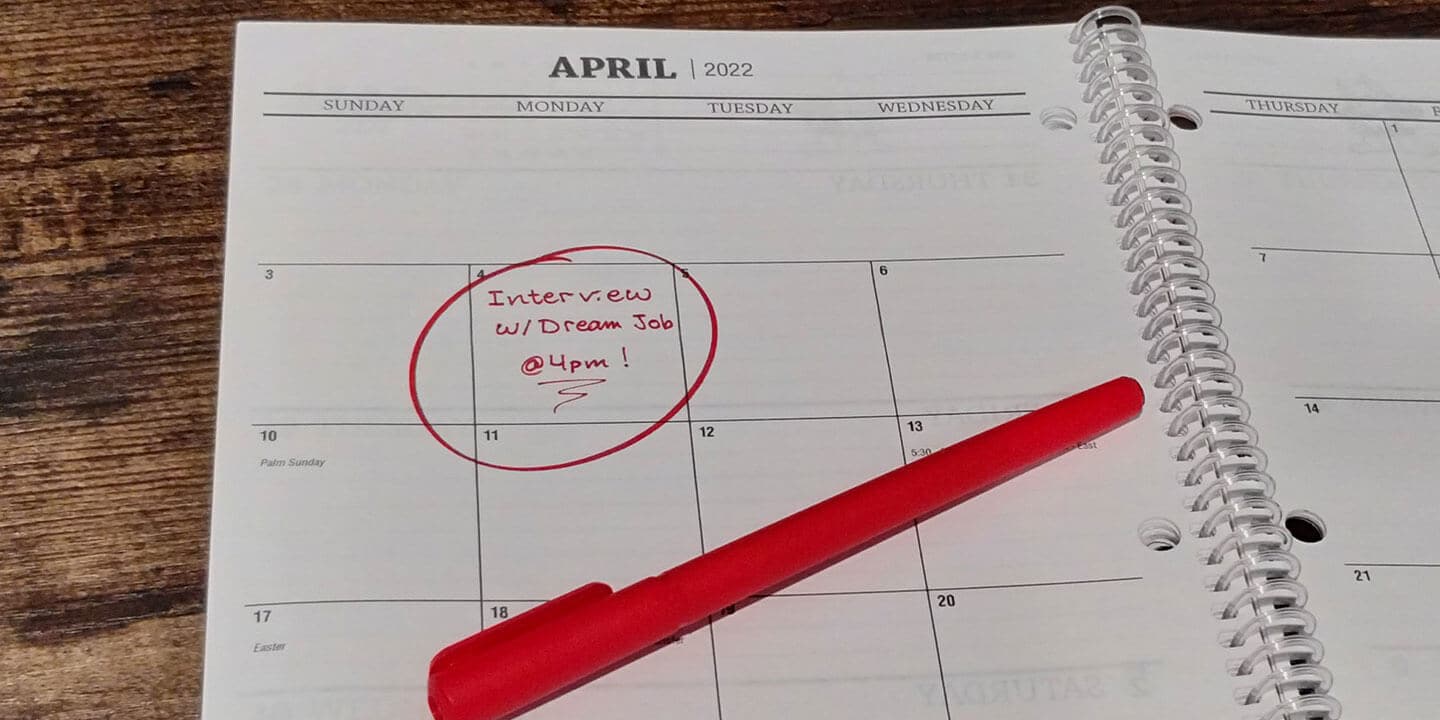
  • An open planner on a desk with the words ‘Interview with dream job @ 4 pm!’ written in red ink on one of the days.

    Interview Tips to Help You Land That Dream Job or Internship

    Faith Van Wyk

    Congratulations, you got an interview!

    Now what?

    For many, interviews are the most nerve-wracking part of the internship or job search. There are steps you can take to prepare for an interview that will help you make a great impression on your interviewer and may ultimately help you land the position!

    Before The Interview:

    1. Research the company. You’ll want to find information like the company’s mission statement, any big projects that the company recently completed and made public, and any recent mentions of the company in the news or in relevant journals. If you go into an interview with this knowledge, you will show your interviewer that you have a genuine interest in working for their company and that you have a high level of professionalism compared to other applicants.
    2. Be ready to dress for the job you want. If you can, try to find out how current employees in the role you are interviewing for dress. You should try to emulate this look during the interview. If this isn’t possible, use your best judgment when deciding between formal business attire and business casual. This can be dependent on the industry you’re looking to go into and the individual company culture. Another important thing is to be sure that you go into the interview well-groomed. In general, you should be clean and free of offensive odors.
    3. Research commonly asked interview questions. There are lots of resources out there with questions that are often asked during interviews. Certain websites may even provide you with example answers. The important thing is to familiarize yourself with the questions that may be asked during your interview and to prepare your own answers. You want to show your interviewer that you would be an asset to the company, so you should take every question that is asked of you as an opportunity to share your relevant skills and experience.

    Tips To Remember:

    • Be conversational! One of the things interviewers will look for is your ability to hold a conversation because they are trying to gauge how well you will be able to communicate with clients, coworkers, and higher-ups.
    • Remember that your interviewer once sat in the same seat you’re in now. Be personable, pleasant, and don’t be afraid to use humor if appropriate!
    • Your body language says just as much about you as your words (if not more!) Make sure you make an appropriate level of eye contact, nod or show other signs of acknowledgment when you are being spoken to and make yourself appear as calm and collected as possible.
    • Bring copies of your resume for yourself and your interviewer! This practice has become somewhat obsolete with advancements in technology, but it’s still a good idea to bring your resume to reference during the interview.

    Finally, don’t be afraid to ask questions! Interviews are meant to help you just as much as they’re meant to help your interviewer decide if you would be a good fit for a certain role. Make sure you ask questions about factors that are important to you, like work-life balance, parental leave, PTO, company culture, etc. If you are looking for a company that values employees having a work-life balance and your interviewer tells you that this is not something the company is concerned about or flat-out refuses to answer, the company may not be a good fit for you.

    Do you have a compelling story or student success tips you’d like to see published on the Pearson Students blog?  If you are a college student and interested in writing for us – click here to pitch your idea and get started! 
     

  • From passion to profession: How anatomy and physiology set the foundation for my nursing journey

    Arianna Olivier

    I wish I could say I have an extraordinary story to tell about why I wanted to be a nurse. Where I saved someone’s life on a random day, or I was impacted a certain way when at the hospital. Truthfully speaking, the reason why I concluded to become a nurse was because of anatomy and physiology. When I was in high school taking anatomy and physiology for the first time, I was captivated by the beauty of the human body, specifically the heart. I was entranced by the simultaneous complexity and simplicity of the structure of the heart. From here, I entered an endless cycle of wanting to learn more.

    I knew I had many exams ahead of me before I could finish my nursing journey. However, the first step was to prepare for was the TEAS (Test of Essential Academic Skills) exam. The TEAS is a standardized entrance exam used at my nursing program to judge how competent you are to enter the nursing program. It covers areas such as reading, math, science, anatomy and physiology, and English. Considering that my strongest suits had been reading and math, I primarily focused on studying for the science portion of the exam. This accounted for my many trips to the school library alongside my anatomy and physiology textbook. Each day I would set aside 3-4 hours of studying where I really focused on the foundation of the various systems in the body. Practice questions were my lifeline. As humbled as I would be when I got an answer wrong, it made me realize that I needed to look over the material and figure out what I was not understanding. With the assistance of the Mastering A&P questions, I was able to have a trusted guide to develop my weaker areas.

    Soon enough I received my score from the TEAS and got into the nursing program. Now came the hard part: passing nursing school. I cannot describe in words the culture shock I had when entering my human assessment and fundamentals class. It required a different level of understanding and analyzing practice questions, since the course transitioned from straight forward questions to critical thinking analysis. From the whirlwind of late-night study sessions, clinical rotations, and the weekly exams, nursing school has been nothing but a rollercoaster ride. However, I believe the reason I am able to comprehend and pass every exam is my solid foundation of anatomy and physiology. Once you understand how an organ is supposed to function, you can understand where it is going wrong. For example, veins take blood to the heart while arteries take blood away from the heart. Now, a patient comes in with pain in their legs that worsens with exercise, pain eases with rest and reports numbness and paresthesia. As a nurse assessing this patient, I can suspect maybe there is a problem of circulation either between the veins or arteries and can expect a certain level of care for this patient. Nonetheless, I would not be able to come to this conclusion if I did not know the way our bodies receive circulation.

    On top of having a good foundation of anatomy and physiology, I have found it critical to pair that with practicing NCLEX-style questions to prepare for the NCLEX-RN (National Council Licensure Examination for Registered Nurses) exam. The NCLEX-RN is a computer adaptive exam that has to be passed in order to establish licensing for an individual to work as a Registered Nurse. This dynamic combination is a powerful tool for not only passing the NCLEX exam but becoming a competent nurse. As I am passing the last hurdle of the program, I focus my energy on completing and revising practice questions. Nursing students at Miami-Dade have to take an exit exam that calculates our probability of actually passing the NCLEX. This exam covers all the principles that we have been learning from the beginning. Having questions that mimic real world scenarios requires us not only to recall information but also apply it. It is the bridge that connects our theoretical knowledge of anatomy and physiology with the practical nursing interventions required to be competent. To give an example, prioritization questions help us understand which patient should we designate care to first in critical settings. As you may know, nurses will have multiple patients at a time, but it is up to the nurse's critical judgment to decide which patient takes priority over the others. A patient going into cardiac arrest will take priority over a patient who is vomiting blood. With the recurrent practice of this style of questions I will be able to go into the real world and identify which one of my patients has the higher risk of getting hurt and who I have to assess first.

    To sum everything up, nursing school is not about just passing a test. It is the foundation of our nursing care and having reassurance in knowing that we are well prepared to provide safe care to our future patients. Combining a strong foundation in anatomy and physiology with consistent practice of NCLEX-style questions will provide the smoothest pathway to succeed in the nursing field. I know that the first few years of being a nurse will be the most difficult transition in the beginning. Learning the hospital's policies and the way to ease communications with different patients and hospital personnel will be something I learn on the job. However, I can sleep comfortably knowing that I have the knowledge to provide safe and competent care to any patient that comes into my hands.