

Join author Henry Sayre in our Looking Through the Canvas webisode series where he will discuss the politics underlying Édouard Manet’s The Battle of the “Kearsarge” and the “Alabama” painted in a matter of weeks after, on Sunday, June 19, the U.S.S. Kearsarge engaged the Confederate sloop Alabama in international waters just off Cherbourg, France in the English Channel and sank her in a battle that lasted some 70 minutes. Manet’s first painting to directly address current events, it encapsulates French attitudes toward the American Civil War. Its centrality to the painter’s own political leanings are perhaps best illustrated by the fact that eight years later, after France had been defeated by Germany and radical Paris had fallen to more conservative French forces, in what itself amounted to a Civil War, it would be Manet’s sole entry to the Salon of 1872.
Art & Humanities
Resources that help educators instruct and inspire

Revel
Revel® enables students to explore and apply concepts as they read, encouraging active participation in learning.

AI-Powered Study Tool
Our AI-powered study tool transforms mistakes into teachable moments, helping students build confidence and study smarter.

Pearson+
Pearson+ empowers students to choose how they learn best with easy-to-use eTextbooks and study tools.

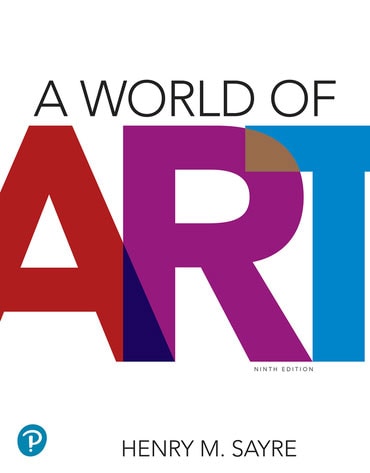
A World of Art, 9th Edition
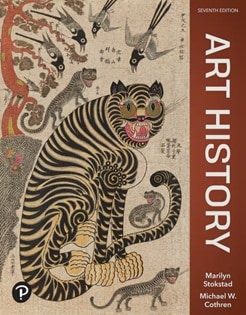
Art History, 7th Edition
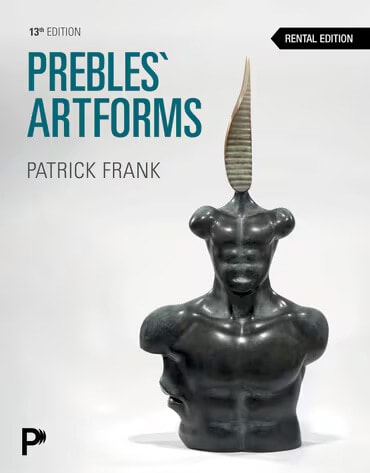
Prebles’ Artforms, 13th Edition
Join author and Professor Michael Cothren in our Looking Through the Canvas webisode series where he will discuss unique perspectives on Giotto's Kiss of Judas. The frescos wealthy banker Enrico Scrovegni commissioned from Tuscan painter Giotto di Bondone in the early years of the fourteenth century are among the most important works of the Western painting tradition. They appear in most introductory courses to demonstrate the movement toward the use of modeled, weighty figures to enact sacred narrative with a humanizing focus that moves this history of painting toward the Renaissance in Italy. For centuries after they were completed, artists journeyed to Padua to study and draw from these murals, which became an inspirational aspect of their training. During a semester in France studying studio-art, my own instructor sent me to Padua to study and draw. But instead of guiding me to the solution of problems in my own painting (her reasoning for sending me there), the days I spent in the Scrovegni chapel fueled within me a curiosity about the objectives and enigmas of visual narrative that converted me to a life in art history.
Explore early computer art from 1965-1975. See how artists used primitive computers to create diverse abstract works, pioneering AI-assisted creativity and paving the way for modern digital art.