

Campbell Essential Biology, 8th edition
- Eric J. Simon |
- Kelly A. Hogan |
Looking for the K12?See school programs
Title overview
For non-majors biology courses.
Promote and strengthen science literacy skills
Campbell Essential Biology connects biology to students’ lives and our larger society. The authors reinforce concepts by fostering critical-thinking skills that help learners become informed citizens, relate classroom concepts to everyday life, and understand how biology’s broader themes serve to unify the entire subject.
The 8th Edition revises its treatment of the process of science, with a more nuanced approach that demystifies the subject for non-scientists and more authentically reflects how science is undertaken. It links content to major themes in biology, marking these connections clearly for easy identification. Many timely content updates include cutting-edge cancer therapies (Ch. 8) and DNA profiling (Ch. 12); new features help students understand key figures, and much more.
Hallmark features of this title
- Scientific literacy skills: Process of Science essays present material in a non-linear and highly visual format, aligning with widely accepted models of how science actually works.
- Engaging visuals: A Chapter Thread weaves a compelling topic throughout each chapter, highlighted in Biology and Society essays, The Process of Science, and Evolution Connection essays.
- Innovative approach:
- Major themes in biology (Evolution, Structure/Function, Information Flow, Energy Transformations and Interconnections within Systems) help students see the interconnectedness of concepts.
- Evolution Connection essays further explore a consistent evolution theme in depth in each chapter.
New and updated features of this title
- NEW: Skills CheckPoint questions in every chapter reinforce study skills and key scientific skills such as graphing, interpreting data, designing experiments, and working with math.
- NEW: Teach Me/Show Me/Quiz Me figure walkthroughs bring key text figures to life. The “Teach Me” version of the figure provides a walkthrough that explains each step. The “Show Me” version helps the student review after they complete the video. The “Quiz Me” version prompts students to answer assessments to demonstrate understanding.
- REVISED: Connections to students’ lives include topics such as the emergence of COVID-19 (Ch. 10) and food insecurity (Ch. 22). A Why It Matters feature starts each chapter and details the relevance of the upcoming material. Updated unifying chapter threads also pique student interest, including evolution in a human-dominated world (Ch. 14) and the importance of biodiversity to human affairs (Ch. 20).
- REVISED: Major themes in biology are now expanded and highlighted for easy identification. In each chapter, 3-5 examples of major themes are called out to help students make the connections between those themes and the course content. New end-of-chapter questions promote related critical thinking.
- REVISED: An updated approach to the process of science demystifies the topic for non-scientists. It more authentically reflects how science actually proceeds, with multiple pathways, frequent restarts and more. Chapter 1 discusses this process in detail, and it is explored in The Process of Science essays in each chapter.
Key features
Features of Mastering Biology for the 8th Edition
- NEW: Infographics are available as assignable tutorial questions within Mastering Biology.
- REVISED: New Mastering Biology activities promote critical thinking relating to major themes in biology.
- These themes link to text content throughout and are now highlighted for easy identification.
- In each chapter, 3-5 examples of major themes are called out to help students make the connections between those themes and the course content.
Features of Pearson+ eTextbook for the 8th Edition
- NEW: Infographics are available as an interactive feature in the eTextbook.
- NEW: AI-powered study tool for Pearson+ eTextbook is an intuitive, 24/7 study companion that draws from vetted Pearson content to keep students engaged with the book you’ve chosen for your course. For example, students can ask the study tool for summaries, explanations of challenging concepts or practice questions to test their understanding.
Table of contents
- 1. Learning About Life
- Introduction
- BIOLOGY AND SOCIETY: A Passion for Life
- 1.1 The Scientific Study of Life
- 1.2 The Properties of Life
- 1.3 Major Themes in Biology
- EVOLUTION CONNECTION: Turtles in the Tree of Life
- Chapter 1 Review
UNIT 1: CELLS
- 2. Essential Chemistry for Biology
- Introduction
- BIOLOGY AND SOCIETY: Nuclear Medicine
- 2.1 Some Basic Chemistry
- 2.2 Water and Life
- EVOLUTION CONNECTION: Radioactivity as an Evolutionary Clock
- Chapter 2 Review
- 3. The Molecules of Life
- Introduction
- BIOLOGY AND SOCIETY: Got Lactose?
- 3.1 Organic Compounds
- 3.2 Large Biological Molecules
- EVOLUTION CONNECTION: The Evolution of Lactose Intolerance in Humans
- Chapter 3 Review
- 4. A Tour of the Cell
- Introduction
- BIOLOGY AND SOCIETY: Antibiotics: Drugs That Target Bacterial Cells
- 4.1 The Microscopic World of Cells
- 4.2 Membrane Structure
- 4.3 The Nucleus and Ribosomes: Genetic Control of the Cell
- 4.4 The Endomembrane System: Manufacturing and Distributing Cellular Products
- 4.5 Chloroplasts and Mitochondria: Providing Cellular Energy
- 4.6 The Cytoskeleton: Cell Shape and Movement
- EVOLUTION CONNECTION: The Evolution of Bacterial Resistance in Humans
- Chapter 4 Review
- 5. The Working Cell
- Introduction
- BIOLOGY AND SOCIETY: Harnessing Cellular Structures
- 5.1 Some Basic Energy Concepts
- 5.2 ATP and Cellular Work
- 5.3 Enzymes
- 5.4 Membrane Function
- EVOLUTION CONNECTION: The Origin of Membranes
- Chapter 5 Review
- 6. Cellular Respiration: Obtaining Energy from Food
- introduction
- BIOLOGY AND SOCIETY: Getting the Most Out of Your Muscles
- 6.1 Energy Flow and Chemical Cycling in the Biosphere
- 6.2 Cellular Respiration: Aerobic Harvest of Food Energy
- 6.3 Fermentation: Anaerobic Harvest of Food Energy
- EVOLUTION CONNECTION: The Importance of Oxygen
- Chapter 6 Review
- 7. Photosynthesis: Using Light to Make Food
- Introduction
- BIOLOGY AND SOCIETY: A Solar Revolution
- 7.1 The Basics of Photosynthesis
- 7.2 The Light Reactions: Converting Solar Energy to Chemical Energy
- 7.3 The Calvin Cycle: Making Sugar from Carbon Dioxide
- EVOLUTION CONNECTION: Creating a Better Biofuel Factory
- Chapter 7 Review
UNIT 2: GENETICS
- 8. Cellular Reproduction: Cells from Cells
- introduction
- BIOLOGY AND SOCIETY: Virgin Birth of a Shark
- 8.1 What Cell Reproduction Accomplishes
- 8.2 The Cell Cycle and Mitosis
- 8.3 Meiosis, the Basis of Sexual Reproduction
- EVOLUTION CONNECTION: The Advantages of Sex
- Chapter 8 Review
- 9. Patterns of Inheritance
- Introduction
- BIOLOGY AND SOCIETY: Darwin's Dogs
- 9.1 Genetics and Heredity
- 9.2 Variations on Mendel's Laws
- 9.3 The Chromosomal Basis of Inheritance
- EVOLUTION CONNECTION: Barking Up the Evolutionary Tree
- Chapter 9 Review
- 10. The Structure and Function of DNA
- Introduction
- BIOLOGY AND SOCIETY: The Emergence of COVID-19
- 10.1 DNA: Structure and Replication
- 10.2 From DNA to RNA to Protein
- 10.3 Viruses and Other Noncellular Infectious Agents
- EVOLUTION CONNECTION: Emerging Viruses
- Chapter 10 Review
- 11. How Genes Are Controlled
- Introduction
- BIOLOGY AND SOCIETY: Breast Cancer and Chemotherapy
- 11.1 How and Why Genes Are Regulated
- 11.2 Cloning Plants and Animals
- 11.3 The Genetic Basis of Cancer
- EVOLUTION CONNECTION: The Evolution of Cancer in the Body
- Chapter 11 Review
- 12. DNA Technology
- Introduction
- DNA Profiling
- BIOLOGY AND SOCIETY: Using DNA to Establish Guilt and Innocence
- 12.1 Genetic Engineering
- 12.2 DNA Profiling and Forensic Science
- 12.3 Bioinformatics
- 12.4 Safety and Ethical Issues
- EVOLUTION CONNECTION: The Y Chromosome as a Window on History
- Chapter 12 Review
UNIT 3: EVOLUTION AND DIVERSITY
- 13. How Populations Evolve
- Introduction
- Evolution in Action
- BIOLOGY AND SOCIETY: Mosquitoes and Evolution
- 13.1 The Diversity of Life
- 13.2 Charles Darwin and The Origin of Species
- 13.3 Evidence of Evolution
- 13.4 Natural Selection as the Mechanism for Evolution
- 13.5 The Evolution of Populations
- 13.6 Mechanisms of Evolution
- EVOLUTION CONNECTION: The Rising Threat of Antibiotic Resistance
- Chapter 13 Review
- 14. How Biological Diversity Evolves
- Introduction
- BIOLOGY AND SOCIETY: Humanity's Footprint
- 14.1 The Origin of Species
- 14.2 Earth History and Macroevolution
- 14.3 Mechanisms of Macroevolution
- 14.4 Classifying the Diversity of Life
- EVOLUTION CONNECTION: Evolution in the Anthropocene
- Chapter 14 Review
- 15. The Evolution of Microbial Life
- Introduction
- BIOLOGY AND SOCIETY: Our Invisible Inhabitants
- 15.1 Major Episodes in the History of Life
- 15.2 The Origin of Life
- 15.3 Prokaryotes
- 15.4 Protists
- EVOLUTION CONNECTION: The Sweet Life of Streptococcus mutans
- Chapter 15 Review
- 16. The Evolution of Plants and Fungi
- Introduction
- BIOLOGY AND SOCIETY: The Diamond of the Kitchen
- 16.1 Colonizing Land
- 16.2 Plant Diversity
- 16.3 Fungi
- EVOLUTION CONNECTION: A Pioneering Partnership
- Chapter 16 Review
- 17. The Evolution of Animals
- Introduction
- BIOLOGY AND SOCIETY: Evolving Adaptability
- 17.1 The Origins of Animal Diversity
- 17.2 Major Invertebrate Phyla
- 17.3 Vertebrate Evolution and Diversity
- 17.4 The Human Ancestry
- EVOLUTION CONNECTION: Are We Still Evolving?
- Chapter 17 Review
UNIT 4: ECOLOGY
- 18. An Introduction to Ecology and the Biosphere
- Introduction
- BIOLOGY AND SOCIETY: Penguins, Polar Bears, and People in Peril
- 18.1 An Overview of Ecology
- 18.2 Living in Earth's Diverse Environments
- 18.3 Biomes
- 18.4 Climate Change
- EVOLUTION CONNECTION: Climate Change as an Agent of Natural Selection
- Chapter 18 Review
- 19. Population Ecology
- Introduction
- BIOLOGY AND SOCIETY: Invasion of the Lionfish
- 19.1 An Overview of Population Ecology
- 19.2 Population Growth Models
- 19.3 Applications of Population Ecology
- 19.4 Human Population Growth
- EVOLUTION CONNECTION: Humans as an Invasive Species
- Chapter 19 Review
- 20. Communities and Ecosystems
- Introduction
- BIOLOGY AND SOCIETY: Why Biodiversity Matters
- 20.1 Biodiversity
- 20.2 Community Ecology
- 20.3 Ecosystem Ecology
- 20.4 Conservation and Restoration Biology
- EVOLUTION CONNECTION: Saving the Hot Spots
- Chapter 20 Review
UNIT 5: ANIMAL STRUCTURE AND FUNCTION
- 21. Unifying Concepts of Animal Structure and Function
- Introduction
- BIOLOGY AND SOCIETY: An Avoidable Tragedy
- 21.1 The Structural Organization of Animals
- 21.2 Exchanges with the External Environment
- 21.3 Regulating the Internal Environment
- EVOLUTION CONNECTION: Adaptations for Thermoregulation
- Chapter 21 Revivew
- 22. Nutrition and Digestion
- Introduction
- BIOLOGY AND SOCIETY: "Diet" Is a Complex Word
- 22.1 An Overview of Animal Nutrition
- 22.2 A Tour of the Human Digestive System
- 22.3 Human Nutritional Requirements
- 22.4 Nutritional Disorders
- EVOLUTION CONNECTION: Fat and Sugar Cravings
- Chapter 22 Review
- 23. Circulation and Respiration
- BIOLOGY AND SOCIETY: Avoiding "The Wall"
- 23.1 Unifying Concepts of Animal Circulation
- 23.2 The Human Cardiovascular System
- 23.3 Unifying Concepts of Animal Respiration
- 23.4 The Human Respiratory System
- EVOLUTION CONNECTION: Evolving Endurance
- Chapter 23 Review
- 24. The Body's Defenses
- Introduction
- BIOLOGY AND SOCIETY: Herd Immunity
- 24.1 An Overview of the Immune System
- 24.2 Innate Immunity
- 24.3 The Lymphatic System
- 24.4 Adaptive Immunity
- 24.5 Immune Disorders
- EVOLUTION CONNECTION: Viral Evolution versus the Flu Vaccine
- Chapter 24 Review
- 25. Hormones
- Introduction
- BIOLOGY AND SOCIETY: Baseball's Ongoing Steroid Problem
- 25.1 Hormones: An Overview
- 25.2 The Human Endocrine System
- EVOLUTION CONNECTION: Steroids and Male Aggression
- Chapter 25 Review
- 26. Reproduction and Development
- Introduction
- BIOLOGY AND SOCIETY: New Ways of Making Babies
- 26.1 Unifying Concepts of Animal Reproduction
- 26.2 Human Reproduction
- 26.3 Reproductive Health
- 26.4 Human Development
- 26.7 Reproductive Technologies
- EVOLUTION CONNECTION: The "Grandmother Hypothesis"
- Chapter 26 Review
- 27. Nervous, Sensory, and Locomotor Systems
- Introduction
- BIOLOGY AND SOCIETY: Medicinal Poisons
- 27.1 An Overview of Animal Nervous Systems
- 27.2 The Human Nervous System: A Closer Look
- 27.3 The Senses
- 27.4 Locomotor Systems
- EVOLUTION CONNECTION: A Neurotoxin Arms Race
- Chapter 27 Review
UNIT 6: PLANT STRUCTURE AND FUNCTION
- 28. The Life of a Flowering Plant
- Introduction
- BIOLOGY AND SOCIETY: The Buzz on Coffee Plants
- 28.1 The Structure and Function of a Flowering Plant
- 28.2 Plant Growth
- 28.3 The Life Cycle of a Flowering Plant
- EVOLUTION CONNECTION: The Problem of the Disappearing Bees
- Chapter 28 Review
- 29. The Working Plant
- Introduction
- BIOLOGY AND SOCIETY: Planting Hope in the Wake of Disaster
- 29.1 How Plants Acquire and Transport Nutrients
- 29.2 Plant Hormones
- 29.3 Response to Stimuli
- EVOLUTION CONNECTION: Plants, Bugs, and People
- Chapter 29 Review
APPENDICES
- A. Metric Conversion Table
- B. The Periodic Table
- C. Credits
- D. Selected Answers
Author bios
About our authors
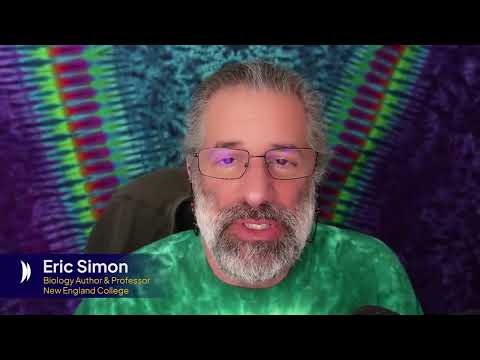
Eric J. Simon is a professor in the Department of Biology and Health Science at New England College in Henniker, New Hampshire. He teaches introductory biology and human biology to non-science majors, as well as international biology-themed travel courses, to instill a love of the natural world in his students. Dr. Simon received a B.A. in biology and computer science, an M.A. in biology from Wesleyan University, and a Ph.D. in biochemistry from Harvard University. His research focuses on innovative ways to use technology to increase active learning in the science classroom, particularly for nonscience majors. Dr. Simon is also the author of the introductory biology textbook Biology: The Core, 3rd Edition and a coauthor of Campbell Biology: Concepts & Connections, 10th Edition.
Kelly A. Hogan is a professor in the Department of Biology at Duke University, teaching introductory biology courses to science majors and serving in a leadership role around the undergraduate curriculum. She routinely teaches very large interactive classes and supports faculty in strategies to reach their teaching and learning goals. Dr. Hogan received her B.S. in biology at the College of New Jersey and her Ph.D. in pathology at the University of North Carolina, Chapel Hill. Her research interests relate to how large classes can be more inclusive through evidence-based teaching methods and technology. She provides faculty development to other instructors through peer coaching, workshops, and mentoring. Dr. Hogan is also a coauthor of Campbell Biology: Concepts & Connections, 10th Edition and coauthor of Inclusive Teaching: Strategies for Promoting Equity in the College Classroom.
Neil A. Campbell (1946-2004) combined the inquiring nature of a research scientist with the soul of a caring teacher. Over his 30 years of teaching introductory biology to both science majors and non-science majors, many thousands of students had the opportunity to learn from him and be stimulated by his enthusiasm for the study of life. He is greatly missed by his many friends in the biology community. His coauthors remain inspired by his visionary dedication to education and are committed to searching for ever-better ways to engage students in the wonders of biology.