

Now with the AI-powered study tool

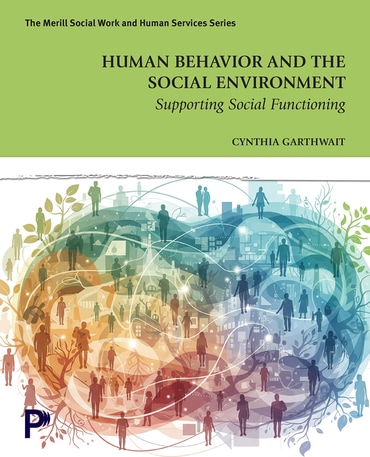
Human Behavior and the Social Environment, 1st edition

Published by Pearson (1 July 2026) © 2027

  • Cynthia Garthwait
Products list

In this eTextbook — More ways to learn

  • More flexible. Start learning right away, on any device.
  • More supportive. Get AI explanations and practice questions (select titles).
  • More interactive. Bring learning to life with audio, videos, and diagrams.
  • More memorable. Make concepts stick with highlights, search, notes, and flashcards.
  • More understandable. Translate text into 100+ languages with one tap.
 
Products list

Details

  • A print edition

Title overview

Human Behavior and the Social Environment, 1st Edition helps you develop competence in understanding human development and behavior, learning how to assess both well in order to implement effective interventions. It provides specific, clear connections to practice with individuals and families, and shows how thinking critically about understanding people is key to social work practice. The author links theory and practice in meaningful ways, helping you visualize your interactions with clients. This friendly, learner-oriented presentation is suitable for both BSW and MSW students.

Table of contents

Note: Each chapter concludes with References and Recommended Readings.

1. SOCIAL FUNCTIONING: THE DOMAIN OF SOCIAL WORK

  • Introduction
  • Social Roles in Social Functioning
  • Understanding and Promoting Social Functioning
  • Internal and External Influences on Human Development and Human Behavior
  • Generalist Social Work Practice
  • Professional Social Work Behaviors and Role
  • Essentials For Understanding Clients
  • Principles of Social Functioning
  • Improving Social Functioning

2. HUMAN DEVELOPMENT AND BEHAVIOR

  • Introduction
  • Critical Thinking for Social Workers
  • Professional Questions and Attitudes for Understanding Clients
  • Key Concepts for Understanding Human Behavior
  • “You Would Think”
  • Social Functioning Assets
  • Resiliency and Vulnerability
  • Conceptual Frameworks In Social Work Practice
  • Why People Do What They Do, and Why They Don’t Do What They Don’t Do
  • Interaction Between Positive and Negative Behavior
  • Videos for Additional Practice

3. THEORY THINKING

  • People First, Theories Second
  • Introduction
  • Theory Thinking
  • Classification of Social Work Theories
  • Elements of Theory Thinking
  • Student and Professional Thinking Comparison
  • Client Perspectives on Theory
  • Connecting Orienting and Practice Theories for Clients
  • Looking Ahead

4. PHYSICAL DEVELOPMENT AND FUNCTIONING: THEORY AND PRACTICE

  • Understanding Physical Functioning
  • Dynamics of Physical Development and Functioning
  • Orienting Theories about Physical Development and Functioning
  • Types and Severity of Physical Challenges
  • Practice Theories Used to Promote Physical Functioning
  • How Will I Know If My Clients Are Better Physically?
  • Translating Social Work Knowledge for Clients
  • Case Studies, Treatment Issues, and Recommendations
  • Videos for Additional Practice

5. COGNITIVE DEVELOPMENT AND FUNCTIONING: THEORY AND PRACTICE

  • Understanding Cognitive Functioning
  • Common Cognitive Problems
  • Dynamics of Cognitive Development and Functioning
  • Orienting Theories about Cognitive Development and Functioning
  • Types and Severity of Cognitive Challenges
  • Practice Theories Used to Promote Cognitive Functioning
  • How Will I Know If My Clients Are Better Cognitively?
  • Translating Social Work Knowledge for Clients
  • Case Studies, Treatment Issues, and Recommendations
  • Looking Ahead

6. PSYCHOLOGICAL DEVELOPMENT AND FUNCTIONING: THEORY AND PRACTICE

  • Understanding Psychological Functioning
  • Dynamics of Psychological Development and Functioning
  • Orienting Theories about Psychological Development and Functioning
  • Types and Severity of Psychological Challenges
  • Practice Theories Used to Promote Psychological Functioning
  • How Will I Know If My Clients Are Better Psychologically?
  • Translating Social Work Knowledge for Clients
  • Case Studies, Treatment Issues, and Recommendations
  • Videos for Additional Practice

7. EMOTIONAL DEVELOPMENT AND FUNCTIONING: THEORY AND PRACTICE

  • Understanding Emotional Functioning
  • Common Emotional Problems
  • Dynamics of Emotional Development and Functioning
  • Orienting Theories about Emotional Development and Functioning
  • Types and Severity of Emotional Challenges
  • Practice Theories Used to Promote Emotional Functioning
  • How Will I Know If My Clients Are Better Emotionally?
  • Translating Social Work Knowledge for Clients
  • Case Studies, Treatment Issues, and Recommendations

8, SOCIAL DEVELOPMENT AND FUNCTIONING: THEORY AND PRACTICE

  • Understanding Social Functioning
  • Facets of Positive Social Functioning
  • Facets of Negative Social Functioning
  • Common Social Problems
  • Dynamics of Social Development and Functioning
  • Orienting Theories about Social Development and Functioning
  • Types and Severity of Social Problems
  • Practice Theories Used to Promote Social Functioning
  • How Will I Know If My Clients Are Better Socially?
  • Translating Social Work Knowledge for Clients
  • Case Studies, Treatment Issues, and Recommendations

9. SPIRITUAL DEVELOPMENT AND FUNCTIONING: THEORY AND PRACTICE

  • Understanding Spiritual Functioning
  • Common Spiritual Problems
  • Dynamics of Spiritual and Religious Development and Functioning
  • Orienting Theories about Spiritual Development and Functioning
  • Types and Severity of Spiritual Challenges
  • Practice Theories Used to Promote Spiritual Functioning
  • How Will I Know If My Clients Are Better Spiritually?
  • Translating Social Work Knowledge for Clients
  • Case Studies, Treatment Issues, and Recommendations
  • Videos for Additional Practice

10. THE SOCIAL ENVIRONMENT

  • Focus on the Social Environment
  • Interaction within the Social Environment
  • Definitions and Models
  • Dynamics of the Social Environment
  • Philosophical Questions in Practical Situations
  • Professional Perspectives on the Social Environment
  • Examining the Social Environment
  • Functions and Influence of Social Environments
  • Videos for Additional Practice

11. FAMILY AS SOCIAL ENVIRONMENT

  • Introduction and the Importance of Family
  • Definition of Family
  • Types of Families
  • Family Structure
  • Family Dynamics
  • Family Development
  • Impact of Family on Members
  • Resiliency and Risk in Families
  • Continuum of Family Functioning
  • Orienting Theories about Family
  • Families in Context
  • Translating Social Work Knowledge about Families
  • Looking Ahead

12. GROUPS AS SOCIAL ENVIRONMENT

  • Introduction and the Importance of Groups
  • Definition of Group
  • Types of Groups
  • Group Structure
  • Group Dynamics
  • Group Development
  • Impact of Groups on Members
  • Resiliency and Risk in Groups
  • Continuum of Group Functioning
  • Orienting Theories Regarding Groups
  • Groups in Context
  • Translating Social Work Knowledge about Groups
  • Looking Ahead

13. ORGANIZATIONS AS SOCIAL ENVIRONMENT

  • Introduction and the Importance of Organizations
  • Definition of Organization
  • Types of Organizations
  • Organizational Structure
  • Organizational Dynamics
  • Organizational Development
  • Impact of Organizations on Members
  • Resiliency and Risk in Organizations
  • Continuum of Organizational Functioning
  • Orienting Theories Regarding Organizations
  • Organizations in Context
  • Translating Social Work Knowledge about Organizations
  • Looking Ahead

14. COMMUNITY AS SOCIAL ENVIRONMENT

  • Introduction and the Importance of Community
  • Definition of Community
  • Types of Communities
  • Community Structure
  • Community Dynamics
  • Community Development
  • Impact of Community on Members
  • Resiliency and Risk in Communities
  • Continuum of Community Functioning
  • Orienting Theories Regarding Communities
  • Communities in Context
  • Translating Social Work Knowledge about Communities
  • Looking Ahead

15. SOCIETY AS SOCIAL ENVIRONMENT

  • Introduction and the Importance of Society
  • Definition of Society
  • Types of Society
  • Societal Structure
  • Societal Dynamics
  • Societal Development
  • Impact of Society on Members
  • Resiliency and Risk in Society
  • Continuum of Societal Functioning
  • Orienting Theories Regarding Society
  • Society in Context
  • Translating Social Work Knowledge about Society
  • Looking Ahead
  • Videos for Additional Practice

16. INTEGRATING HUMAN BEHAVIOR AND THE PLANNED CHANGE PROCESS

  • Introduction
  • Levels of Integration
  • Process of Integration
  • Concept of Change
  • Understanding the Planned Change Process
  • Learning about Change from Clients
  • Conclusion
  • Videos for Additional Practice

APPENDICES

  • A: General Helping Techniques
  • B: Integrating General Helping Techniques into the Planned Change Process
  • C: Social Worker/Client Conversations
  • D: Statements and Questions to Assess and Enhance Human Behavior Throughout the Planned Change Process
  • E: Positive and Negative Outcomes in the Planned Change Process
  • F: Example Case Study

Glossary

Index

Need help?Get in touch