Ch. 22 The Digestive System
Amerman - Human Anatomy & Physiology 2nd Edition
Amerman2nd EditionHuman Anatomy & PhysiologyISBN: 9780136873822Not the one you use?Change textbook
Chapter 22, Problem 18b

Mark the following statements as true or false. If a statement is false, correct it to make a true statement.
b. The esophageal and pharyngeal phases of swallowing are mediated by the swallowing reflex of the brainstem and the enteric nervous system.

Verified step by step guidance
1
Step 1: Understand the phases of swallowing. Swallowing, or deglutition, consists of three phases: the voluntary phase, the pharyngeal phase, and the esophageal phase. The voluntary phase is under conscious control, while the pharyngeal and esophageal phases are involuntary and controlled by reflexes.
Step 2: Identify the control mechanisms for the pharyngeal and esophageal phases. The pharyngeal phase is mediated by the swallowing reflex, which is controlled by the brainstem (specifically the medulla oblongata). The esophageal phase is primarily controlled by the enteric nervous system, with some input from the brainstem.
Step 3: Analyze the statement. The statement claims that both the esophageal and pharyngeal phases are mediated by the swallowing reflex of the brainstem and the enteric nervous system. This is partially correct but not entirely accurate.
Step 4: Correct the false part of the statement. The pharyngeal phase is mediated by the swallowing reflex of the brainstem, while the esophageal phase is mediated by the enteric nervous system, with some coordination from the brainstem. Therefore, the statement is false as written.
Step 5: Rewrite the corrected statement. The corrected statement should read: 'The pharyngeal phase of swallowing is mediated by the swallowing reflex of the brainstem, while the esophageal phase is mediated by the enteric nervous system, with some input from the brainstem.'

Verified video answer for a similar problem:

This video solution was recommended by our tutors as helpful for the problem above.
Was this helpful?

Key Concepts

Here are the essential concepts you must grasp in order to answer the question correctly.

Swallowing Reflex

The swallowing reflex is a complex series of actions initiated by the brainstem that coordinates the movement of food from the mouth through the pharynx and into the esophagus. This reflex involves both voluntary and involuntary muscle contractions, ensuring that food is safely directed into the digestive tract while preventing aspiration into the airway.
Recommended video:
3:37
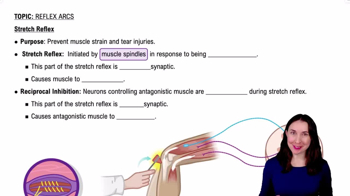
Stretch Reflex

Pharyngeal Phase of Swallowing

The pharyngeal phase of swallowing is the second stage of the swallowing process, occurring after the oral phase. It is characterized by the involuntary contraction of muscles in the pharynx, which propels the bolus of food toward the esophagus while simultaneously closing off the airway to prevent choking.
Recommended video:
03:21
Phases of Mitosis

Enteric Nervous System

The enteric nervous system (ENS) is a complex network of neurons that governs the function of the gastrointestinal system. Often referred to as the 'second brain,' the ENS operates independently but can communicate with the central nervous system, playing a crucial role in regulating digestive processes, including the coordination of swallowing.
Recommended video:
3:33
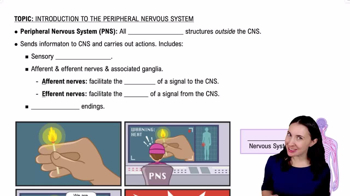
Peripheral Nervous System