
Ch. 42 - Circulation and Gas Exchange
Campbell - Campbell Biology 12th Edition
Urry12th EditionCampbell BiologyISBN: 9785794169850Not the one you use?Change textbook
Chapter 42, Problem 7

Compared with the interstitial fluid that bathes active muscle cells, blood reaching these cells in arterioles has a
a. Higher PO2.
b. Higher PCO2.
c. Greater bicarbonate concentration.
d. Lower pH.

Verified step by step guidance
1
Understand the role of arterioles: Arterioles are small blood vessels that branch out from arteries and lead to capillaries. They play a crucial role in delivering oxygenated blood to tissues, including muscle cells.
Consider the composition of blood in arterioles: Blood in arterioles is typically rich in oxygen because it is coming directly from the heart and lungs, where gas exchange occurs. Therefore, it has a higher partial pressure of oxygen (PO2) compared to interstitial fluid.
Analyze the interstitial fluid: Interstitial fluid is the fluid that surrounds cells in tissues. In active muscle cells, this fluid will have a different composition due to cellular respiration, which consumes oxygen and produces carbon dioxide.
Compare PO2 levels: Since blood in arterioles is oxygen-rich, it will have a higher PO2 compared to the interstitial fluid surrounding active muscle cells, where oxygen is being used up for energy production.
Evaluate other options: Consider the other choices (higher PCO2, greater bicarbonate concentration, lower pH) and understand that these are typically characteristics of the interstitial fluid due to the metabolic activity of muscle cells, which produce CO2 and may lower pH.

Verified video answer for a similar problem:

This video solution was recommended by our tutors as helpful for the problem above.
Video duration:
2m
Was this helpful?

Key Concepts

Here are the essential concepts you must grasp in order to answer the question correctly.

Partial Pressure of Oxygen (PO2)

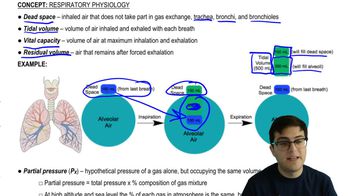
Partial pressure of oxygen (PO2) refers to the pressure exerted by oxygen in a mixture of gases or in a liquid, such as blood. In the context of blood reaching active muscle cells, the PO2 is typically higher in the arterioles compared to the interstitial fluid because blood delivers oxygen to tissues, which is then used for cellular respiration.
Recommended video:
Guided course
08:52
Air Movement and Partial Pressure

Partial Pressure of Carbon Dioxide (PCO2)

Partial pressure of carbon dioxide (PCO2) is the pressure exerted by CO2 in a mixture of gases or in a liquid. In active muscle cells, CO2 is produced as a byproduct of metabolism, leading to higher PCO2 in the interstitial fluid compared to the blood in arterioles, which is responsible for transporting CO2 away from tissues to be exhaled.
Recommended video:
Guided course
08:52
Air Movement and Partial Pressure

Bicarbonate Buffer System

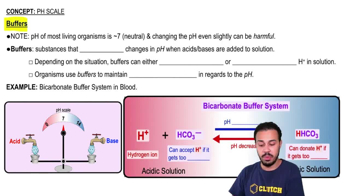
The bicarbonate buffer system helps maintain pH balance in the blood. It involves the equilibrium between carbonic acid and bicarbonate ions. In active tissues, CO2 is converted to bicarbonate, increasing its concentration in the blood. This system is crucial for transporting CO2 and regulating blood pH, which tends to be lower in active tissues due to increased CO2 production.
Recommended video: