
Pearson+ LogoPearson+ Logo
Ch. 56 - Conservation Biology and Global Change
Campbell - Campbell Biology 12th Edition
Urry12th EditionCampbell BiologyISBN: 9785794169850Not the one you use?Change textbook
Chapter 56, Problem 2

The main cause of the increase in the amount of CO₂ in Earth’s atmosphere over the past 170 years is
a. Increased worldwide primary production
b. Increased worldwide fertilizer production
c. Increased infrared radiation absorption by the atmosphere
d. The burning of fossil fuels and deforestation

Verified step by step guidance
1
Understand the context of the problem: The question is asking about the primary cause of the increase in CO2 levels in Earth's atmosphere over the past 170 years. This requires knowledge of human activities and their impact on the carbon cycle.
Review the options provided: Analyze each choice to determine its relevance to the increase in CO2 levels. For example, primary production refers to photosynthesis, which typically reduces CO2, not increases it.
Consider historical events: Over the past 170 years, industrialization has significantly increased, leading to activities such as burning fossil fuels (coal, oil, natural gas) and deforestation, both of which release large amounts of CO2 into the atmosphere.
Eliminate incorrect options: Increased fertilizer production (Option B) contributes to nitrogen cycle changes, not directly to CO2 levels. Increased infrared radiation absorption (Option C) is a consequence of higher CO2 levels, not the cause.
Identify the correct answer: The burning of fossil fuels and deforestation (Option D) are well-documented as the primary drivers of increased CO2 levels due to human activities, making this the most accurate choice.

Verified video answer for a similar problem:

This video solution was recommended by our tutors as helpful for the problem above.
Video duration:
1m
Was this helpful?

Key Concepts

Here are the essential concepts you must grasp in order to answer the question correctly.

Carbon Dioxide Emissions

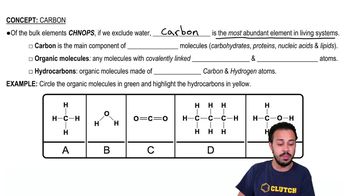
Carbon dioxide (CO2) is a greenhouse gas that traps heat in the atmosphere. Its levels have significantly increased due to human activities, particularly the burning of fossil fuels like coal, oil, and natural gas, which release CO2 as a byproduct. Understanding the sources of CO2 emissions is crucial for addressing climate change and its impacts.
Recommended video:

Deforestation

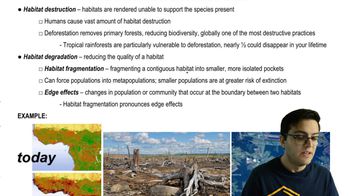
Deforestation refers to the large-scale removal of trees from forested areas, which reduces the number of trees available to absorb CO2 from the atmosphere. This process not only contributes to increased CO2 levels but also disrupts ecosystems and biodiversity. The loss of forests exacerbates climate change by diminishing a natural carbon sink.
Recommended video:
Guided course
03:23
Habitat Destruction and Degradation

Greenhouse Effect

The greenhouse effect is a natural process where certain gases in the Earth's atmosphere trap heat, keeping the planet warm enough to support life. However, human activities, particularly the burning of fossil fuels and deforestation, have intensified this effect by increasing the concentration of greenhouse gases like CO2, leading to global warming and climate change.
Recommended video:
Guided course
04:52
Coriolis Effect Curves Prevailing Winds
Related Practice