
Textbook Question
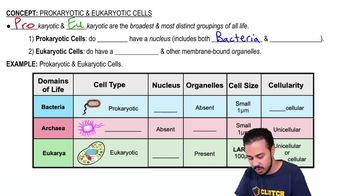
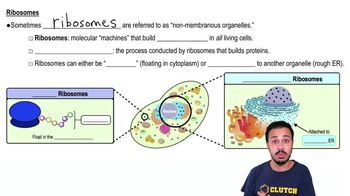
Which cell would be best for studying lysosomes?
a. Muscle cell
b. Nerve cell
c. Bacterial cell
d. Phagocytic white blood cell
2631
views

 Verified step by step guidance
 05:54
05:54
 06:51
06:51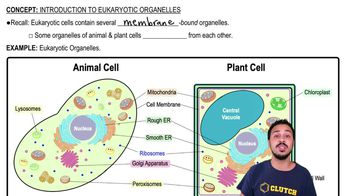 03:45
03:45Which cell would be best for studying lysosomes?
a. Muscle cell
b. Nerve cell
c. Bacterial cell
d. Phagocytic white blood cell
Cyanide binds to at least one molecule involved in producing ATP. If a cell is exposed to cyanide, most of the cyanide will be found within the
a. Mitochondria.
b. Ribosomes.
c. Peroxisomes.
d. Lysosomes.
Which structure is not part of the endomembrane system?
a. Nuclear envelope
b. Chloroplast
c. Golgi apparatus
d. Plasma membrane
Which structure is common to plant and animal cells?
a. Chloroplast
b. Central vacuole
c. Mitochondrion
d. Centriole
From memory, draw two eukaryotic cells. Label the structures listed here and show any physical connections between the internal structures of each cell: nucleus, rough ER, smooth ER, mitochondrion, centrosome, chloroplast, vacuole, lysosome, microtubule, cell wall, ECM, microfilament, Golgi apparatus, intermediate filament, plasma membrane, peroxisome, ribosome, nucleolus, nuclear pore, vesicle, flagellum, microvilli, plasmodesma.