Pearson+ LogoPearson+ Logo
Ch. 33 - Viruses
Freeman - Biological Science 8th Edition
Freeman8th EditionBiological ScienceISBN: 9780138276263Not the one you use?Change textbook
Chapter 33, Problem 12

The mosquito-borne Zika virus (ZIKV) is one of the most feared viruses for pregnant women. Recent statistics justify this fear: Infants born to mothers infected with ZIKV during pregnancy face a risk of up to 42 percent of developing birth defects, including microcephaly (an abnormally small head and decreased brain volume).
What do we know about how ZIKV causes damage to the developing brain?
Researchers have determined that host cells possess several different surface proteins that can serve as virus receptors for ZIKV. If you were to repeat the experiment described in Figure 33.8 using ZIKV instead of HIV, how would you expect the results to be different? Explain.

Verified step by step guidance
1
Identify the key difference between the experiment with HIV and the proposed experiment with ZIKV. The original experiment tests if CD4 is the receptor for HIV entry into T cells. For ZIKV, you need to determine which surface proteins on host cells serve as receptors for ZIKV entry.
Select a suitable host cell type for ZIKV infection. Unlike HIV, which targets T cells, ZIKV is known to infect neural progenitor cells, among others. Choose a cell type relevant to ZIKV's known infection pattern.
Prepare multiple samples of the chosen host cells, similar to the 160 samples of T cells used in the HIV experiment. Each sample will be treated with a different antibody that blocks a specific surface protein.
Add a constant number of ZIKV particles to each sample, ensuring that the conditions are optimal for ZIKV entry and replication, similar to the conditions used for HIV in the original experiment.
Use microscopy or another suitable detection method to identify which samples show signs of ZIKV infection. The samples where infection is blocked indicate the surface protein that ZIKV uses as a receptor, analogous to how CD4 was identified for HIV.

Verified video answer for a similar problem:

This video solution was recommended by our tutors as helpful for the problem above.
Video duration:
45s
Was this helpful?

Key Concepts

Here are the essential concepts you must grasp in order to answer the question correctly.

Zika Virus Pathogenesis

Zika virus (ZIKV) pathogenesis refers to the mechanisms by which the virus causes disease, particularly in pregnant women. ZIKV can cross the placental barrier and infect fetal neural progenitor cells, leading to developmental issues such as microcephaly. Understanding how ZIKV interacts with host cells is crucial for elucidating its impact on fetal brain development.
Recommended video:
Guided course
04:30
Virus Replication

Viral Receptors

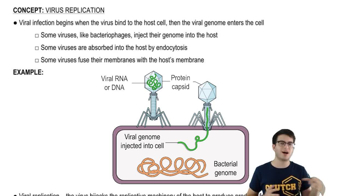
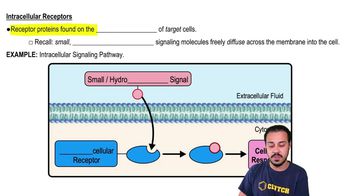
Viral receptors are specific proteins on the surface of host cells that viruses use to gain entry. For ZIKV, certain surface proteins on host cells act as receptors, facilitating the virus's attachment and entry. Identifying these receptors is essential for understanding how ZIKV infects cells and causes damage, particularly in the context of fetal development.
Recommended video:
Guided course
02:28
Intracellular Receptors

Experimental Design in Virology

Experimental design in virology involves creating controlled experiments to test hypotheses about viral behavior and interactions with host cells. In the context of ZIKV, researchers might compare its entry mechanisms to those of other viruses, like HIV, by using specific antibodies to block receptors. This approach helps clarify the unique pathways through which different viruses infect cells and the implications for disease outcomes.
Recommended video:
Guided course
02:50
Experimental Design Example 1
Related Practice
Textbook Question

If you were in charge of the government's budget devoted to stemming the AIDS epidemic, would you devote most of the resources to drug development or preventive medicine? Defend your answer.

767
views
Textbook Question

Which of the following types of viruses would you expect to require periods of latency?

a. Viruses that have large genomes and require a long time for replication

b. Viruses that require a long time for transmission to new hosts

c. Viruses that require a long time for assembly into complex structures

d. Viruses that infect cells of the immune system

920
views
Textbook Question

The mosquito-borne Zika virus (ZIKV) is one of the most feared viruses for pregnant women. Recent statistics justify this fear: Infants born to mothers infected with ZIKV during pregnancy face a risk of up to 42 percent of developing birth defects, including microcephaly (an abnormally small head and decreased brain volume).

What do we know about how ZIKV causes damage to the developing brain?

ZIKV is a Baltimore class IV virus. Based on this classification, what do you know about the structure of its genome?

1046
views
Textbook Question

The mosquito-borne Zika virus (ZIKV) is one of the most feared viruses for pregnant women. Recent statistics justify this fear: Infants born to mothers infected with ZIKV during pregnancy face a risk of up to 42 percent of developing birth defects, including microcephaly (an abnormally small head and decreased brain volume). What do we know about how ZIKV causes damage to the developing brain? Several lines of evidence suggest that after ZIKV is transmitted to a pregnant woman via the bite of an infected mosquito, the virus then directly infects cells of the placenta, gaining access to the fetal brain.

Following attachment, the virion would most likely enter the placental cell by:

a. Insertion via the mosquito's mouthparts

b. Endocytosis

c. Degrading the cell wall with lysozyme

d. Injection through a hollow, needle-like protein structure

834
views
Textbook Question

The mosquito-borne Zika virus (ZIKV) is one of the most feared viruses for pregnant women. Recent statistics justify this fear: Infants born to mothers infected with ZIKV during pregnancy face a risk of up to 42 percent of developing birth defects, including microcephaly (an abnormally small head and decreased brain volume). What do we know about how ZIKV causes damage to the developing brain? Researchers recently developed a mouse model for fetal brain defects associated with human ZIKV infection. To determine the effect of ZIKV on the number of neurons in the brain, ZIKV was injected into the brains of developing mouse embryos. Neurons were identified by staining sections of brain tissue with antibodies against NeuN, a neuron-specific protein, and the number of NeuN-positive cells per mm2 in specific regions was quantified. The results of three independent experiments are shown in the graph below. Use the P value provided to determine if the difference is significant or not (* means P< 0.05). Based on these results, what can you conclude?

828
views
Textbook Question

The mosquito-borne Zika virus (ZIKV) is one of the most feared viruses for pregnant women. Recent statistics justify this fear: Infants born to mothers infected with ZIKV during pregnancy face a risk of up to 42 percent of developing birth defects, including microcephaly (an abnormally small head and decreased brain volume).

What do we know about how ZIKV causes damage to the developing brain?

Traveling and tourism have been badly affected in ZIKV-affected countries. What advice would you give a friend planning a trip to the Caribbean?

860
views