Pearson+ LogoPearson+ Logo
Ch. 33 - Viruses
Freeman - Biological Science 8th Edition
Freeman8th EditionBiological ScienceISBN: 9780138276263Not the one you use?Change textbook
Chapter 33, Problem 2

What does reverse transcriptase do?

Verified step by step guidance
1
Step 1: Understand the term 'Reverse Transcriptase'. Reverse transcriptase is an enzyme used by retroviruses, which are a type of virus. This enzyme has the ability to convert their RNA (ribonucleic acid) into DNA (deoxyribonucleic acid).
Step 2: Understand the process. After the virus has entered a host cell, reverse transcriptase allows the viral RNA to be translated back into DNA. This is contrary to the usual flow of genetic information in cells which is from DNA to RNA.
Step 3: Understand the significance. Once the viral RNA has been reverse transcribed into DNA, it can be integrated into the host's genome by another viral enzyme called integrase. This allows the virus to replicate along with the host's cells.
Step 4: Understand the application. Reverse transcriptase is also used in laboratories to synthesize cDNA (complementary DNA) from an RNA template, a process called reverse transcription. This is useful in studying gene expression.
Step 5: Review. In summary, reverse transcriptase is an enzyme that can convert RNA into DNA, which is crucial for the life cycle of retroviruses and useful in genetic research.

Verified video answer for a similar problem:

This video solution was recommended by our tutors as helpful for the problem above.
Video duration:
39s
Was this helpful?

Key Concepts

Here are the essential concepts you must grasp in order to answer the question correctly.

Reverse Transcriptase

Reverse transcriptase is an enzyme that catalyzes the transcription of RNA into DNA. This process is crucial for retroviruses, such as HIV, allowing them to integrate their genetic material into the host's genome. By converting RNA back to DNA, reverse transcriptase enables the virus to replicate and propagate within the host.
Recommended video:
Guided course
04:16
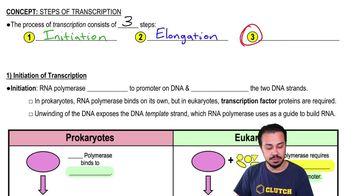
1) Initiation of Transcription

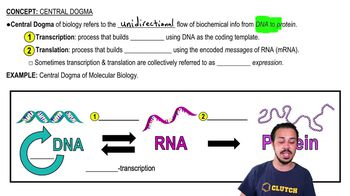
Central Dogma of Molecular Biology

The central dogma of molecular biology describes the flow of genetic information within a biological system, typically from DNA to RNA to protein. However, reverse transcriptase challenges this flow by allowing RNA to be transcribed back into DNA, illustrating the complexity of genetic information transfer and the role of retroviruses in this process.
Recommended video:
Guided course
05:45
Central Dogma

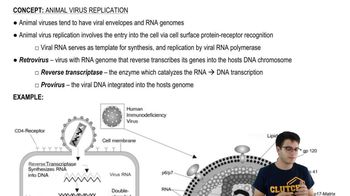
Retroviruses

Retroviruses are a class of viruses that replicate in a host cell by reverse transcription. They contain RNA as their genetic material and utilize reverse transcriptase to convert their RNA into DNA, which can then integrate into the host's genome. This unique replication strategy is a key feature of retroviruses, making them significant in both virology and gene therapy research.
Recommended video:
Guided course
05:45
Animal Viruses and Retroviruses