
What do proximate explanations of behavior focus on? a. how displays and other types of behavior have changed through time, or evolved b. the 'adaptive significance' of a behavior c. genetic, neurological, and hormonal mechanisms of behavior d. appropriate experimental methods when studying behavior
Ch. 50 - Behavioral Ecology
Chapter 50, Problem 1
Many insects, birds, and other animals are attracted to artificial lights, a side effect of their innate navigational strategies. For example, many birds fly off-course toward bright urban areas during their fall and spring migrations, causing bird mortality due to window strikes and exhaustion. Pose one solution that could reduce impacts on animals and also benefit humans.
Verified step by step guidance1
Identify the specific types of artificial lights that are most attractive to animals, such as certain wavelengths or intensities that may interfere with their natural behaviors.
Research and develop alternative lighting technologies that are less disruptive to wildlife. This could include lights with wavelengths outside the visual range of most birds and insects, or lights that can be dimmed during peak migration periods.
Implement city-wide or regional initiatives to replace existing harmful lighting with wildlife-friendly alternatives. This could involve collaboration between government, businesses, and conservation groups.
Educate the public and local businesses about the impact of light pollution on wildlife and promote the benefits of reducing light pollution, such as energy savings and improved human health from reduced glare and better night skies.
Monitor and study the effects of the new lighting solutions on wildlife and adjust strategies as needed to ensure that they are effective in reducing harm to animals while also providing adequate lighting for human needs.
Key Concepts
Here are the essential concepts you must grasp in order to answer the question correctly.
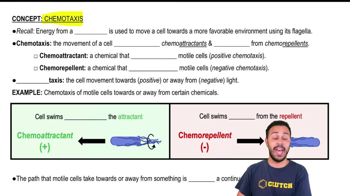
Phototaxis
Phototaxis is the movement of organisms in response to light, where many species are attracted to bright sources. This behavior is often instinctual, guiding animals during navigation. However, artificial lights can disrupt natural migratory patterns, leading to disorientation and increased mortality rates, particularly in birds.
Recommended video:
Guided course
Chemotaxis
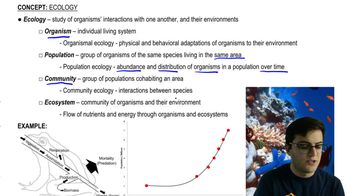
Urban Ecology
Urban ecology studies the interactions between living organisms and their urban environment. It examines how urbanization affects wildlife, including habitat loss and altered behaviors. Understanding urban ecology is crucial for developing strategies that mitigate negative impacts on wildlife while accommodating human needs.
Recommended video:
Guided course
Ecology
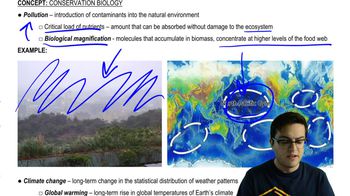
Light Pollution Mitigation
Light pollution mitigation involves strategies to reduce excessive artificial light in the environment. Solutions may include using shielded lighting, implementing curfews for outdoor lighting, or utilizing warmer light spectrums. These measures can help protect wildlife, particularly during migration, while still providing necessary illumination for human activities.
Recommended video:
Guided course
Pollution and Climate Change
Related Practice
Textbook Question
1376
views
Textbook Question
What do ultimate explanations of behavior focus on?
976
views
Textbook Question
A behavior is considered adaptive if it increases an individual's fitness. How is fitness measured? Select True or False for each statement.
T/F Strength
T/F Body size
T/F Speed
T/F Number of viable offspring
1016
views
Textbook Question
Why does altruism seem paradoxical?
a. Sometimes altruistic behavior is actually selfish.
b. Altruism does not actually help others.
c. Alleles that cause an organism to behave altruistically should be selected against since these alleles should lower the organism's fitness.
d. Animals behave altruistically to help the species, but sometimes their behavior harms the species.
1263
views
