
Pearson+ LogoPearson+ Logo
Ch. 50 - Behavioral Ecology
Freeman - Biological Science 8th Edition
Freeman8th EditionBiological ScienceISBN: 9780138276263Not the one you use?Change textbook
Chapter 50, Problem 16

<Image>
Mass strandings of whales occur on beaches near military exercises where sonar is used, raising concerns about the effects of human-generated underwater sounds on animal behavior. Scientists are collecting behavioral data on several species of whales to find out how sonar affects them.
There are debates about what action the military should take to avoid harming the whales. How could you apply cost–benefit analysis to address this problem?

Verified step by step guidance
1
Understand the concept of cost-benefit analysis: It is a systematic approach to estimating the strengths and weaknesses of alternatives used to determine options that provide the best approach to achieving benefits while preserving savings.
Identify the costs involved: Consider the potential negative impacts on whale populations, including disruptions to their natural behaviors, potential injuries, or fatalities due to sonar exposure.
Identify the benefits involved: Consider the benefits of military exercises, such as national security, training effectiveness, and preparedness, which are crucial for defense purposes.
Compare the costs and benefits: Evaluate the significance of the negative impacts on whales against the importance of military readiness. This involves assessing the ecological, ethical, and long-term consequences of sonar use.
Propose solutions or alternatives: Based on the analysis, suggest measures that could minimize harm to whales, such as modifying sonar frequencies, implementing exclusion zones, or scheduling exercises during periods of low whale activity.

Verified video answer for a similar problem:

This video solution was recommended by our tutors as helpful for the problem above.
Video duration:
1m
Was this helpful?

Key Concepts

Here are the essential concepts you must grasp in order to answer the question correctly.

Cost-Benefit Analysis

Cost-benefit analysis is a systematic approach to evaluating the economic pros and cons of different actions. It involves comparing the costs of an action, such as military exercises using sonar, against the benefits, like national security, while considering the potential harm to whales. This analysis helps in making informed decisions by quantifying the trade-offs involved.
Recommended video:
Guided course
07:15
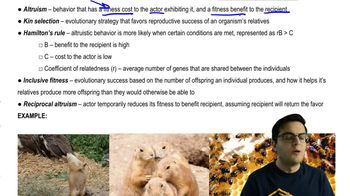
Migration and Altruism

Sonar and Marine Life

Sonar, a technology that uses sound waves to detect objects underwater, can impact marine life, particularly whales. These animals rely on echolocation for navigation and communication, and sonar can interfere with these processes, leading to disorientation or strandings. Understanding sonar's effects is crucial for assessing its impact on whale behavior and health.
Recommended video:
Guided course
01:47
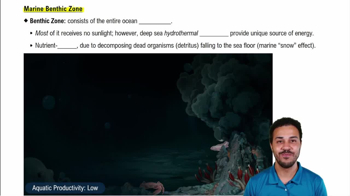
Marine Benthic Zone

Animal Behavior Studies

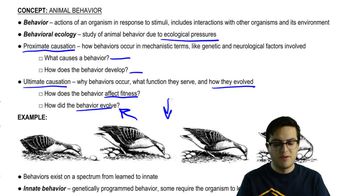
Animal behavior studies involve observing and analyzing how animals interact with their environment and respond to stimuli. In the context of sonar and whales, scientists collect data on whale responses to sonar exposure to understand behavioral changes. This research is essential for developing strategies to mitigate negative impacts and inform policy decisions regarding sonar use.
Recommended video:
Related Practice
Textbook Question

<Image>

Mass strandings of whales occur on beaches near military exercises where sonar is used, raising concerns about the effects of human-generated underwater sounds on animal behavior. Scientists are collecting behavioral data on several species of whales to find out how sonar affects them.

Using the graph, estimate the number of minutes of foraging per hour before and after the sound exposure. Then predict the effect of sonar on the fitness of blue whales. Explain your reasoning.

619
views
Textbook Question

<Image>

Mass strandings of whales occur on beaches near military exercises where sonar is used, raising concerns about the effects of human-generated underwater sounds on animal behavior. Scientists are collecting behavioral data on several species of whales to find out how sonar affects them.

Predict why the whale foraged at a depth of 100–170 m.

a. The whale learned to forage at this depth from its mother.

b. The whale had an innate instinct to feed at this depth.

c. The whale's food was most plentiful at this depth.

d. The whale could not dive any deeper than this depth.

702
views
Textbook Question

<Image>

Mass strandings of whales occur on beaches near military exercises where sonar is used, raising concerns about the effects of human-generated underwater sounds on animal behavior. Scientists are collecting behavioral data on several species of whales to find out how sonar affects them.

The researchers also measured the speed and direction of whale swimming in response to the sound exposure. Whales increase their speed and swim away from the direction of sound. Design a study to test the hypothesis that this behavior leads to beach strandings. Note that you will not receive permission to conduct the study if your actions are likely to cause strandings to occur.

747
views