Pearson+ LogoPearson+ Logo
Ch. 19 - Epigenetics
Klug - Concepts of Genetics  12th Edition
Klug12th EditionConcepts of Genetics ISBN: 9780135564776Not the one you use?Change textbook
Chapter 19, Problem 6

What are the possible roles of proteins in histone modification?

Verified step by step guidance
1
Understand the concept of histone modification: Histone modification refers to chemical changes made to histone proteins, which are involved in packaging DNA into chromatin. These modifications can influence gene expression by altering chromatin structure and accessibility.
Identify the types of histone modifications: Common modifications include acetylation, methylation, phosphorylation, ubiquitination, and sumoylation. Each type of modification has specific effects on chromatin structure and gene regulation.
Explore the roles of proteins in histone modification: Proteins play key roles in adding, removing, or interpreting histone modifications. Enzymes such as histone acetyltransferases (HATs) and histone deacetylases (HDACs) add or remove acetyl groups, while histone methyltransferases (HMTs) and demethylases regulate methylation.
Examine the functional impact of these proteins: Proteins involved in histone modification can act as 'writers' (adding modifications), 'erasers' (removing modifications), or 'readers' (recognizing and binding to specific modifications). These actions influence chromatin dynamics and gene expression patterns.
Consider the biological significance: Histone modification proteins are crucial for processes such as transcriptional regulation, DNA repair, replication, and cell differentiation. Dysregulation of these proteins can lead to diseases such as cancer or developmental disorders.

Verified video answer for a similar problem:

This video solution was recommended by our tutors as helpful for the problem above.
Video duration:
1m
Was this helpful?

Key Concepts

Here are the essential concepts you must grasp in order to answer the question correctly.

Histone Proteins

Histone proteins are essential components of chromatin, the structure that packages DNA in eukaryotic cells. They help organize DNA into a compact form, allowing it to fit within the nucleus. Histones can undergo various modifications, such as acetylation and methylation, which play a crucial role in regulating gene expression and DNA accessibility.
Recommended video:

Post-Translational Modifications

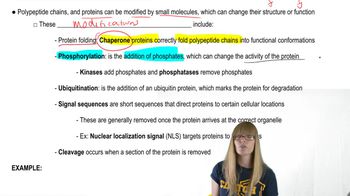
Post-translational modifications (PTMs) refer to the chemical changes that proteins undergo after their synthesis. In the context of histones, PTMs such as phosphorylation, methylation, and acetylation can alter the interaction between histones and DNA, influencing chromatin structure and function. These modifications are critical for processes like transcription regulation and DNA repair.
Recommended video:
Guided course
04:30
Post Translational Modifications

Epigenetic Regulation

Epigenetic regulation involves changes in gene expression that do not alter the underlying DNA sequence. Histone modifications are a key mechanism of epigenetic regulation, as they can either promote or inhibit the transcription of genes. This dynamic regulation allows cells to respond to environmental signals and maintain cellular identity, playing a vital role in development and disease.
Recommended video: