Pearson+ LogoPearson+ Logo
Ch. 22 - Applications of Genetic Engineering and Biotechnology
Klug - Concepts of Genetics  12th Edition
Klug12th EditionConcepts of Genetics ISBN: 9780135564776Not the one you use?Change textbook
Chapter 22, Problem 1d

How can we correlate the genome with RNA expression data in a tissue or a single cell?

Verified step by step guidance
1
Step 1: Understand the relationship between the genome and RNA expression. The genome contains the complete set of DNA instructions for an organism, while RNA expression reflects the active transcription of specific genes in a tissue or cell. RNA expression data can provide insights into which genes are being actively transcribed under specific conditions.
Step 2: Use sequencing technologies to gather data. To correlate the genome with RNA expression, perform whole-genome sequencing to identify the complete DNA sequence of the organism. Then, use RNA sequencing (RNA-Seq) to measure the levels of RNA transcripts in the tissue or single cell of interest.
Step 3: Map RNA-Seq data to the genome. Align the RNA-Seq reads to the reference genome using bioinformatics tools. This step helps identify which regions of the genome are actively transcribed and provides quantitative data on gene expression levels.
Step 4: Analyze differential expression. Compare RNA expression data across different tissues, cells, or conditions to identify patterns of gene activity. Statistical methods can be used to determine which genes are upregulated or downregulated in specific contexts.
Step 5: Integrate functional genomics data. Combine RNA expression data with other genomic information, such as epigenetic modifications, transcription factor binding sites, or chromatin accessibility, to gain a deeper understanding of gene regulation and cellular function.

Verified video answer for a similar problem:

This video solution was recommended by our tutors as helpful for the problem above.
Video duration:
1m
Was this helpful?

Key Concepts

Here are the essential concepts you must grasp in order to answer the question correctly.

Genomics

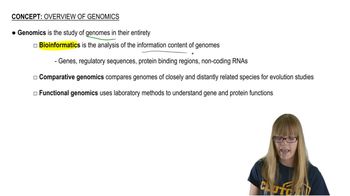
Genomics is the study of the complete set of DNA, including all of its genes, within an organism. It involves analyzing the structure, function, evolution, and mapping of genomes. Understanding genomics is crucial for correlating genomic data with RNA expression, as it provides the foundational information about genetic sequences that can influence gene expression patterns.
Recommended video:
Guided course
02:48
Genomics Overview

Transcriptomics

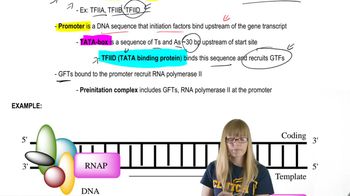
Transcriptomics is the study of the transcriptome, which encompasses all RNA molecules, including mRNA, rRNA, and non-coding RNAs, produced in a cell or tissue at a specific time. By analyzing RNA expression data, researchers can determine which genes are actively being expressed and how their expression levels vary under different conditions, allowing for a correlation with genomic data.
Recommended video:
Guided course
09:16
Eukaryotic Transcription

Single-Cell Analysis

Single-cell analysis refers to techniques that allow for the examination of individual cells rather than bulk populations. This approach is essential for understanding heterogeneity in gene expression within tissues, as it reveals how different cells may express genes differently. Correlating genomic data with RNA expression at the single-cell level provides insights into cellular functions and disease mechanisms.
Recommended video:
Guided course
02:48
Chi Square Analysis