Understand that chylomicrons and VLDL (Very Low-Density Lipoproteins) are both lipoproteins, which are molecules that transport lipids (fats) in the bloodstream. They differ in their origin, composition, and function.
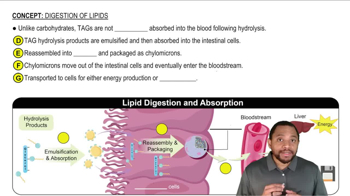
Recognize that chylomicrons are formed in the small intestine after the digestion of dietary fats. Their primary role is to transport triglycerides and other lipids absorbed from food to tissues such as muscle and adipose tissue.
Note that VLDL is synthesized in the liver and primarily transports triglycerides and cholesterol that are produced or processed by the liver to peripheral tissues.
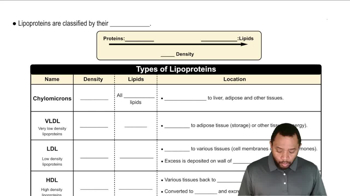
Compare their composition: Chylomicrons are larger and contain a higher proportion of triglycerides relative to proteins, making them less dense. VLDL, while still rich in triglycerides, has a slightly higher protein content and is therefore denser than chylomicrons.
Understand their metabolic fate: Chylomicrons are broken down by lipoprotein lipase in the bloodstream, releasing fatty acids for energy or storage. VLDL is also metabolized by lipoprotein lipase, but as triglycerides are removed, it is converted into intermediate-density lipoproteins (IDL) and eventually low-density lipoproteins (LDL), which have different roles in lipid transport.
Verified video answer for a similar problem:
This video solution was recommended by our tutors as helpful for the problem above
Video duration:
4m
Play a video:
Was this helpful?
Key Concepts
Here are the essential concepts you must grasp in order to answer the question correctly.
Chylomicrons
Chylomicrons are lipoprotein particles formed in the intestinal mucosa after the ingestion of dietary fats. They primarily transport triglycerides, cholesterol, and fat-soluble vitamins from the intestines to other tissues via the lymphatic system and bloodstream. Chylomicrons are characterized by their large size and low density, making them the least dense of all lipoproteins.
VLDL is a type of lipoprotein produced by the liver that primarily carries triglycerides synthesized from excess carbohydrates and proteins. It plays a crucial role in lipid metabolism by delivering triglycerides to peripheral tissues. VLDL is smaller and denser than chylomicrons and is converted into LDL (Low-Density Lipoprotein) as it loses triglycerides.
Lipoproteins are complexes of lipids and proteins that transport hydrophobic lipids through the aqueous environment of the bloodstream. They vary in size, density, and composition, influencing their function in lipid transport and metabolism. The differences in the composition of chylomicrons and VLDL, such as their triglyceride and protein content, determine their specific roles in the body’s lipid transport system.