Pearson+ LogoPearson+ Logo
Ch.15 Lipids
Timberlake - Chemistry: An Introduction to General, Organic, and Biological Chemistry 13th Edition
Timberlake13th EditionChemistry: An Introduction to General, Organic, and Biological ChemistryISBN: 9780134421353Not the one you use?Change textbook
Chapter 15, Problem 46a

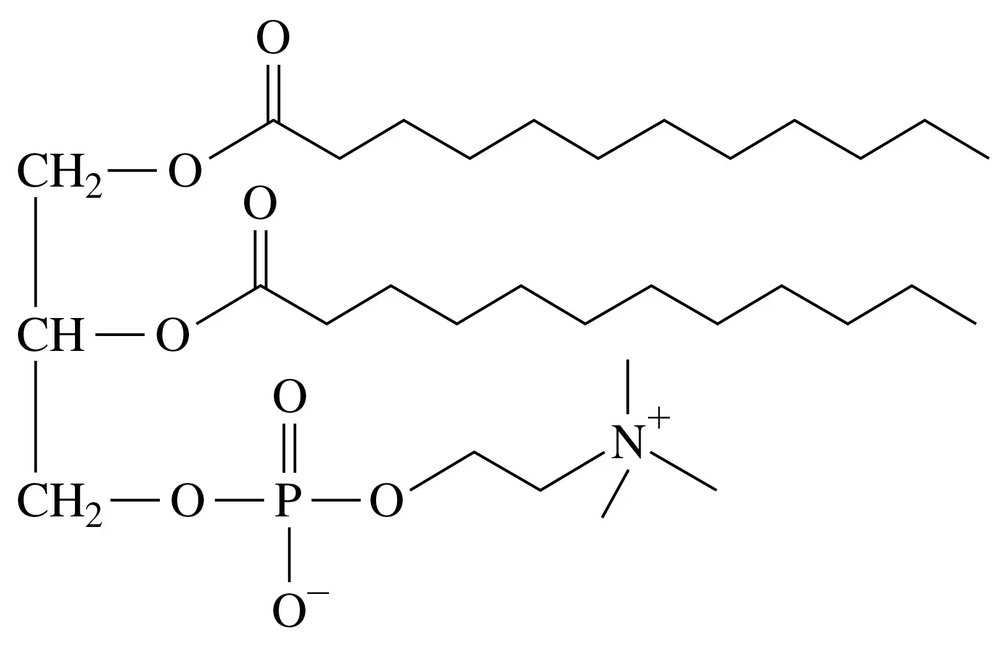
Identify the following features of this phospholipid, which is needed for the brain and nerve tissues:
Chemical structure of a glycerophospholipid, showing glycerol backbone, fatty acid chains, phosphate, and nitrogen group. 
a. Is the phospholipid formed from glycerol or sphingosine?

Verified step by step guidance
1
Examine the structure of the phospholipid in the provided image. Look for the backbone of the molecule to determine whether it is glycerol or sphingosine. Glycerol has a three-carbon chain with hydroxyl groups (-OH) attached, while sphingosine has a long-chain amino alcohol structure with a single hydroxyl group and an amine group (-NH2).
Identify the functional groups attached to the backbone. Glycerol-based phospholipids typically have two fatty acid chains and a phosphate group attached to the three-carbon backbone. Sphingosine-based phospholipids often have one fatty acid chain and a phosphate group attached to the sphingosine backbone.
Check for the presence of a nitrogen atom in the backbone. Sphingosine contains a nitrogen atom as part of its structure, while glycerol does not.
Compare the observed features of the phospholipid in the image to the characteristics of glycerol and sphingosine. Use this comparison to determine whether the phospholipid is formed from glycerol or sphingosine.
Conclude whether the phospholipid is glycerol-based or sphingosine-based based on the structural analysis and the functional groups identified in the image.

Verified video answer for a similar problem:

This video solution was recommended by our tutors as helpful for the problem above.
Video duration:
4m
Was this helpful?

Key Concepts

Here are the essential concepts you must grasp in order to answer the question correctly.

Phospholipid Structure

Phospholipids are essential components of cell membranes, consisting of a hydrophilic 'head' and two hydrophobic 'tails.' The head is typically made of a phosphate group, while the tails are long fatty acid chains. Understanding the structure is crucial for identifying the type of phospholipid and its role in cellular functions, particularly in brain and nerve tissues.
Recommended video:
Guided course
1:01
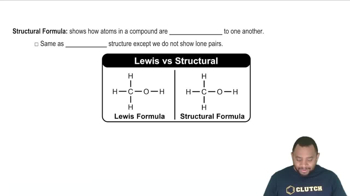
Structural Formula Concept 2

Glycerol vs. Sphingosine

Phospholipids can be classified based on their backbone structure: glycerol or sphingosine. Glycerol-based phospholipids, such as phosphatidylcholine, are common in membranes, while sphingosine-based phospholipids, like sphingomyelin, are particularly abundant in nerve tissues. Recognizing the differences between these backbones helps in determining the specific type of phospholipid involved.
Recommended video:
Guided course
1:20
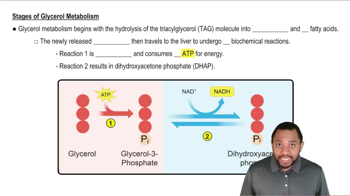
Glycerol Metabolism Concept 2

Role in Brain and Nerve Tissues

Phospholipids play a vital role in the structure and function of brain and nerve tissues. They contribute to the formation of myelin sheaths, which insulate nerve fibers and enhance signal transmission. Understanding their function in these tissues is essential for grasping how phospholipids support neurological health and communication within the nervous system.
Recommended video:
Guided course
1:24
Polysaccharides Example 1