Pearson+ LogoPearson+ Logo
Ch.15 Lipids
Timberlake - Chemistry: An Introduction to General, Organic, and Biological Chemistry 13th Edition
Timberlake13th EditionChemistry: An Introduction to General, Organic, and Biological ChemistryISBN: 9780134421353Not the one you use?Change textbook
Chapter 15, Problem 16

How does an anti-inflammatory drug reduce inflammation?

Verified step by step guidance
1
Understand that inflammation is the body's natural response to injury or infection, involving the release of chemical signals like prostaglandins that cause swelling, redness, and pain.
Recognize that anti-inflammatory drugs, such as NSAIDs (Non-Steroidal Anti-Inflammatory Drugs), work by inhibiting the enzyme cyclooxygenase (COX). This enzyme is responsible for the production of prostaglandins.
Learn that there are two main types of COX enzymes: COX-1 and COX-2. COX-1 is involved in protecting the stomach lining and maintaining kidney function, while COX-2 is primarily involved in inflammation and pain.
Understand that by blocking COX-2, anti-inflammatory drugs reduce the production of prostaglandins, which in turn decreases inflammation, pain, and swelling.
Be aware that while these drugs are effective, they can have side effects, such as stomach irritation or increased risk of ulcers, due to their impact on COX-1. This is why selective COX-2 inhibitors were developed to minimize these side effects.

Verified video answer for a similar problem:

This video solution was recommended by our tutors as helpful for the problem above.
Video duration:
1m
Was this helpful?

Key Concepts

Here are the essential concepts you must grasp in order to answer the question correctly.

Inflammation

Inflammation is the body's natural response to injury or infection, characterized by redness, heat, swelling, and pain. It involves the activation of the immune system, which sends white blood cells and other substances to the affected area to promote healing. While inflammation is essential for recovery, chronic inflammation can lead to various diseases, making its regulation important.
Recommended video:
Guided course
3:52
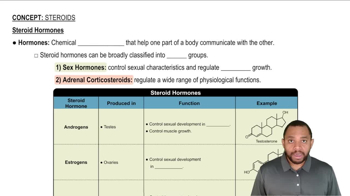
Steroids Concept 4

Mechanism of Action of Anti-Inflammatory Drugs

Anti-inflammatory drugs, such as nonsteroidal anti-inflammatory drugs (NSAIDs) and corticosteroids, work by inhibiting specific pathways in the inflammatory process. For instance, NSAIDs block the enzyme cyclooxygenase (COX), which is crucial for producing prostaglandins—chemicals that promote inflammation, pain, and fever. By reducing these mediators, these drugs effectively alleviate symptoms of inflammation.
Recommended video:
Guided course
2:39
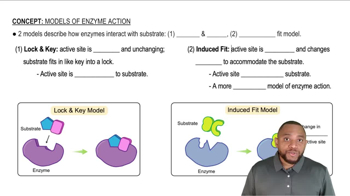
Models of Enzyme Action Concept 1

Prostaglandins

Prostaglandins are lipid compounds that play a key role in the inflammatory response. They are produced at the site of injury and contribute to the symptoms of inflammation, such as pain and swelling. Anti-inflammatory drugs target the synthesis of prostaglandins, thereby reducing their levels and mitigating the inflammatory response, which helps in pain relief and recovery.