Pearson+ LogoPearson+ Logo
Ch.17 Nucleic Acids and Protein Synthesis
Timberlake - Chemistry: An Introduction to General, Organic, and Biological Chemistry 13th Edition
Timberlake13th EditionChemistry: An Introduction to General, Organic, and Biological ChemistryISBN: 9780134421353Not the one you use?Change textbook
Chapter 17, Problem 82

How do protease inhibitors disrupt the life cycle of the HIV virus?

Verified step by step guidance
1
Protease inhibitors are a class of antiviral drugs that target the HIV protease enzyme, which is essential for the virus's replication cycle.
HIV protease is responsible for cleaving long polypeptide chains (produced during viral replication) into smaller, functional proteins necessary for assembling new virus particles.
By binding to the active site of the HIV protease enzyme, protease inhibitors prevent the enzyme from cleaving the polypeptide chains, thereby halting the production of functional viral proteins.
Without functional proteins, the virus cannot assemble mature infectious particles, effectively disrupting its ability to spread and infect new cells.
Protease inhibitors are often used in combination with other antiretroviral drugs to enhance their effectiveness and reduce the likelihood of the virus developing resistance.

Verified video answer for a similar problem:

This video solution was recommended by our tutors as helpful for the problem above.
Video duration:
2m
Was this helpful?

Key Concepts

Here are the essential concepts you must grasp in order to answer the question correctly.

HIV Life Cycle

The HIV life cycle consists of several stages, including attachment, fusion, reverse transcription, integration, replication, assembly, and budding. Understanding this cycle is crucial for identifying how drugs can interfere with the virus's ability to replicate and spread within the host. Each stage presents potential targets for therapeutic intervention.
Recommended video:
Guided course
02:09
Radioactive Half-Life Concept 1

Protease Inhibitors

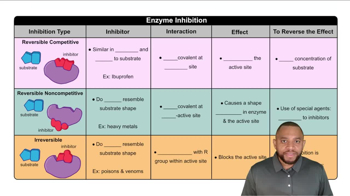
Protease inhibitors are a class of antiretroviral drugs that specifically inhibit the activity of the HIV protease enzyme. This enzyme is essential for processing viral proteins into their functional forms, which are necessary for the assembly of new viral particles. By blocking this enzyme, protease inhibitors prevent the maturation of the virus, effectively reducing its ability to infect new cells.
Recommended video:
Guided course
3:26
Enzyme Inhibition Concept 2

Antiretroviral Therapy (ART)

Antiretroviral therapy (ART) is a treatment regimen for HIV that typically involves a combination of medications, including protease inhibitors. ART aims to reduce the viral load in a patient's body, improve immune function, and prevent the progression to AIDS. Understanding ART is important for comprehending how protease inhibitors fit into broader treatment strategies for managing HIV infection.
Recommended video:
Guided course
1:39
Fatty Acids Example 5