Pearson+ LogoPearson+ Logo
Ch.17 Nucleic Acids and Protein Synthesis
Timberlake - Chemistry: An Introduction to General, Organic, and Biological Chemistry 13th Edition
Timberlake13th EditionChemistry: An Introduction to General, Organic, and Biological ChemistryISBN: 9780134421353Not the one you use?Change textbook
Chapter 17, Problem 79a

A specific virus contains RNA as its genetic material.
a. Why would reverse transcription be used in the life cycle of this type of virus?

Verified step by step guidance
1
Understand the concept of reverse transcription: Reverse transcription is a process where RNA is converted into complementary DNA (cDNA) using the enzyme reverse transcriptase. This is the opposite of the usual transcription process, where DNA is transcribed into RNA.
Recognize the role of RNA in the virus: Viruses that contain RNA as their genetic material, such as retroviruses, rely on reverse transcription to integrate their genetic material into the host cell's DNA.
Explain the necessity of reverse transcription: Since the host cell's machinery primarily works with DNA, the RNA-based virus must convert its RNA into DNA to ensure its genetic material can be incorporated into the host genome and replicated.
Describe the integration process: After reverse transcription, the newly synthesized DNA is integrated into the host cell's genome, allowing the virus to hijack the host's cellular machinery to produce viral proteins and replicate its genetic material.
Highlight the importance in the viral life cycle: Reverse transcription is a critical step for RNA viruses to establish infection, replicate, and propagate within the host organism.

Verified video answer for a similar problem:

This video solution was recommended by our tutors as helpful for the problem above.
Video duration:
3m
Was this helpful?

Key Concepts

Here are the essential concepts you must grasp in order to answer the question correctly.

Reverse Transcription

Reverse transcription is the process by which RNA is converted into DNA by the enzyme reverse transcriptase. This is crucial for RNA viruses, particularly retroviruses, as it allows them to integrate their genetic material into the host's DNA, facilitating replication and propagation within the host cell.
Recommended video:
Guided course
6:37
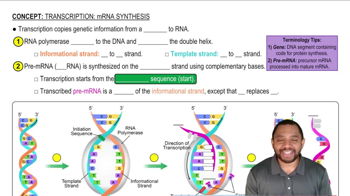
Transcription: mRNA Synthesis Concept 1

RNA Viruses

RNA viruses are a class of viruses that use RNA as their genetic material instead of DNA. They can be single-stranded or double-stranded and often rely on host cellular machinery for replication. Understanding their structure and life cycle is essential for comprehending how they infect host cells and propagate.
Recommended video:
Guided course
2:43
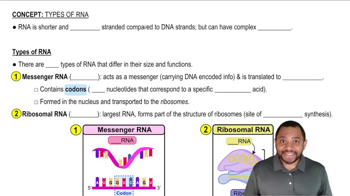
Types of RNA Concept 1

Viral Life Cycle

The viral life cycle encompasses the stages a virus undergoes to infect a host and replicate. This includes attachment, entry, replication, assembly, and release. For RNA viruses, reverse transcription plays a pivotal role in converting their RNA genome into DNA, which is then integrated into the host genome, allowing for efficient viral replication.
Recommended video:
Guided course
02:09
Radioactive Half-Life Concept 1