Pearson+ LogoPearson+ Logo
Ch.18 Metabolic Pathways and ATP Production
Timberlake - Chemistry: An Introduction to General, Organic, and Biological Chemistry 13th Edition
Timberlake13th EditionChemistry: An Introduction to General, Organic, and Biological ChemistryISBN: 9780134421353Not the one you use?Change textbook
Chapter 18, Problem 55a

What is the ATP energy yield associated with each of the following?
a. NADH → NAD+

Verified step by step guidance
1
Understand the context: ATP energy yield refers to the amount of ATP produced during cellular respiration when molecules like NADH are oxidized. NADH is a key electron carrier in the electron transport chain.
Recall the role of NADH: NADH donates electrons to the electron transport chain, which drives the production of ATP through oxidative phosphorylation. This process occurs in the mitochondria.
Determine the ATP yield per NADH: Each NADH molecule typically contributes to the generation of approximately 2.5 ATP molecules during oxidative phosphorylation. This value is based on the efficiency of the electron transport chain and chemiosmosis.
Express the reaction: The oxidation of NADH to NAD⁺ can be written as: NADH+NAD++H. This reaction releases electrons that enter the electron transport chain.
Summarize the process: The energy released during the transfer of electrons from NADH to the electron transport chain is used to pump protons across the mitochondrial membrane, creating a proton gradient. This gradient drives ATP synthesis via ATP synthase, resulting in approximately 2.5 ATP molecules per NADH.

Verified video answer for a similar problem:

This video solution was recommended by our tutors as helpful for the problem above.
Video duration:
1m
Was this helpful?

Key Concepts

Here are the essential concepts you must grasp in order to answer the question correctly.

ATP Yield from NADH

NADH is a key electron carrier in cellular respiration, particularly in the electron transport chain. When NADH is oxidized to NAD⁺, it contributes to the generation of ATP through oxidative phosphorylation. Typically, the oxidation of one molecule of NADH results in the production of approximately 2.5 ATP molecules in eukaryotic cells.
Recommended video:
Guided course
03:09
Percent Yield

Oxidative Phosphorylation

Oxidative phosphorylation is the final stage of cellular respiration, occurring in the mitochondria. It involves the transfer of electrons from NADH and FADH₂ through a series of protein complexes, ultimately leading to the production of ATP. The energy released during this electron transfer is used to pump protons across the mitochondrial membrane, creating a proton gradient that drives ATP synthesis via ATP synthase.
Recommended video:
Guided course
0:51
Oxidative Phosphorylation Concept 2

Redox Reactions

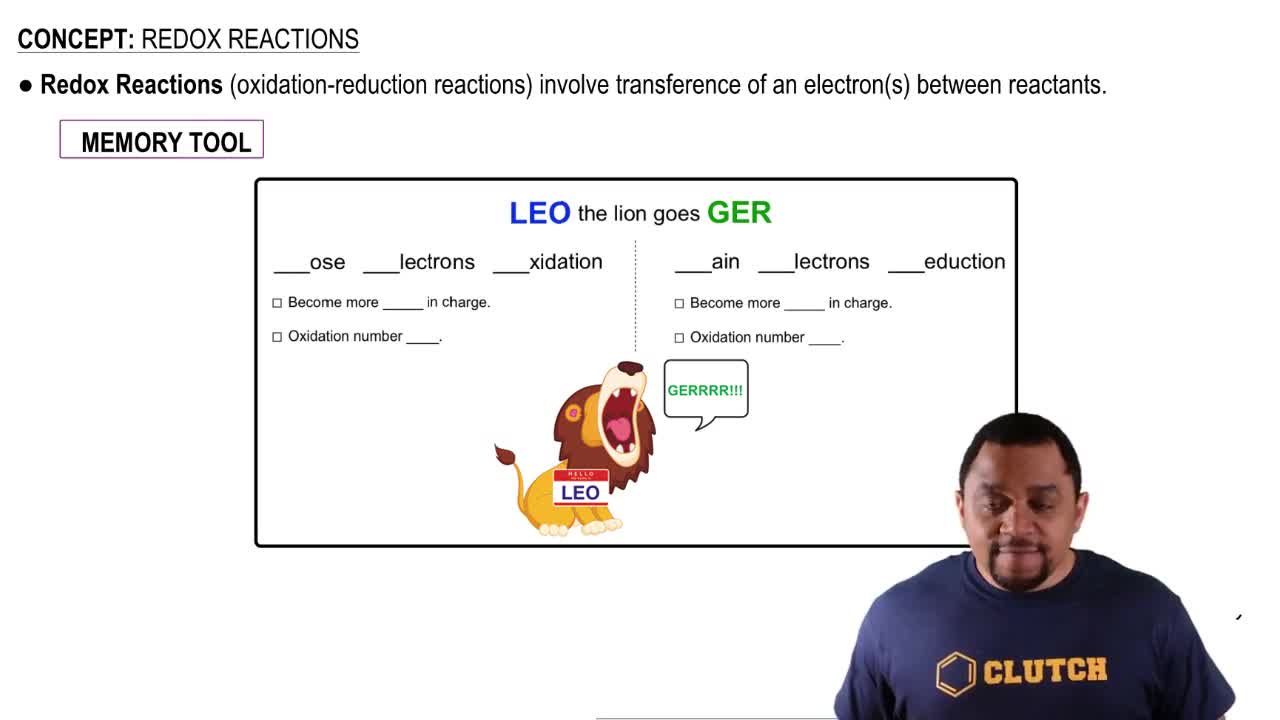
Redox reactions, or reduction-oxidation reactions, are chemical processes where electrons are transferred between molecules. In the context of cellular respiration, NADH undergoes oxidation (losing electrons) to become NAD⁺, while other molecules are reduced (gaining electrons). Understanding these reactions is crucial for grasping how energy is transferred and stored in the form of ATP during metabolic processes.
Recommended video:
Guided course
01:53
Redox Reactions