Pearson+ LogoPearson+ Logo
Ch.3 Matter and Energy
Timberlake - Chemistry: An Introduction to General, Organic, and Biological Chemistry 13th Edition
Timberlake13th EditionChemistry: An Introduction to General, Organic, and Biological ChemistryISBN: 9780134421353Not the one you use?Change textbook
Chapter 3, Problem 9b

Describe each of the following as a physical or chemical property:
b. Hydrogen reacts readily with oxygen.

Verified step by step guidance
1
Understand the difference between physical and chemical properties: A physical property can be observed or measured without changing the substance's chemical identity (e.g., color, melting point, density). A chemical property describes the ability of a substance to undergo a chemical change or reaction, resulting in the formation of a new substance.
Analyze the statement: 'Hydrogen reacts readily with oxygen.' This describes a behavior where hydrogen combines with oxygen to form a new substance, such as water (H₂O).
Recognize that the formation of a new substance (water) indicates a chemical change, which is a hallmark of a chemical property.
Conclude that the ability of hydrogen to react with oxygen is a chemical property because it involves a chemical reaction and the creation of a new substance.
Remember that chemical properties are always related to how a substance interacts with other substances to form new compounds or undergo chemical changes.

Verified video answer for a similar problem:

This video solution was recommended by our tutors as helpful for the problem above.
Video duration:
1m
Was this helpful?

Key Concepts

Here are the essential concepts you must grasp in order to answer the question correctly.

Chemical Property

A chemical property is a characteristic of a substance that becomes evident during a chemical reaction. It describes the ability of a substance to undergo changes that transform it into different substances. For example, the reactivity of hydrogen with oxygen is a chemical property, as it involves a reaction that produces water.
Recommended video:
Guided course
02:11
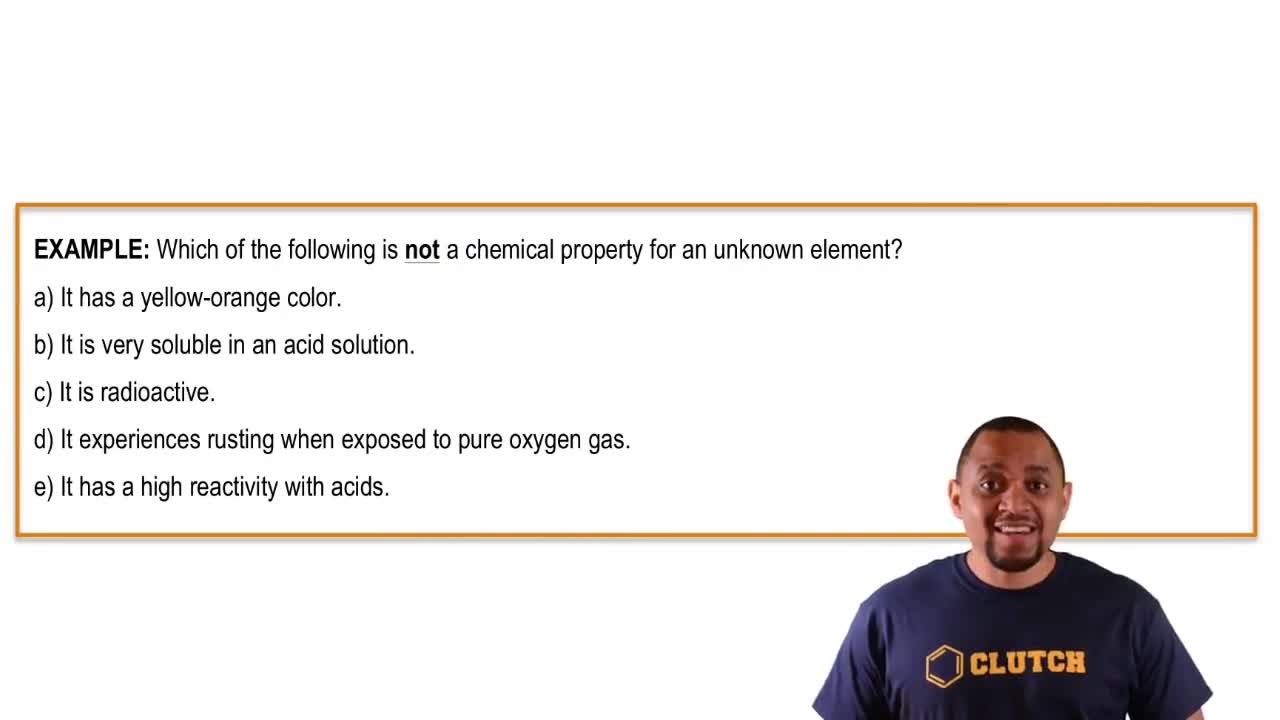
Chemical Properties Example 1

Reactivity

Reactivity refers to the tendency of a substance to undergo chemical reactions, either by itself or with other materials. In the case of hydrogen, its high reactivity with oxygen means it readily combines with oxygen molecules, leading to combustion or oxidation. This property is crucial in understanding how elements interact in chemical processes.
Recommended video:
Guided course
01:41
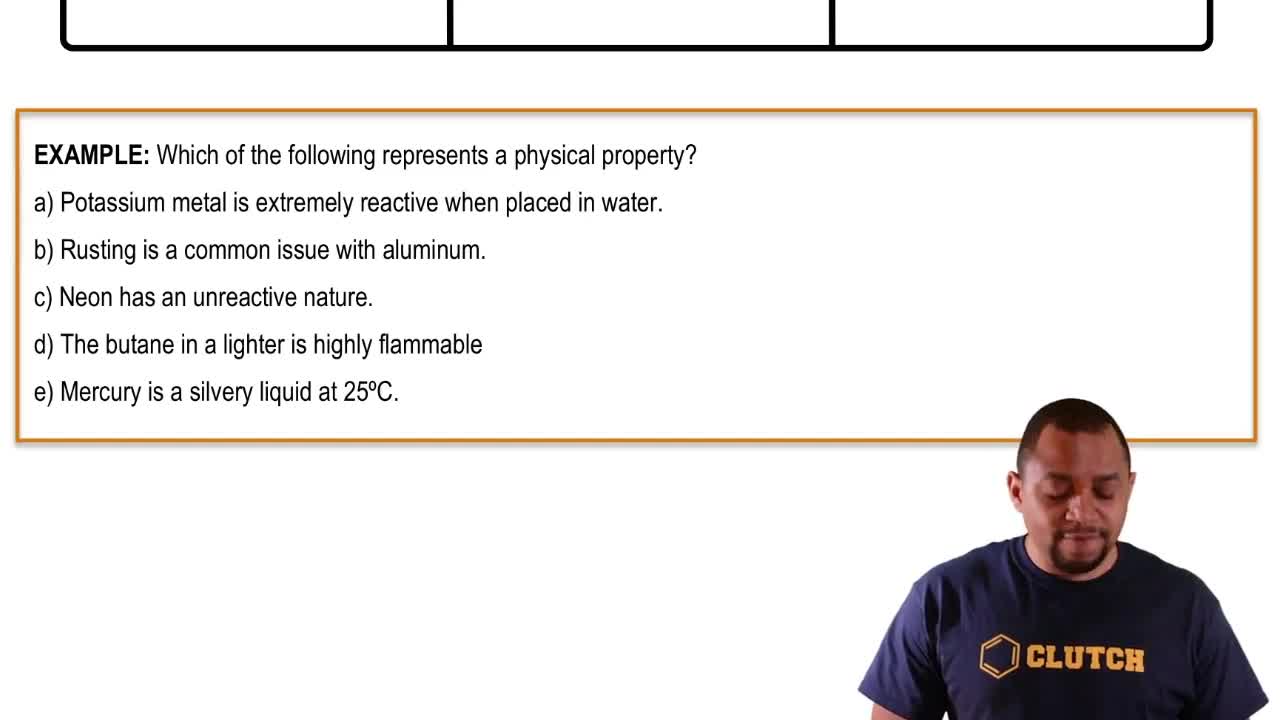
Physical Properties Example

Combustion Reaction

A combustion reaction is a type of chemical reaction where a substance combines with oxygen, releasing energy in the form of heat and light. When hydrogen reacts with oxygen, it undergoes combustion, producing water and energy. This reaction is fundamental in various applications, including energy production and propulsion.
Recommended video:
Guided course
2:25
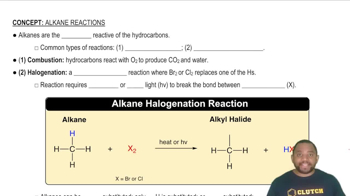
Common Types of Alkane Reactions Concept 1