Pearson+ LogoPearson+ Logo
Ch.3 Matter and Energy
Timberlake - Chemistry: An Introduction to General, Organic, and Biological Chemistry 13th Edition
Timberlake13th EditionChemistry: An Introduction to General, Organic, and Biological ChemistryISBN: 9780134421353Not the one you use?Change textbook
Chapter 3, Problem 10b

Describe each of the following as a physical or chemical property:
b. Apple slices turn brown when they are exposed to air.

Verified step by step guidance
1
Understand the difference between physical and chemical properties: A physical property is a characteristic that can be observed or measured without changing the substance's chemical identity (e.g., color, melting point, density). A chemical property describes a substance's ability to undergo a chemical change, resulting in the formation of a new substance (e.g., flammability, reactivity).
Analyze the scenario: The problem states that apple slices turn brown when exposed to air. This indicates a change occurring over time due to exposure to the environment.
Consider the cause of browning: The browning of apple slices is due to a chemical reaction between enzymes in the apple (such as polyphenol oxidase) and oxygen in the air. This reaction produces new compounds, such as melanin, which cause the brown color.
Determine the type of property: Since the browning involves a chemical reaction and results in the formation of new substances, this is a chemical property of the apple.
Conclude: The ability of apple slices to turn brown when exposed to air is a chemical property because it involves a chemical change in the composition of the apple.

Verified video answer for a similar problem:

This video solution was recommended by our tutors as helpful for the problem above.
Video duration:
48s
Was this helpful?

Key Concepts

Here are the essential concepts you must grasp in order to answer the question correctly.

Physical Property

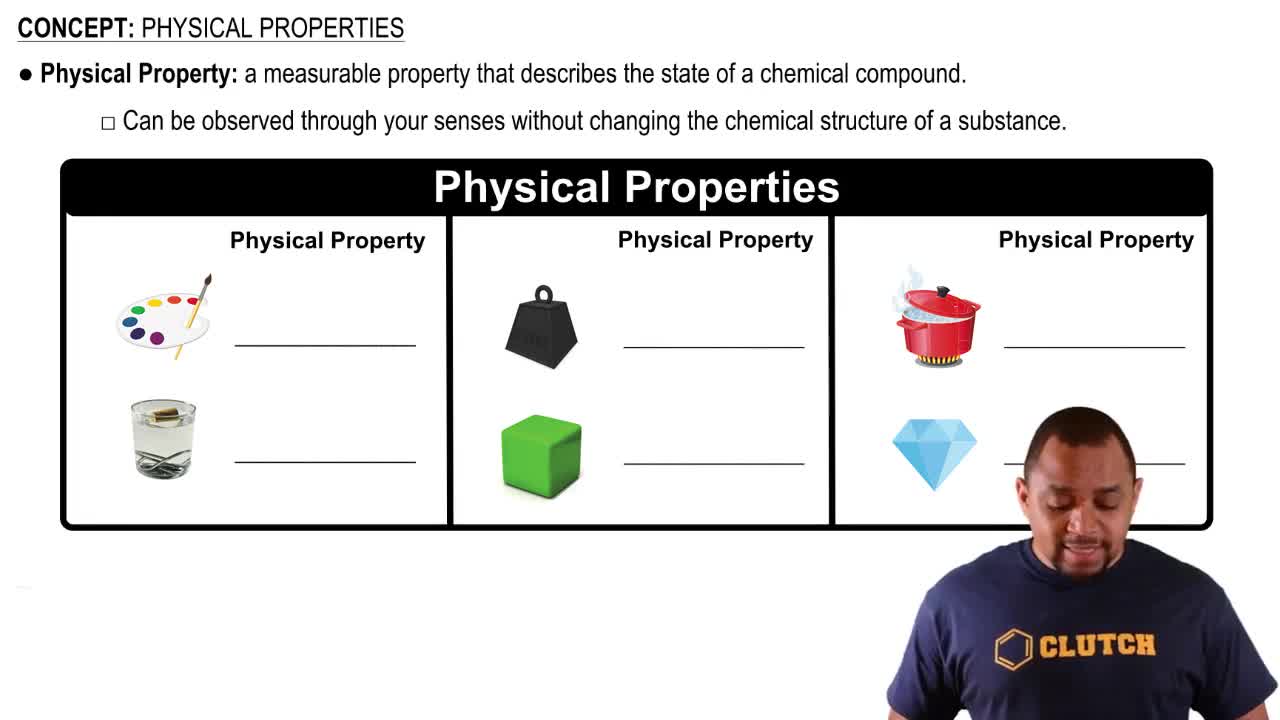
A physical property is a characteristic of a substance that can be observed or measured without changing its chemical composition. Examples include color, odor, melting point, and density. In the context of apple slices turning brown, the initial appearance of the slices is a physical property that can be observed before any chemical changes occur.
Recommended video:
Guided course
02:54
Physical Properties Concept

Chemical Property

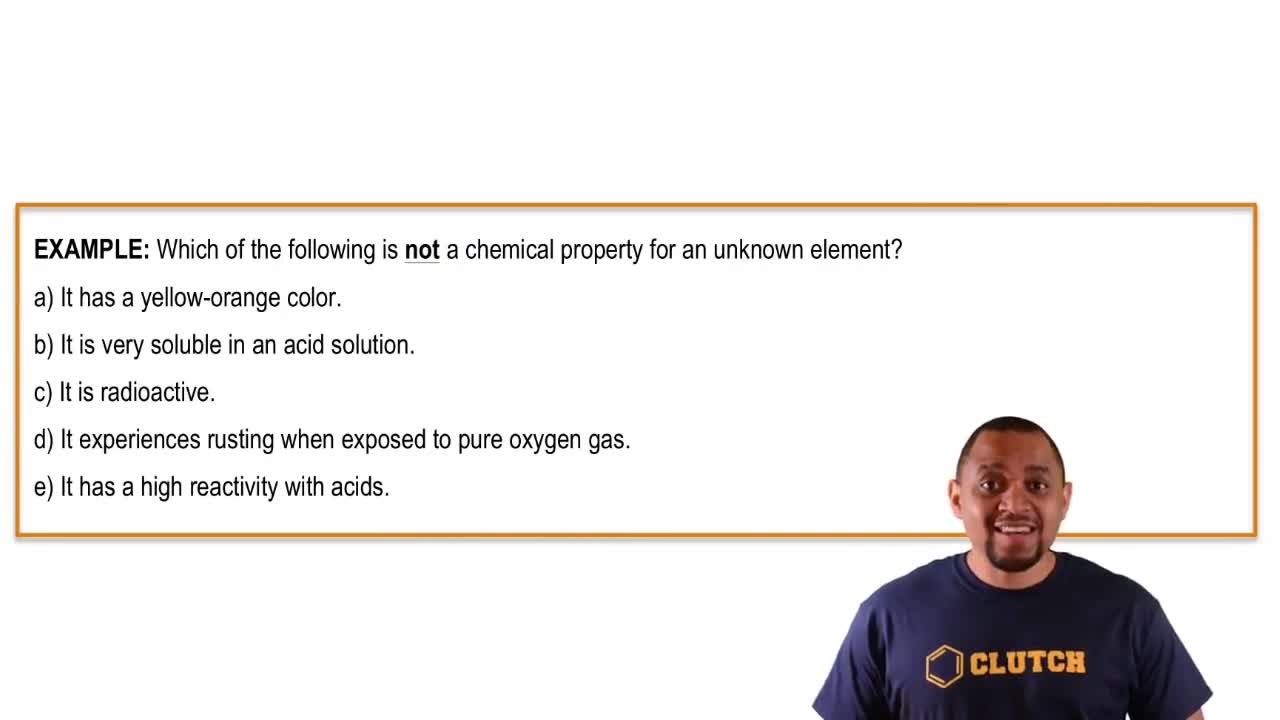
A chemical property describes a substance's ability to undergo a specific chemical change. This includes reactions with other substances, such as oxidation or combustion. The browning of apple slices is a chemical property, as it involves a reaction with oxygen in the air, leading to the formation of new compounds that change the color of the apple.
Recommended video:
Guided course
02:11
Chemical Properties Example 1

Oxidation Reaction

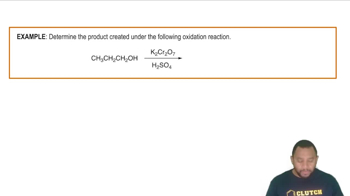
An oxidation reaction is a type of chemical reaction where a substance loses electrons, often involving the reaction with oxygen. In the case of apple slices, the exposure to air triggers oxidation, resulting in the browning effect. This process is catalyzed by enzymes in the apple, which facilitate the conversion of phenolic compounds into brown pigments.
Recommended video:
Guided course
1:32
Alcohol Reactions Oxidation Reactions Example 1