Pearson+ LogoPearson+ Logo
Ch.7 Chemical Quantities and Reactions
Timberlake - Chemistry: An Introduction to General, Organic, and Biological Chemistry 13th Edition
Timberlake13th EditionChemistry: An Introduction to General, Organic, and Biological ChemistryISBN: 9780134421353Not the one you use?Change textbook
Chapter 7, Problem 107b

The equation for the formation of silicon tetrachloride from silicon and chlorine is
Si(s) + 2Cl2(g) → SiCl4(g) + 157 kcal
b. Is the energy of the product higher or lower than the energy of the reactants?

Verified step by step guidance
1
Step 1: Begin by analyzing the given chemical equation: Si(s) + 2Cl₂(g) → SiCl₄(g) + 157 kcal. The '+ 157 kcal' indicates that energy is released during the reaction, meaning it is an exothermic reaction.
Step 2: In an exothermic reaction, the energy of the products is lower than the energy of the reactants because energy is released to the surroundings.
Step 3: The release of 157 kcal signifies that the system loses this amount of energy, which corresponds to a decrease in the energy content of the products compared to the reactants.
Step 4: Conceptually, the energy difference between the reactants and products is what is released as heat (157 kcal in this case). This confirms that the products are more stable and have lower energy.
Step 5: Conclude that the energy of the product (SiCl₄) is lower than the energy of the reactants (Si and Cl₂) due to the exothermic nature of the reaction.

Verified video answer for a similar problem:

This video solution was recommended by our tutors as helpful for the problem above.
Video duration:
2m
Was this helpful?

Key Concepts

Here are the essential concepts you must grasp in order to answer the question correctly.

Chemical Reaction Energy

In a chemical reaction, the energy of the reactants and products can be compared to determine the reaction's energy change. The energy released or absorbed during a reaction is often expressed in kilocalories or joules. In exothermic reactions, like the formation of silicon tetrachloride, energy is released, indicating that the products have lower energy than the reactants.
Recommended video:
Guided course
00:58
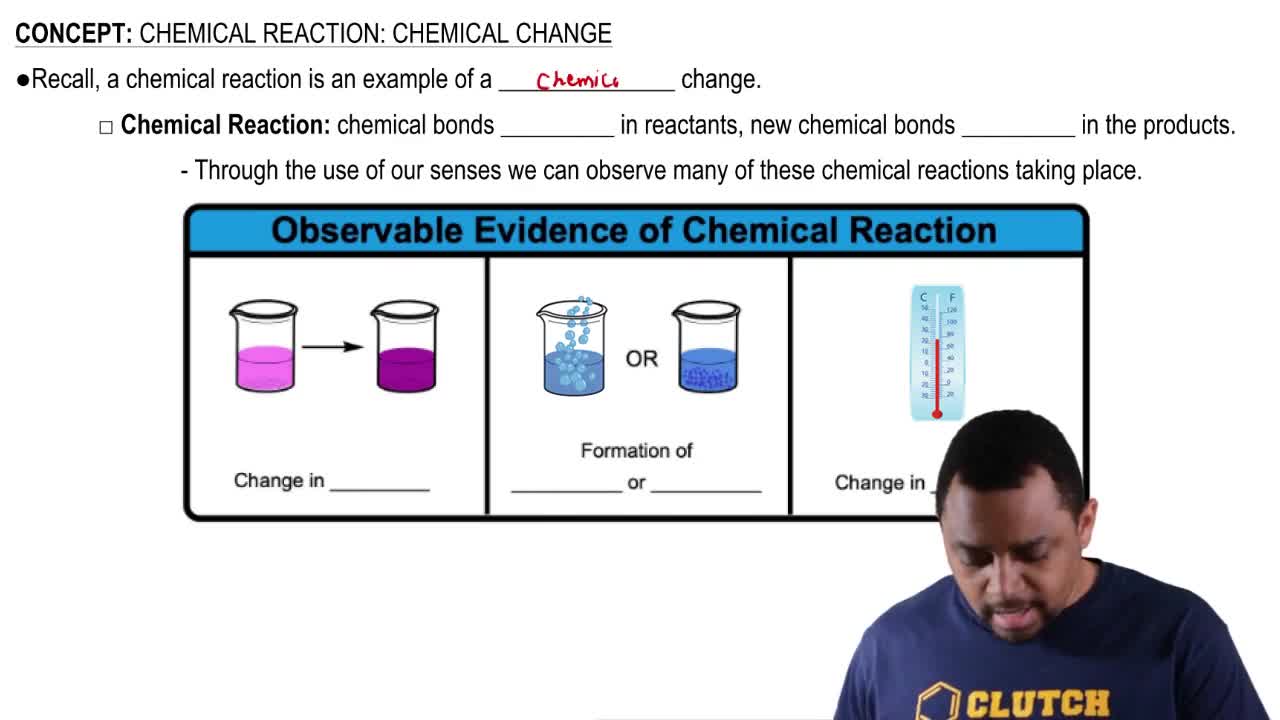
Chemical Reaction: Chemical Change Concept 1

Exothermic Reactions

Exothermic reactions are processes that release energy, usually in the form of heat, to the surroundings. This occurs when the total energy of the products is less than that of the reactants, resulting in a negative change in enthalpy. The reaction provided, which produces silicon tetrachloride, is an example of an exothermic reaction, as indicated by the release of 157 kcal.
Recommended video:
Guided course
02:38
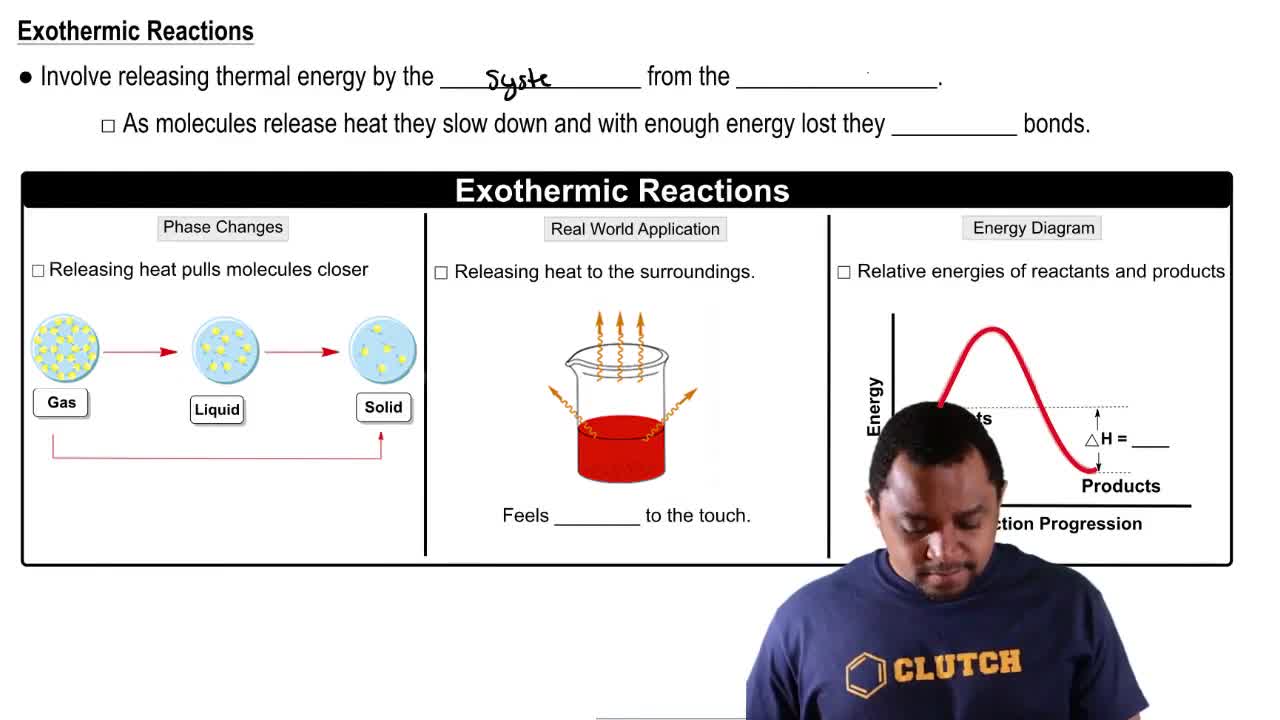
Endothermic & Exothermic Reactions

Enthalpy Change

Enthalpy change (ΔH) is a measure of the total heat content of a system during a chemical reaction. It reflects the difference in energy between the reactants and products. A negative ΔH value signifies that the products are more stable and have lower energy than the reactants, which is the case in the reaction forming silicon tetrachloride, where energy is released.
Recommended video:
Guided course
01:53
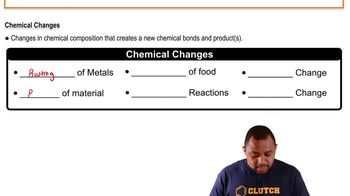
Physical & Chemical Changes