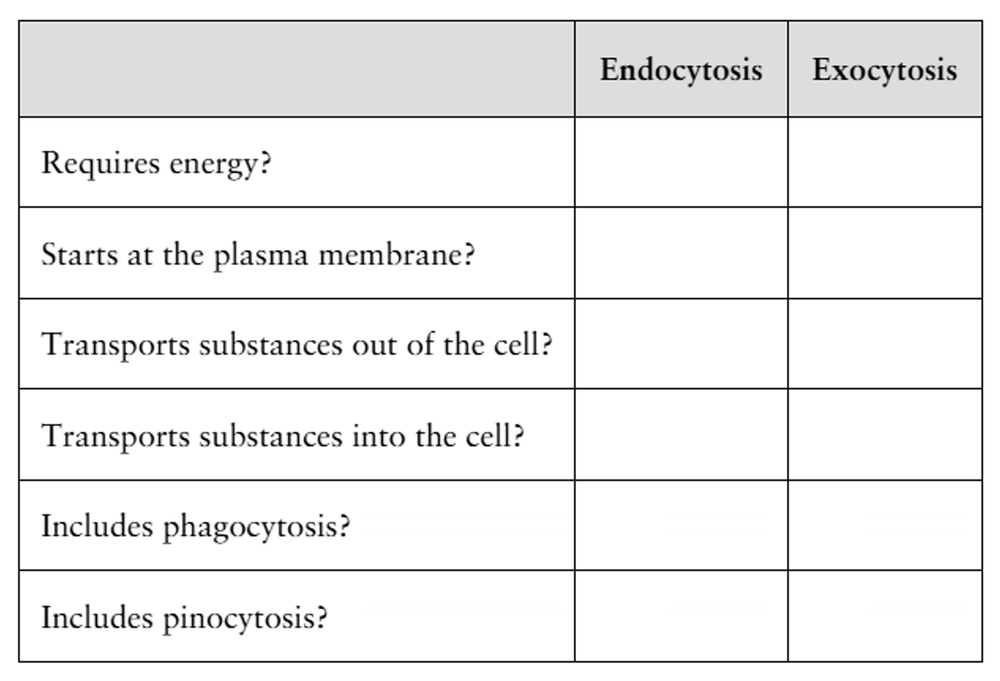
Complete the table by answering yes or no for each question.
Verified step by step guidance
1
Since the problem references an image and a table that are not provided, first carefully examine the image and the table to understand what information is being asked for each question.
Identify the criteria or characteristics that determine a 'yes' or 'no' answer for each question in the table. This might involve recognizing microbial traits, growth conditions, staining results, or other microbiological features shown in the image.
For each question in the table, compare the relevant part of the image or data to the criteria identified. Decide if the condition or characteristic is present (answer 'yes') or absent (answer 'no').
Systematically fill in the table by writing 'yes' or 'no' for each question based on your analysis, ensuring consistency and accuracy.
Review your answers to confirm they align with the microbiological principles and the evidence provided in the image, correcting any discrepancies before finalizing the table.
Verified video answer for a similar problem:
This video solution was recommended by our tutors as helpful for the problem above
Video duration:
3m
Play a video:
0 Comments
Key Concepts
Here are the essential concepts you must grasp in order to answer the question correctly.
Interpreting Microbiological Data Tables
Understanding how to read and interpret data tables is essential in microbiology. This involves recognizing the parameters measured, such as growth presence, biochemical reactions, or resistance patterns, and accurately answering yes or no based on the data provided.
Many microbiology questions involve identifying microorganisms using biochemical or physiological tests. Knowing common tests (e.g., catalase, oxidase, fermentation) and their expected positive or negative results helps in completing tables correctly.
Answering yes or no requires understanding what each response signifies in the context of the test or observation. This includes recognizing positive versus negative outcomes and their implications for microbial characteristics or behavior.