

Campbell Essential Biology, Global Edition, 7th edition
- Eric J. Simon |
- Jean L. Dickey |
Title overview
This title is a Pearson Global Edition. The Editorial team at Pearson has worked closely with educators around the world to include content which is especially relevant to students outside the United States.
Develop and Practice Science Literacy Skills
Teach students to view their world using scientific reasoning with Campbell Essential Biology. The authors’ approach equips your students to become better informed citizens, relate concepts from class to their everyday lives, and understand and apply real data, making biology relevant and meaningful to their world and futures.
The new edition incorporates instructor feedback on what key skills to highlight in new Process of Science essays and uses striking infographic figures in conveying real data to help students see and better understand how science actually works. New author-narrated Figure Walkthrough Videos guide students through key biology concepts and processes.
New topics in Why It Matters inspire curiosity and provide real-world examples to convey why abstract concepts like cell respiration or photosynthesis matter to students. This edition’s unmatched offering of author-created media supports students in the toughest topics with 24/7 access through the enhanced Pearson eText, embedded QR codes in the print text, and Mastering Biology.
Hallmark features of this title
Scientific literacy skills
- Process of Science essays present material in a non-linear and highly visual format, aligning with widely accepted models of how science actually works.
Engaging visuals
- Each Chapter Thread weaves a compelling topic throughout the chapter, highlighted in Biology and Society essays, The Process of Science, and Evolution Connection essays.
Innovative approach
- Major Themes in Biology (Evolution, Structure/Function, Information Flow, Energy Transformations and Interconnections within Systems) help students see the interconnectedness of concepts.
- Evolution Connection essays further explore a consistent evolution theme in depth in each chapter.
New and updated features of this title
Scientific literacy skills
- UPDATED: Process of Science essays present the material in a non-linear and highly visual format, aligning with widely accepted models of how science actually works.
- Visualizing the Data figures illustrate data in an infographic format and provide students with a fresh approach to understanding concepts.
Engaging visuals
- 29 Figure Walkthroughs, written and narrated by the author team, appear in each chapter and include a QR Code to an accompanying short video that explains the concept or process.
- UPDATED: Why It Matters inspires curiosity with photos and real-world examples that convey why abstract concepts like cell respiration and photosynthesis matter.
Innovative approach
- Two Biology and Society essays have been added, and the Biology and Society essays relating biology to students' lives are either new or updated: Chapter 7: A Solar Revolution, Chapter 10: The Global Threat of Zika Virus, Chapter 14 Humanity's Footprint, Chapter 17 Evolving Adaptability.
- Assessment questions reinforce the five major biological themes, are located at the end of each chapter.
Key features
Features of Mastering Biology for the 7th Edition
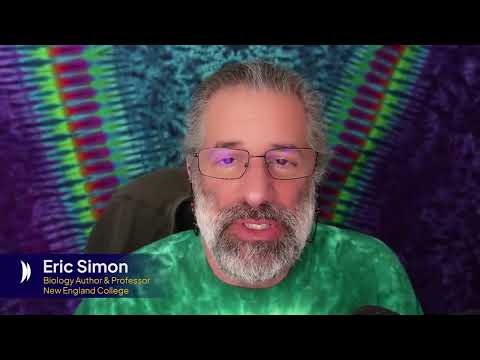
- 12 Topic Overview Videos, narrated by author Eric Simon and contributor Kelly Hogan, introduce key concepts and vocabulary and can be assigned.
- Visualizing the Data coaching activities bring the infographic figures in the book to life and are assignable in Mastering.
- Evaluating Science in the Media activities teach students to recognize validity, bias, purpose, and authority in everyday sources of information.
- Scientific Thinking Activities help students develop an understanding of how scientific research is conducted.
Table of contents
- 1 Learning About Life
- 2 Essential Chemistry for Biology
- 3 The Molecules of Life
- 4 A Tour of the Cell
- 5 The Working Cell
- 6 Cellular Respiration: Obtaining Energy from Food
- 7 Photosynthesis: Using Light to Make Food
- 8 Cellular Reproduction: Cells from Cells
- 9 Patterns of Inheritance
- 10 The Structure and Function of DNA
- 11 How Genes Are Controlled
- 12 DNA Technology
- 13 How Populations Evolve
- 14 How Biological Diversity Evolves
- 15 The Evolution of Microbial Life
- 16 The Evolution of Plants and Fungi
- 17 The Evolution of Animals
- 18 An Introduction to Ecology and the Biosphere
- 19 Population Ecology
- 20 Communities and Ecosystems
Author bios
About our authors
ERIC J. SIMON is a professor in the Department of Biology and Health Science at New England College (Henniker, New Hampshire). He teaches introductory biology to science majors and nonscience majors, as well as upper-level courses in tropical marine biology and careers in science. Dr. Simon received a B.A. in biology and computer science, an M.A. in biology from Wesleyan University, and a Ph.D. in biochemistry from Harvard University. His research focuses on innovative ways to use technology to increase active learning in the science classroom, particularly for nonscience majors. Dr. Simon is also the author of the introductory biology textbook Biology: The Core, 2nd Edition, and a coauthor of Campbell Biology: Concepts & Connections, 9th Edition.
JEAN L. DICKEY is Professor Emerita of Biological Sciences at Clemson University (Clemson, South Carolina). After receiving her B.S. in biology from Kent State University, she went on to earn a Ph.D. in ecology and evolution from Purdue University. In 1984, Dr. Dickey joined the faculty at Clemson, where she devoted her career to teaching biology to nonscience majors in a variety of courses. In addition to creating content-based instructional materials, she developed many activities to engage lecture and laboratory students in discussion, critical thinking, and writing, and implemented an investigative laboratory curriculum in general biology. Dr. Dickey is the author of Laboratory Investigations for Biology, 2nd Edition, and is a coauthor of Campbell Biology: Concepts & Connections, 9th Edition.
JANE B. REECE was Neil Campbells longtime collaborator and a founding author of Campbell Essential Biology and Campbell Essential Biology with Physiology. Her education includes an A.B. in biology from Harvard University (where she was initially a philosophy major), an M.S. in microbiology from Rutgers University, and a Ph.D. in bacteriology from the University of California, Berkeley. At UC Berkeley, and later as a postdoctoral fellow in genetics at Stanford University, her research focused on genetic recombination in bacteria. Dr. Reece taught biology at Middlesex County College (New Jersey) and Queensborough Community College (New York). Dr. Reeces publishing career began in 1978 when she joined the editorial staff of Benjamin Cummings, and since then, she played a major role in a number of successful textbooks. She was the lead author of Campbell Biology Editions 8-10 and a founding author of Campbell Biology: Concepts & Connections.
NEIL A. CAMPBELL (1946-2004) combined the inquiring nature of a research scientist with the soul of a caring teacher. Over his 30 years of teaching introductory biology to both science majors and nonscience majors, many thousands of students had the opportunity to learn from him and be stimulated by his enthusiasm for the study of life. He is greatly missed by his many friends in the biology community. His coauthors remain inspired by his visionary dedication to education and are committed to searching for ever better ways to engage students in the wonders of biology.