Students blog

Explore the latest trends, tips, and experiences in college life in this blog written by fellow students.

Explore posts in other areas.

PreK-12Higher EducationProfessional

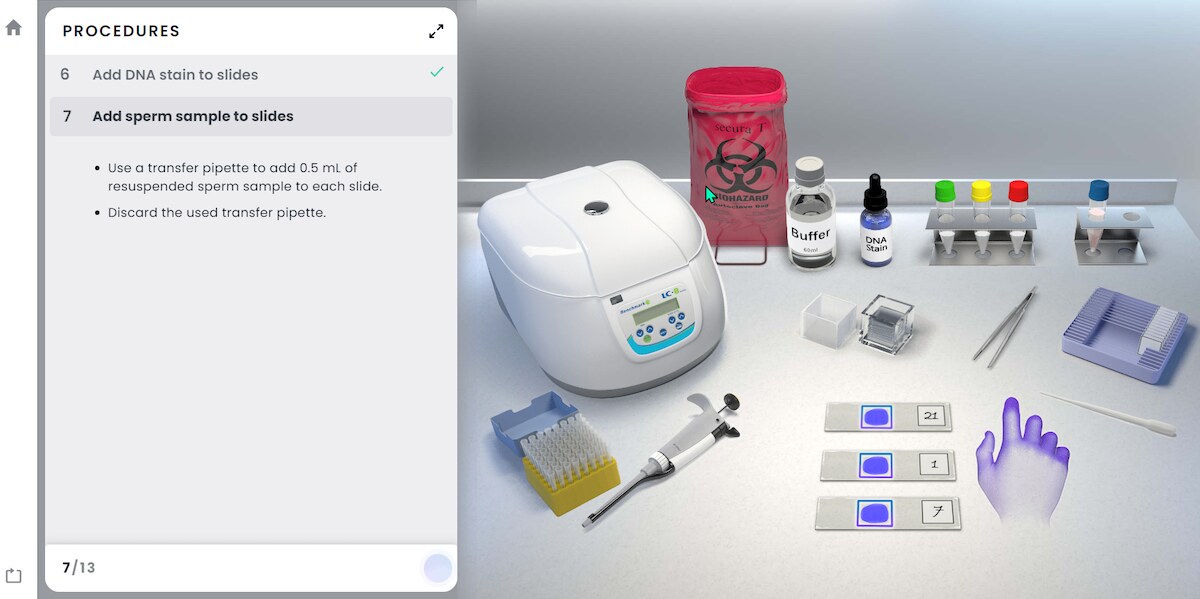
  • Virtual lab environment with open procedures window guiding students to click on items to discover how it will be used.

    Pearson Interactive Labs: Connecting real life with online labs

    Mikayla Wallace

    Lab-based science courses have always intimidated me because, as a Business Management major, I have no lab experience. I was excited to try the Pearson Interactive Science Labs because their design allows you to work through online labs conveniently from anywhere at your own pace. After working through the virtual labs, I consider them an essential tool because they provide a meaningful science-based experience that includes a real-world scenario introduction, a step-by-step lab walkthrough, reflective analysis, and a wrap-up quiz. The interactive labs are easy to navigate, even without a science background, and are an excellent resource for applying the knowledge learned.

    Engaging Introduction:

    College can be overwhelming, which leads me to rush through assignments without understanding the meaning and importance of what I am learning. The Pearson Interactive Labs effectively explain the significant realistic scenario of the lab before you begin, which grabs your attention and encourages authentic participation. Background information for the case is also presented, and embedded questions ensure you fully understand the material and can move forward successfully to the lab. One feature I found beneficial was the multiple formats for the embedded questions, such as multiple choice, select all that are correct, and matching type questions.

    Straightforward Guided Lab Experience:

    After viewing the case scenario and relevant background information, the simulation allows you to familiarize yourself with the lab equipment location and tool names, which is extremely helpful for non-biology majors like me who may have never completed a college-level lab. Once you have walked through the tools necessary for the lab, you are given a set of self-paced step-by-step instructions to accomplish the lab goals. I feel the lab instructions are valuable because they are thorough yet easy enough to follow for any student including those with no prior lab experience.

    Impactful Application of Knowledge:

    When finished with the lab, you are guided through how to analyze the data and apply your knowledge to other related cases. Following the final analysis of the lab results, you are prompted to answer case-related questions in a quiz format. As a student, I appreciate opportunities to apply the knowledge I have learned because it creates a sense of accomplishment and cements the learned concepts into my memory for future use.

    The interactive lab structure offers a guide through the complete science process including formulating a hypothesis, conducting a lab, and analyzing lab results. Having all the information and virtual tools needed for a lab assignment accessible in one place is crucial, especially for non-science majors. Busy college students like myself seek convenience in school work, which is why the virtual interactive labs are a fantastic tool for anyone taking a science course, regardless of their science background.

    Busy college students like myself seek convenience in school work, which is why the virtual interactive labs are a fantastic tool for anyone taking a science course, regardless of their science background.

    Learn more about Pearson Interactive Labs today! 

  • Nutritional food dishs of chicken on rice with avocado

    What’s on My Plate: Recipes for the Everyday College Student

    Rachel Stennett

    Picking out all the shortcomings in our diet is the easy part- figuring out how to make up for these shortcomings is a lot harder. “I should be eating more veggies, but I don’t have the time to prepare them; I should be drinking more water, but the taste is so boring compared to juice; I would cook more, but I don’t know what to make” are all common excuses students make when it comes to dining in college. Now that we have covered some of the nutritional deficiencies in college students and the most common micronutrient sources- how do we actually implement these foods into our diet? 

    While I experimented in the kitchen growing up, most of my meals were not as appetizing as the ones I idolized on cooking shows. During my time in college, I have had more time to refine my cooking skills and build a modest collection of go-to recipes. Here are a few of my favorite recipes and quick meals that can help add back missing micronutrients to the everyday college student’s diet.

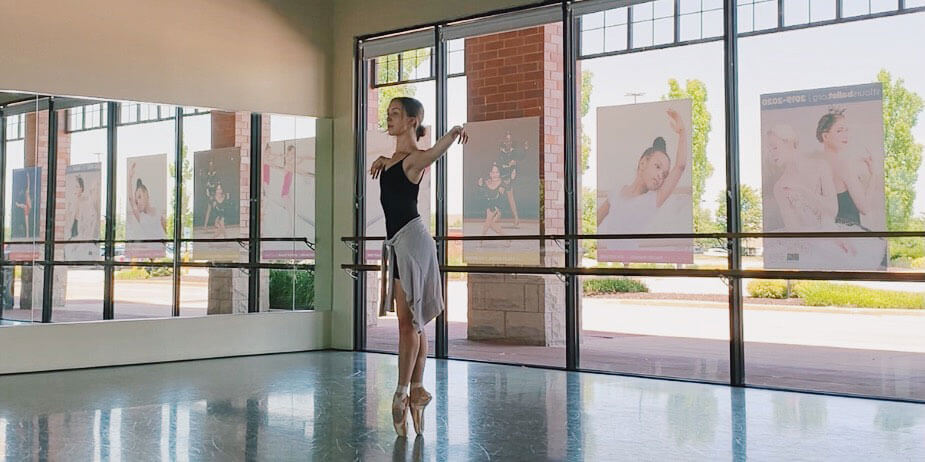
  • A female student holding a ballet pose in an empty dance studio.

    Better Dancer, Better Student

    Lauren Kot

    College is a great time to start developing new skills, especially when they help you in your success as a healthy, learning student. What skills am I referring to? You may be thinking of skills such as communication, time-management, or teamwork. Although these are very helpful and necessary to academic success, another skill you should explore as a college student is dancing! There is no better time than now in college to take a dance class. In addition to being a fun way to express yourself, dancing is also a great way to strengthen both your body and mind.

    Strengthen Your Mind

    Dancing benefits you in many ways that can result in better brain function. It has been shown to:

    • Improve memory
    • Improve critical thinking skills
    • Stimulate new neural connections
    • Reduce stress
    • Improve physical health

    Dancing requires a lot of memorization, and the practice of remembering moves and executing them helps build the brain’s ability to access stored information. Dancing also forces students to quickly learn that solutions to problems can take many forms and helps in developing better critical thinking skills. In addition to bettering memory and critical thinking, the combination of movement and sensory enrichment during dancing has been shown to improve neuroplasticity (the ability to form new neural connections). Talk about having a positive impact on the brain! Dancing stimulates the growth of new neurons, leading to a healthier brain and a lesser chance of developing neurological diseases later in life.

    Strengthen Your Body

    Just like other forms of physical activity, dancing reduces stress and improves overall physical health. Dancing releases dopamine and endorphins to make you happy, in addition to increasing levels of serotonin and reducing levels of cortisol to help alleviate stress. It also boosts creativity and provides a healthy way to express yourself. Dancing is a very aerobic form of exercise, so it helps overall physical health by improving cardiovascular health, strengthening muscles, and increasing endurance. It also increases flexibility and improves balance and coordination!

    Have I convinced you to start dancing yet? The number of benefits that surround dance completely outweigh the trouble of finding a dance class and fitting it into your schedule. The improvement of mental and physical health that dance provides will only make you a better college student. Improved memory, critical thinking skills, neural connections, physical health, and reduced stress are all things that will help you better succeed in college. Better dancer means better student, so start dancing!

    Do you have a compelling story or student success tips you’d like to see published on the Pearson Students blog?  If you are a college student and interested in writing for us – click here to pitch your idea and get started! 

  • A computer-generated graphic of three people sitting on the floor around a low table and playing a board game.

    Outside the Box Ways to Relax

    Jordan Little

    In school, it is easy to get bogged down by continuous deadlines, assignments, and everyday stressors. Whether you chronically overwork or constantly procrastinate, school can stress you out if you're not conscious of your mental state. Even though taking walks, reading books, and meditating are great stress relievers, those practices and habits don't come naturally to everyone. If you're looking for some "outside the box" ways to relax, here are my two favorite ways to de-stress that are a bit less common.

    Board Games

    If you’re a more social person, I love relaxing by playing board games. Whether they’re collaborative or competitive, board games are a great way to schedule fun, non-academic, and inexpensive activities with your friends and peers. Board games are easy to find and only require a onetime purchase if you don’t already own a particular game. If you’re not looking for physical copies of games, you can also find many games for cheap/free online to play on-the-go or online. At Georgia State University, we are lucky enough to have a tabletop gaming club that can help facilitate these weekly games, but it’s super easy to meet up with friends on your own time to do so. Having a game night with my friends every other week has been a great way for me to stop worrying about what’s been stressing me out that week. I can shift my focus onto the objective of the game at hand while getting to catch up and laugh with my friends.

    Jigsaw Puzzles

    For more introverted people, the activity I’ve taken up most this school year to relax is doing jigsaw puzzles. With a range of difficulties and themes, it’s easy to decide on a puzzle that specifically fits what you want. Personally, I like to listen to a good album, catch up on a show, or relax in silence while focusing on the puzzle. Not only are puzzles a great mental workout, but they help you take a break from being on social media, staring at a screen, or stressing over an assignment. The best part is that your hard work helps create a beautiful finished puzzled that you can glue together and use for decoration or gift giving.

    If you don’t know how to de-stress and relax, you can get overwhelmed in the blink of an eye. It’s great to work hard, but it is also necessary to spend time relaxing and having fun, so your brain can keep working hard without burning itself out. While I really enjoy playing board games and doing puzzles to de-stress, I encourage you to see what activity work best for you. It’s important to know what helps you relax and to set aside time to de-stress.

    Do you have a compelling story or student success tips you’d like to see published on the Pearson Students blog?  If you are a college student and interested in writing for us – click here to pitch your idea and get started! 

  • Large blue letters extended from a convention center ceiling that read: IAAPA expo. There is a large off-white column to either side of the letters.

    Dear Younger Me: My Childhood Dreams are Becoming Reality

    Arya Kirpekar

    What is your earliest memory of going to a theme park? Why was that experience memorable to you? I frequented theme parks as a kid and by the time I was old enough to understand the career choices that were in front of me, I wanted to be a “roller coaster engineer”. During my first week of college, I found out about my school’s Theme Park Engineering and Design Club and I knew I had to join. At the first meeting, we talked about our favorite theme park rides, how we would change certain ones, and even some we dreamed of creating and I felt at home right away. I had found a community of people who shared my dream. Through actively participating in this club, I learned that I could alter my previous dream into a real career in theme park design.

    Making the Dream into a Reality

    In November of 2022, I was presented with an opportunity to travel with the club to Orlando for the IAAPA (International Association for Amusement Parks and Attractions) expo. The first time I saw the show floor will forever be a core memory for me. Everywhere the eye could see contained booths, rides, arcade games, food stands, and more. There are no words to do it justice, so I’ll simply describe it as the most overwhelming yet invigorating room I’d ever stepped foot in. Every conversation I had and every company I met reinforced my dream of working in the themed entertainment industry. When I think about everything I learned, it all boils down to the idea that this industry is real and not just something I dreamt of as a kid. Suffice it to say, it was one of the most eye-opening experiences of my life.

    My Biggest Takeaways

    I will forever be grateful for my experience at IAAPA, and I hope to return many more times in my life. For my first real-life introduction to the industry, I felt like I gained a much better understanding of the themed entertainment and attraction industry. Here are my biggest takeaways from the experience:

    1. Classrooms are not equal to real-life experience. I had spent two full semesters hearing about the industry and participating in small-scale activities, but, until I attended the IAAPA expo, my knowledge of the industry barely scraped the surface.
    2. Networking takes time and practice. I thought that networking would come easily to me, but I was sorely mistaken. It took me an entire day to even work up the confidence to initiate a conversation. I’m still working on finding the best ways to introduce myself, but luckily, I have plenty of time to get better at it.
    3. Let passion drive your future endeavors. This was the biggest thing I learned from the experience. Nearly every person I met was excited to talk about their position, projects, and experiences. It was evident that these people had an honest love for their work. Their openness and honesty regarding their passions was incredibly inspiring. They taught me that if I let passion drive my career, I would get much further and be happier than if I follow superficial things.

    If I could relay one piece of advice that I learned from this experience, it’s that there is truth to Walt Disney’s saying, “if you dream it, you can do it.” If you have a passion for something, life is too short to give up on it without even trying. Follow your dreams and they may lead you somewhere beyond what you could have ever imagined.

    Do you have a compelling story or student success tips you’d like to see published on the Pearson Students blog?  If you are a college student and interested in writing for us – click here to pitch your idea and get started! 

  • A tropical beach setting with blue sky and whit puffy clouds.

    Three Actions to Take Better Care of our Planet

    Emilie Conners

    April 22nd. You might remember this day in elementary school as the day your teacher gave you coloring pages with themes of trees, the ocean, and recycling. However, the older we get, the more important this day becomes. Earth Day is all about educating yourself on the ways that you can practice taking better care of the planet. Excess waste is a huge contributor to pollution which harms the earth’s atmosphere which, in turn, will harm us.

    There are tons of different factors that impact the planet and many small lifestyle changes that can make a difference. Here are 3 actions we can practice to take better care of our planet, on Earth Day and every day!

    Help Clean Up

    One easy way to celebrate Earth Day is to participate in a trash cleanup! Joining a big group event or getting together with some friends to remove trash from parks, lakes, beaches, and rivers, all makes a difference. Participating in these types of events helps reduce waste and plastic pollution, plus protects the environment for both wildlife and humans.

    Shop Smarter

    Fast fashion is another culprit of causing extremely high emissions of pollution into our atmosphere. Educating yourself on environmentally friendly fashion choices will help move the world closer towards sustainability.

    Adapt To an Environmentally Friendly Lifestyle

    There are many small lifestyle changes you can make that can make a difference. You can reduce your plastic usage by using reusable bags when you go grocery shopping. Further reduce your plastic usage by taking a reusable water bottle with you. Look for ways to regularly recycle plastic, aluminum, and glass where you live. Making a few of these small changes in the way you live your life can dramatically change the impact you have on the planet and the example you set for others.

    Find More Ways to Celebrate Earth Day

    It can be easy to forget the impact we have on the planet by the actions we take every day; therefore, Earth Day serves as an important reminder. There are tons of changes you can make today to help better the planet and focus on keeping it healthy and beautiful.

    Do you have a compelling story or student success tips you’d like to see published on the Pearson Students blog?  If you are a college student and interested in writing for us – click here to pitch your idea and get started! 

  • A group of six college women and one college man dressed in business attire.

    Networking and Interview Tips from a Natural Born Introvert

    Mikayla Wallace

    Meeting new people in your field or interviewing for a new job can be stressful for everyone, especially introverts like myself. Gaining comfort with introducing yourself to a large group of people such as a club, prepares you for an interview where you are usually only meeting a couple of recruiters. Lucky for us college students now, technology provides us with excellent ways to present ourselves professionally and network with peers or recruiters virtually. First impressions are crucial to the networking and interviewing process, but with a few helpful tips, you will thrive whether you are originally an introvert or extrovert.

    Social Media Branding

    Nowadays online platforms such as LinkedIn are often the beginning of first impressions for professional relationships. Personal branding is crucial to create a consistent and qualifying image that will impress potential employers. LinkedIn is widely used by hiring managers to vet candidates’ experience, which is why it is very important to expand past your resume. Utilizing functions on LinkedIn, such as honors/awards or volunteer work can allow you to demonstrate your character beyond your resume and provide further insight to employers.

    The most important aspect of building your LinkedIn account is the About Me section, in which you can summarize your current activities, interests, and goals relevant to your career path. Aside from professional media platforms, it is also important to maintain a consistent image across other social media platforms like Instagram and Snapchat.

    Networking

    As a college student, the first place to begin in-person networking is in your classes. From there you can meet people in different clubs or organizations. Joining a club is a great way to build your network, participate in something you are passionate about, and add to your resume. Many colleges have networking events for different departments that allow students to meet and converse with professionals in that field. One tip for success at formal networking events is to have a QR code on a mobile device that links to your LinkedIn profile, so you can continue the conversation and leverage that connection. Open-mindedness is key when meeting with new people, any connection, regardless of how small, could have a positive impact on a future job opportunity.

    Interviewing

    After social media branding and networking, interviewing is the next step in proving yourself as the perfect candidate for a position. The resume you submit for each job application should be tailored to the said job description. For example, if the job requires organization, time management, and teamwork skills, those should be the skills you highlight on your resume. The most common interview question is “tell me about yourself”, so having a pitch prepared that blends your past experience, present ventures, and future goals is a great tip for a successful interview.

    In addition to framing your resume around the job description and preparing an introduction pitch, you should also have specific examples from your past experience that relate to the assignments of the job you are applying for. The final interview tip is to always have questions prepared regarding the role you are applying for. A couple of questions to ask include: What does a typical day entail in this role? How would you describe the company culture? How do you measure success for this role?

    Maintaining a consistent social media image, employing network connections, and preparing an informative introduction will promote confidence and preparedness contributing to an excellent first impression during an interview.

    Do you have a compelling story or student success tips you’d like to see published on the Pearson Students blog?  If you are a college student and interested in writing for us – click here to pitch your idea and get started! 

  • A graphic featuring a person’s arm with a clock balanced in the hand.

    Procrastination: A college student’s best friend

    Jared Armstrong

    What were you doing before reading this blog? Scrolling through Instagram? Watching TikTok? Putting off your homework? All of the above? “According to the American Psychological Association (APA), anywhere from ‘80 percent to 95 percent of college students procrastinate, particularly when it comes to doing their coursework’” (National University, 2021, p. 1). Based on this percentage, nearly all college students procrastinate in some way. I am personally guilty of procrastinating and waiting until the last minute to get my assignments turned in. However, there are many different ways to overcome procrastination which will allow you to get the most out of each and every day.

    For starters, the biggest distraction is that smart phone you are either using to read this blog or have sitting right next to you. Put the phone somewhere you can no longer see it and you will immediately see an increase in your productivity. In addition, before moving your phone, set a timer for 25 minutes so that way you have a time limit for your work. Once the timer goes off, set another one for a quick five-minute break. You can now repeat this exercise for however long you plan to do your work.

    If you think I’m crazy, this technique is actually known as the Pomodoro Technique which was developed by entrepreneur Francesco Cirillo when he was a college student. In essence, “the Pomodoro Technique essentially trains people to focus on tasks better by limiting the length of time they attempt to maintain that focus and ensuring restorative breaks from the effort. The method also helps them overcome their tendencies to procrastinate or multitask, both of which are known to impair productivity” (Sheldon and Wigmore, 2022, p. 1). If you want to get rid of your procrastination habits, the Pomodoro Technique is a great place to start.

    Furthermore, there are other simple methods for you to prevent procrastination. Rather than numbing your brain with TikTok’s or social media, go outside, take a walk, get some exercise. Everything I just mentioned is widely known to improve your mood and limit your distractions. These activities will also make your mind more refreshed and ready to work. Make sure you take time every day to just take a breath and relax so that way you can see an immediate increase in your productivity.

    If you struggle with procrastination, you are not alone. I have heard this phrase a lot during my college career, and it really does hold true: “The problem college students face is not a lack of time, rather it is having too much time on their hands.” Instead of wasting valuable time, make a daily schedule for yourself that includes everything you want and need to accomplish based on the time you have. Put your phone away, start doing the Pomodoro Technique and set aside time for relaxation and things that will boost your overall well-being.

    So now what? Are you going to sit on your phone some more or are you going to get the most out of your day so you can have more time for fun? To procrastinate or not to procrastinate, that is the question.

    Works Cited

    National University. (2021, July 6). Helping Students Overcome Procrastination. National University. Retrieved February 23, 2023, from https://www.nu.edu/blog/helping-students-overcome-procrastination/#:~:text=According%20to%20the%20American%20Psychological,of%20every%20five%20students%20in

    Sheldon, R., & Wigmore, I. (2022, September 15). What is Pomodoro Technique Time Management? WhatIs.com. Retrieved February 23, 2023, from https://www.techtarget.com/whatis/definition/pomodoro-technique#:~:text=What%20is%20the%20Pomodoro%20Technique,broken%20by%20five%2Dminute%20breaks

    Do you have a compelling story or student success tips you’d like to see published on the Pearson Students blog?  If you are a college student and interested in writing for us – click here to pitch your idea and get started! 

  • A graphic featuring the letters ‘SGA’ in script font in front of a government building. Two groups of students stand on either side of the person speaking at a podium.

    Get Involved in Your Student Government

    Melanie Perez

    Have you ever wondered what it's like to be part of the student government in your prospective school? Have you ever felt discouraged, as if you’re not good enough to join such an “elite” club? Is it too stressful to think about the amount of work you have to do if you do end up getting accepted? Here are 3 tips on how to get involved and how to stay focused once you’re in.

    Apply Apply Apply

    Don’t focus on the negatives or the what ifs, the first step to your success is to apply. If you’re truly passionate about the position, even if you don't get accepted the first time, try again! I applied early into the school year, and I even made it to the interview stage, but I ended up not getting accepted the first time. Although I was slightly sad, I wasn't discouraged, and at the start of the fall semester, I applied once more and got in! Not getting accepted is not failure, it's a small set-back, and although it might hurt at first, it's always good to keep pushing.

    I'm In? Now What Do I Do?

    The first step after getting accepted is always to talk to one of the managers who run the student government. More often than not, the other student council members don't know much about the paperwork, so always stick to speaking to the higher-ups. They will guide you through the steps needed so you can officialize your position. Once all the paperwork is done, the real work begins…

    How To Manage School Work and Student Government Work.

    Depending on your college or university, the student government might have different schedules or workload. Consult with your SGA president or another member with a lot of experience. Always contact another student for this, not a manager. While SGA work is important, it's important to remember that it comes second to schoolwork. Exams, homework, quizzes, projects, whatever it may be, they all come first. Always prioritize your schoolwork but work to figure out where you have extra time in your schedule to focus on SGA work as well.

    You Got This!

    After a while, you’ll start to notice that everything intertwines, and mixing SGA and schoolwork isn’t so difficult anymore; you now have a set schedule that you follow. Your multi-tasking and time management skills have increased. Being involved in student government is a worthwhile and rewarding endeavor for any college student. Now, what’s taking so long for you to start the application?

    Do you have a compelling story or student success tips you’d like to see published on the Pearson Students blog?  If you are a college student and interested in writing for us – click here to pitch your idea and get started!