My Summer Journey through an Analogue Textbook
A Devoted E-Text User
As someone who grew up with accessible technology, I’ve been an avid E-Text user for my entire college experience. Why wouldn’t I be? E-Texts can be accessed on every device I own and often have additional features for an extended learning experience.
However, during the summer of 2026, I decided to take four online classes (idle hands and whatnot). One class required a 2011 textbook on persuasion. This niche textbook was unavailable as an E-Text, so I did the unimaginable... I bought the thing.
An Unexpected Connection
When the used copy of the book showed up at my door, I flipped through the pages and immediately noticed handwritten notes and highlighted markings throughout. In that moment, I felt like I was holding the Half-Blood Prince’s potions book from Harry Potter. The only difference was the name signed on the front page: some guy named Artie (RIP, maybe).
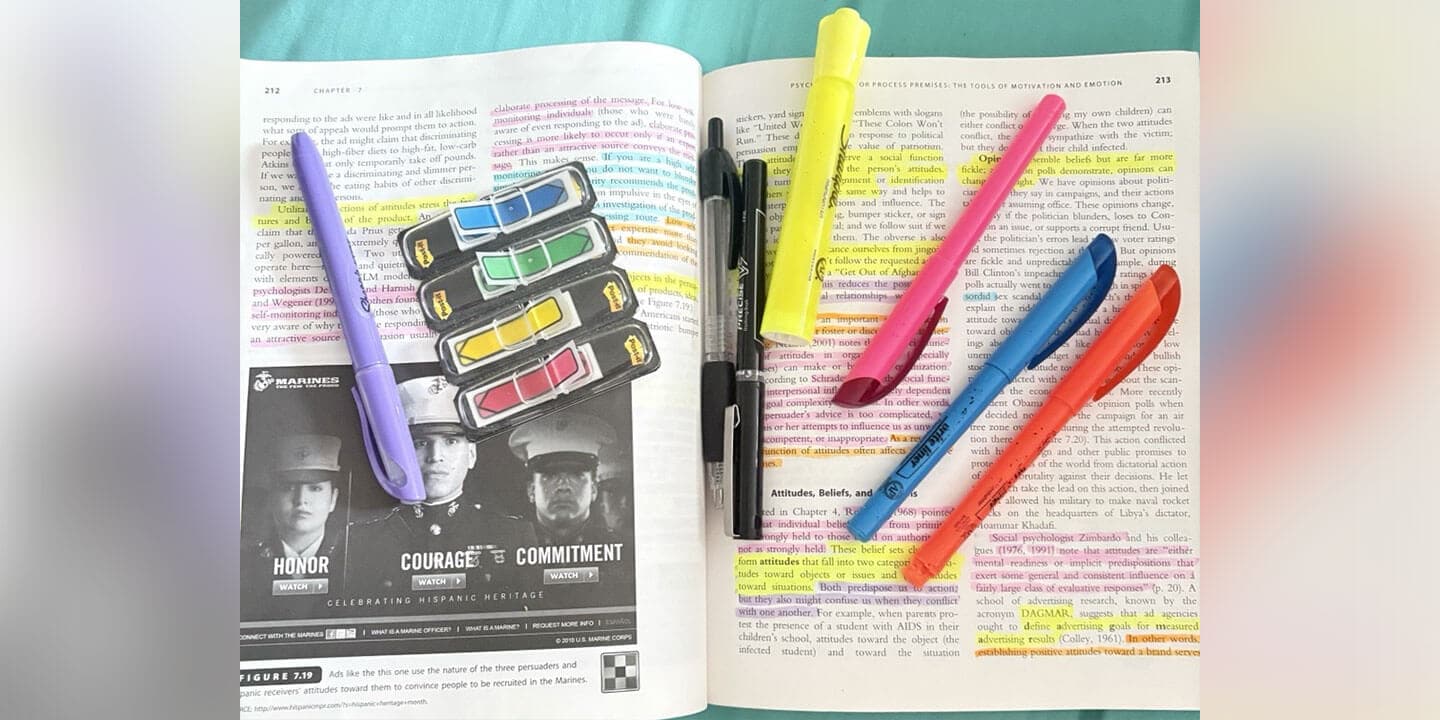
As I began reading for the class, I noticed that despite Artie’s best efforts, he had skimped on highlighting details that I felt were important. I ran around my house until I found some highlighters in a drawer and began making my own highlights and penning comments directly into the textbook.
Suddenly, I felt like I was becoming a part of the textbook in a way I had never experienced with my E-Texts. When I flew down to Texas, my carry-on held my Persuasion textbook and a bag of highlighters. Pretentiously, I sat, flying more than 30,000 feet above the Earth, making wild and free comments in this textbook.
Unlearning Old Rules
I wondered to myself why this was the first time in my life I had ever felt the urge to make comments directly into a paper textbook. I remember being young and my mother scolding me for coloring in a picture book my grandma had given me for my birthday.
A few years later, I would dog-ear my place in a chapter book, and my adoptive mom told me that I was disrespecting the book. I don’t remember picking up many physical books after that. I was afraid I would once again ruin these precious troves of knowledge.
A Convert to Paper
I learn fine with E-Texts; they have all served me well enough. As I move into my senior year, I still maintain a 4.0, but never in my entire life have I felt more connected to a text. After finishing the class with a solid ninety-eight percent, Persuasion now sits on my bookshelf as a reminder of something I not only learned from but became a part of.
I now find myself hungry for my paperback texts. For my fall semester, I ordered every single text I could find in printed form. I have purchased more highlighters in a wide assortment of colors and eagerly await their arrival so that I can begin making comments and highlighting phrases that I find profoundly meaningful.
Maybe I will write my name on the front covers and sell them back when I am finished. Someone else might find them one day, notice untouched phrases, and feel free enough to mark them on their own.
Do you have a compelling story or student success tips you’d like to see published on the Pearson Students blog? If you are a college student and interested in writing for us – click here to pitch your idea and get started!