
Avoiding Midterm Burnout with Aerobic Exercise
Clearing the Fog
The word “midterm” used to stop me dead in my tracks. Just hearing that exams were around the corner would send me into a full-fledged panic. This stress would run my brain so ragged that I'd enter a perpetual mental fog. Needless to say, I was a mess.
Despite attending my classes religiously and taking organized notes, I still couldn’t keep myself from burning out before major exams. That is, until one night, in a blind, chaotic spiral, I decided to go for a walk. After about thirty minutes away from my laptop, I started to feel better.
When I returned to my room, I sat back down with my notes. I noticed my panic had subsided, and I could study with a clearer headspace. After a few weeks of daily walks, I noticed my anxiety had diminished, and I was able to recall more information. It was as if the fog in my mind had cleared.
The Evidence for Exercise
The link between aerobic exercise and cognitive function is not a new concept. It has been widely documented across many medical journals and studies.
A 2022 review by Ferrer-Uris et al. showed that aerobic training three times per week for five weeks improved several cognitive abilities. These included executive function, attention span, information processing speed, and memory (Ferrer-Uris et al.).
A referenced 2011 study monitored participants for twelve months. After a year of regular aerobic activity, the physical volume of the adult hippocampus increased by two percent (Erickson et al., as cited in Ferrer-Uris et al.).
A 2025 article from the CDC linked short bursts of physical activity to improved brain health and function (CDC). The article specifies that an adult needs at least 150 minutes of moderate-intensity exercise each week for these cognitive benefits (CDC).
This weekly goal can be broken down into shorter intervals throughout the week. For example, you can exercise for twenty-two minutes each day or thirty minutes five days a week (CDC).
Steps to Success
I enjoyed night walks because of the crisp air and soft moonlight. However, if safety is a concern, I recommend walking during the day or at your campus gym.
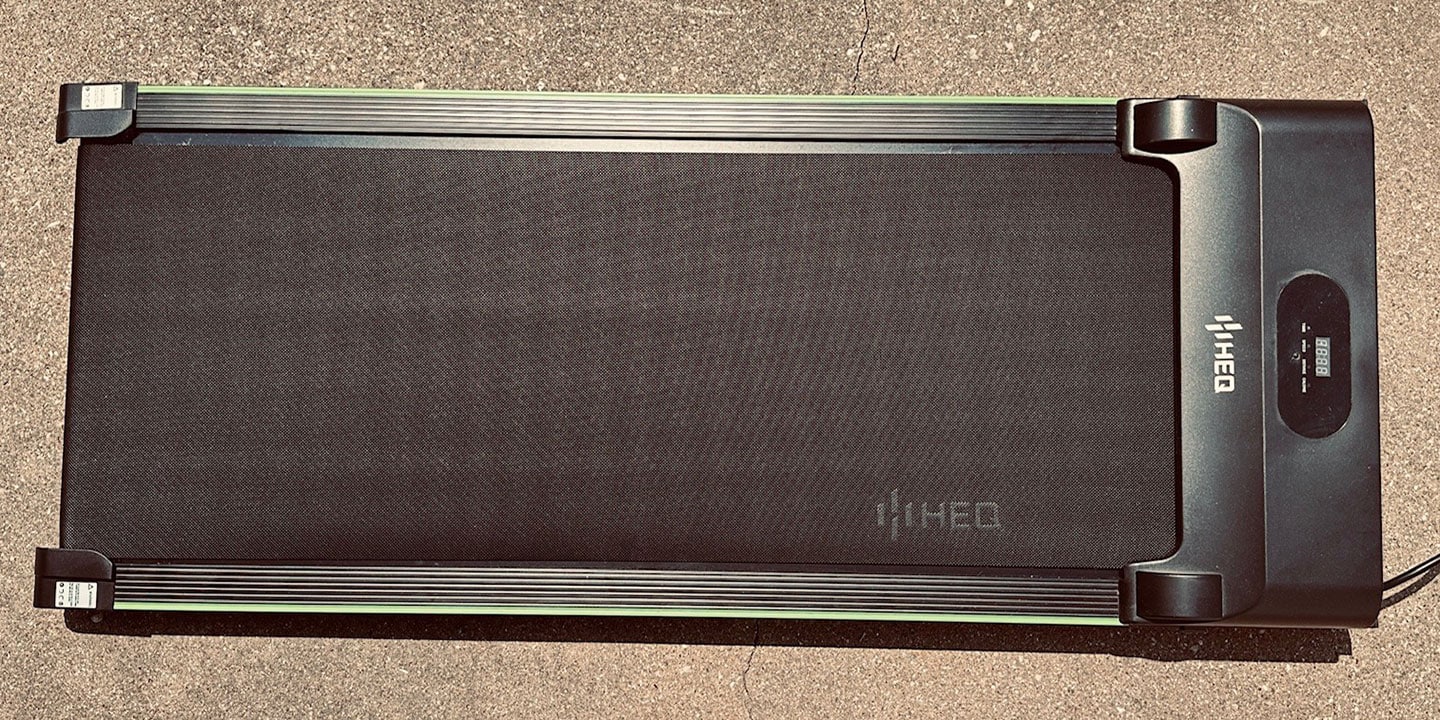
For days when you want to stay inside, walk pads are a great alternative. They can help you meet your 150-minute weekly goal from the comfort of your climate-controlled space. Some people even set up a walk pad at their desk to use while working or in front of their TV to take a break.
If you enjoy healthy competition, consider downloading an activity monitoring app, like StepUp or StepsApp, to track your daily step count. A 2025 UCLA Health article suggests adults under age sixty need 8,000 to 10,000 daily steps for health benefits (UCLA). The StepUp app lets you invite and monitor friends' steps, which is great motivation for those with a competitive spirit.
If you're struggling with stress or burnout, consider adding daily aerobic activity to your routine. It can significantly enhance your cognitive function and overall health, helping you thrive through midterms and beyond.
Bibliography
Centers for Disease Control and Prevention. “Physical Activity Boosts Brain Health.” Centers for Disease Control and Prevention. Last reviewed August 13, 2025. https://www.cdc.gov/physical-activity/features/boost-brain-health.html.
Ferrer-Uris, Blai, Cristina-Eva Gámez, David Olarizu, Luis-Millán González, and Ana-María Perelló-Amorós. “Can Exercise Shape Your Brain? A Review of Aerobic Exercise Effects on Cognitive Function and Neuro-Physiological Underpinning Mechanisms.” AIMS Neuroscience 9, no. 2 (2022): 204–226. https://doi.org/10.3934/Neuroscience.2022012.
UCLA Health. “How Many Steps Do You Need a Day to See Health Benefits?” UCLA Health, February 25, 2025. https://www.uclahealth.org/news/article/how-many-steps-do-you-need-day-see-health-benefits.
Do you have a compelling story or student success tips you’d like to see published on the Pearson Students blog? If you are a college student and interested in writing for us – click here to pitch your idea and get started!
About the author

Katelyn Stewart
By day, Katelyn M. Stewart is an English major at IU Indianapolis, where she is a Pearson Campus Ambassador. By night, she is the singer and guitar player in the indie-rock band The Randys. Although she dreams of becoming the next great American author, she is drawn to nonfiction topics such as medical research, economics, and political dealings. She believes that art is a vessel for truth and that all forms must be cherished and treated with respect.